
Table of Contents
Overview
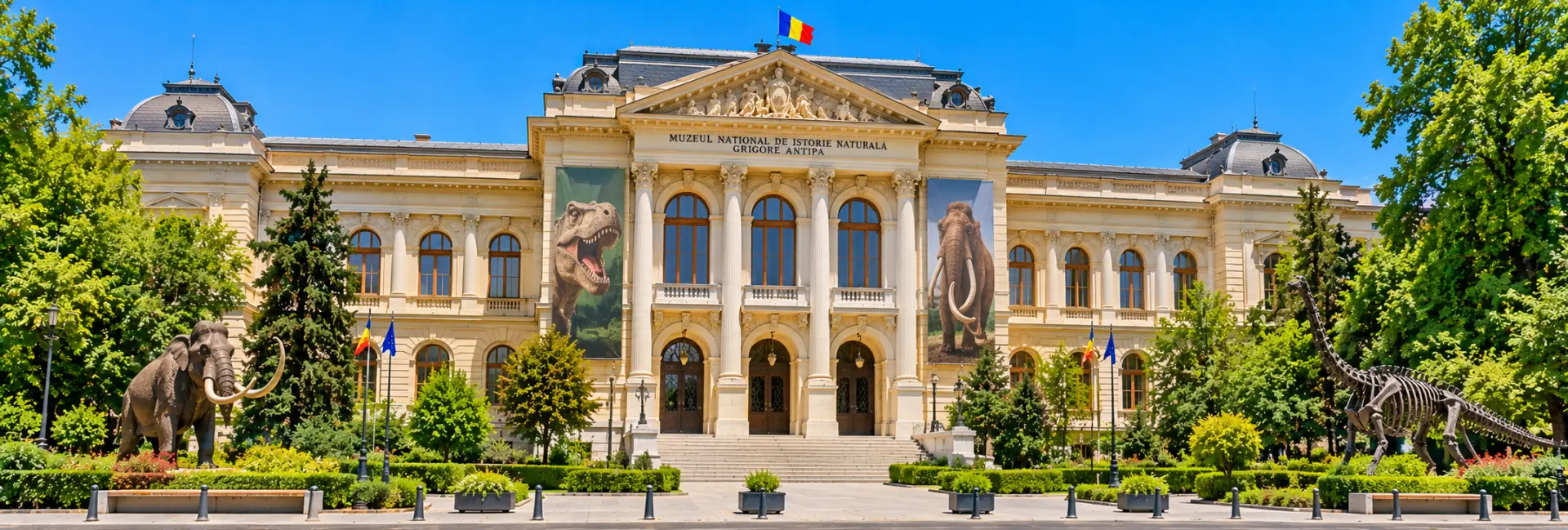
The Grigore Antipa National Museum of Natural History is Bucharest's best-known museum of the natural world, and locals usually just call it "Antipa". It stands on Șoseaua Kiseleff, a leafy boulevard a short walk north of Victoriei Square, in a building that has housed the collection since 1908.
More than two million specimens of invertebrates, vertebrates and fossils are spread across its floors. The museum is especially loved for its lifelike dioramas, a towering fossil skeleton in the main hall and a steady rotation of temporary shows, some of them featuring live animals.
Antipa works for almost any kind of visitor: families looking for a rainy-day outing, travelers who want a cultural hour or two in the capital, and anyone who enjoys classic natural history presented in a refreshed, modern setting.
History of the Museum
A collection born in 1834
The museum dates its founding to 3 November 1834. Mihalache Ghica, brother of Wallachia's ruler Alexandru Ghica, helped launch it by donating a wide mix of items, including ancient coins, minerals, fossils, shells, fish, birds, mammals and works of art. Some of the earliest holdings came from the St. Sabba Academy, and for many decades the growing collection moved between different buildings in the city.
The Antipa era
The institution's modern identity comes largely from zoologist Grigore Antipa (1867–1944), who directed it for 51 years. He pushed for a purpose-built home, which opened in 1908 and was inaugurated by King Carol I. He was also a champion of biogeographic dioramas, which place animals in reconstructions of their natural surroundings and were a forward-looking way of presenting nature at the time.
The museum was renamed in his honor in 1933, and the name has stuck ever since.
Closure and reopening
The permanent exhibition went through a complete overhaul that kept the museum closed for about two and a half years. It reopened in September 2011, and the first weekend alone drew more than 5,700 visitors. Since then Antipa has stayed in the public eye with a busy calendar of temporary exhibitions, workshops and special events, and it now counts among the most popular museums in Romania.
Architecture & Building
The museum building was designed by architect Grigore Cerchez and was created specifically to display and study natural history, rather than adapted from another use. That purpose shows in the layout: a large central hall gives the biggest skeletons room to breathe, while the surrounding galleries are arranged over several levels so that visitors can move from one habitat or theme to the next.
The building is treated as a monument in its own right. On special occasions the museum has offered guided tours that focus on the history and architecture of the structure itself, which is a nice complement to the exhibits.
Entrance and grounds
Visitors are greeted at the front by a giraffe figure, which has become a friendly landmark for families. Inside the entrance hall, a pair of African elephant trophies hang on the walls, setting the tone for the animal world beyond. Behind the museum there is a garden that comes to life during children's events and outdoor activities, so it is worth a glance if the weather is good.
Collections & Exhibits
Antipa's zoological collections are the largest and most varied in Romania, and they document biodiversity not only within the country but well beyond its borders. Together with the geological and paleontological holdings, they trace how the Earth and its animal life have changed over time, including the fauna that once lived on present-day Romanian territory.
Dioramas
The dioramas are the heart of the permanent display. Birds and mammals are shown in three-dimensional scenes that mimic their real environments, and the underwater galleries bring sea life into view, including scenes from the Black Sea. Some of these displays are old enough to be considered museum rarities in their own right.
Fossils, minerals and ethnography
Beyond the animal halls, you will find fossils and rock specimens that tell the story of prehistoric life. The museum's ethnographic collections add another angle by looking at human cultural diversity, which the curators treat as one more form of biodiversity.
How to read the displays
The most rewarding way to approach the exhibition is to treat each gallery as a different habitat or chapter. Watch for the way animals are posed in their scenes, from predators on the move to birds nesting among reconstructed vegetation, and for the small details in the backgrounds that make each diorama feel like a real place rather than a simple case of stuffed animals.
Research behind the scenes
Antipa is not only a visitor attraction. It is also an active research institution that works with museums and universities abroad, and much of its enormous collection is stored for study rather than displayed.
Must-See Highlights
With so much on offer, it helps to know which stops tend to leave the strongest impression.
- The Deinotherium gigantissimum skeleton: the museum's star attraction, displayed in the middle of a large hall. This prehistoric relative of today's elephants is among the biggest land mammals that ever lived, and the skeleton is widely described as one of a kind.
- The artificial cave: an 11-meter walk-through cave with stalactites and bat colonies, a moody change of pace from the brightly lit halls.
- The underwater dioramas: detailed marine scenes, including Black Sea habitats, that are especially popular with younger visitors.
- The butterfly displays: a dedicated butterfly chamber is one of the museum's most colorful and photogenic corners.
- The entrance hall: a quick look at the elephant trophies before you head upstairs is worth the detour.
Ways to Experience It
Self-guided visit
Most people explore at their own pace, following the permanent route from the ground level through the dioramas and up to the upper galleries. The exhibits are labeled clearly enough that you can enjoy them without a guide, and the visual style makes the museum easy to enjoy even for children who cannot yet read the signs.
Guided tours
Guided visits are available, and the museum has run themed tours for special events. If you want a guide, ask at the ticket desk or check the museum's official channels before you go.
Temporary exhibitions
Antipa is well known for temporary shows that sit alongside the permanent display. Past editions have included live exotic butterflies, live tarantulas, live reptiles and building-block-themed exhibitions. These usually require a separate ticket, so check what is currently running before you plan your day.
Family activities
Beyond the galleries, the museum is geared toward families, with workshops and activities that explore topics such as nature, research and science. Children's events often spill into the garden behind the building, which turns the museum into a half-day destination rather than a short stop.
Special events
The museum regularly takes part in cultural days and offers free access to the permanent exhibition on selected occasions, such as the European Museum Night, National Culture Day and International Children's Day. On the latter, the back garden fills with games, workshops and storytelling.
Best Time to Visit
Weekday mornings shortly after opening are generally the calmest time to go. Weekends and school holidays bring families and school groups, and the museum can be crowded, especially around the central hall and the most popular dioramas.
Because the exhibition is indoors, Antipa is a strong choice for cold, wet or very hot days when outdoor sightseeing in Bucharest is less appealing. Opening hours have changed seasonally in the past, with longer hours in summer, so it is worth confirming the current schedule before you set off.
Late afternoon can also be pleasant, as school groups often thin out, though it leaves you less time to see everything before closing. Whatever hour you choose, arrive with a plan for the one or two exhibits you most want to see so that you are not rushing through them at the end.
If you enjoy a festive atmosphere and do not mind crowds, the Museum Night event in May is memorable, with free entry, extended hours and special activities, but it attracts thousands of people in a single evening.
Visitor Tips
- Check current details first: opening days, hours and ticket prices change over time. The museum has generally been closed on Mondays, but confirm on the official website before visiting.
- Plan enough time: two to three hours is a comfortable pace for the permanent exhibition, and you will want extra time if you add a temporary show.
- Getting there: the nearest metro stop is Piața Victoriei, and several city buses run along the surrounding roads. The museum is around the corner from the square.
- Bring the kids: the dioramas, cave and live-animal exhibitions are a hit with children, though crowds can make strollers harder to maneuver on busy days.
- Accessibility: if you need step-free access or other support, contact the museum ahead of your visit to confirm what is currently available.
- Combine your day: pair Antipa with nearby museums or a walk in the park to make a full cultural outing.
Nearby Attractions
Antipa sits in one of Bucharest's most rewarding museum districts, so it is easy to turn a visit into a longer outing.
- Victoriei Square: a major city junction and metro hub just south of the museum, handy as a starting or ending point.
- The Geology Museum and the Romanian Peasant Museum: both are on the same boulevard, within a short walk, and offer a very different take on nature and tradition.
- Herăstrău Park and the Village Museum: further north along Kiseleff, this large lakeside park and open-air museum of rural architecture make a relaxing follow-up after a morning indoors.
- The Triumphal Arch: a longer stroll up the boulevard brings you to one of the capital's most recognizable monuments.
FAQs about visiting the Grigore Antipa National Museum of Natural History
What is the Antipa Museum most famous for? +
It is best known for its lifelike dioramas and for the giant Deinotherium gigantissimum skeleton displayed in the main hall. The collection of more than two million specimens is among the most extensive in Romania.
How long should I spend at the museum? +
Most visitors need about two to three hours for the permanent exhibition. Add extra time if you plan to see a temporary show, such as a live-animal exhibition.
Is the museum free? +
Normally you need a ticket, and prices can change, so check the official website. Entry to the permanent exhibition is free on selected occasions, such as the European Museum Night and International Children's Day.
How do I get to the Antipa Museum? +
The easiest option is to take the metro to Piața Victoriei and walk the short distance up Șoseaua Kiseleff. Several buses also stop nearby, and the museum is easy to reach by taxi or ride-hailing from anywhere in the city.
Is it a good museum for kids? +
Yes, it is one of the capital's most popular family stops. Dioramas, the artificial cave and the live-animal exhibitions keep children engaged, and the museum often runs workshops and activities aimed at younger visitors.
Does the museum have temporary exhibitions? +
Yes, it regularly hosts temporary shows alongside the permanent display, and these have included live butterflies, tarantulas and reptiles. They often need a separate ticket, so check what is on before you go.
What is the best time to avoid crowds? +
Weekday mornings are usually quietest. Weekends, school holidays and free-entry days draw large crowds, so plan around them if you prefer a calm visit.
What else is there to do nearby? +
You can walk to the Geology Museum and the Romanian Peasant Museum on the same boulevard, or continue north to Herăstrău Park and the Village Museum. Victoriei Square is just south of the museum.
