Table of Contents
Overview
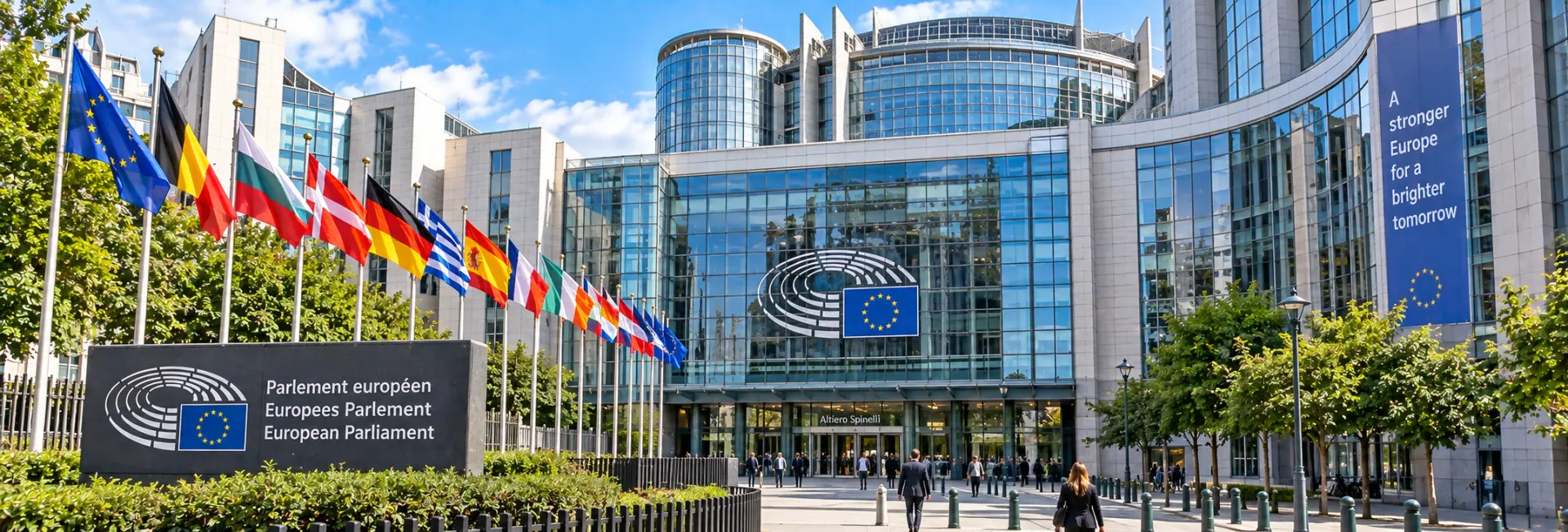
Rising over Brussels' European Quarter, the European Parliament's Espace Leopold complex is where most of the day-to-day work of European Union lawmaking actually happens, even though Strasbourg remains the institution's official seat. Its oval debating chamber and glass-fronted office towers form one of the largest parliamentary complexes in the world, second in scale only to the United States Capitol and its surrounding buildings.
For visitors, the site offers something rare among the EU's institutions: genuine public access, through free guided tours, a large interactive visitor center, and the chance to watch European lawmakers debate in person during open sessions.
History
Building on a Former Rail Yard
The complex takes its name from the surrounding Leopold Quarter, itself named after King Leopold II. Construction began in 1989 on the site of a disused railway station's marshalling yards and a former brewery, land that had sat largely derelict for years before the project began.
A Private Financing Workaround
Initial construction was financed privately, framed as an international conference center rather than a parliamentary building, a structuring choice that sidestepped French objections to the European Parliament expanding its presence in Brussels at the expense of Strasbourg. The Parliament itself later took over financing and expanded the project considerably beyond its original scope.
Built in Stages
The first section, the Paul-Henri Spaak building housing the debating chamber, opened in 1993. The much larger Altiero Spinelli building followed in 1996, adding offices and further committee rooms, and additional wings continued to be added through the 2000s, with the complex reaching its current form by 2008.
Architecture & Buildings
The Paul-Henri Spaak Building
Named after a former Parliament president and one of the EU's founding figures, this building holds the oval hemicycle where plenary debates take place, along with the offices of the Parliament's president and senior staff. Its curved, glass-heavy design was the winning entry in a 1988 architecture competition, with the oval shape intended to symbolize unity among member states.
The Altiero Spinelli Building
The largest structure in the complex, this building provides offices for members and staff along with additional committee rooms and shared facilities, reflecting the scale of the administrative work that supports the Parliament's public sessions.
Art Inside the Complex
The buildings house a notable collection of contemporary art integrated directly into working and public spaces, including a large sculpture embedded within a spiral staircase in the Paul-Henri Spaak building, donated by the artist as a personal contribution to the European project.
Key Areas
The Hemicycle
The horseshoe-shaped debating chamber seats hundreds of members and staff and is the visual centerpiece of any Parliament visit, whether seen in session from the public gallery or as part of a guided tour when Parliament isn't sitting.
Place du Luxembourg
The square in front of the complex is a lively meeting point for parliamentary staff, journalists, and visitors, lined with cafes that fill up quickly after work hours on weekdays.
Parc Leopold
A quieter green space adjoining the complex, this park offers ponds and shaded paths, giving visitors a place to pause between the Parliament buildings and the busier streets of the surrounding district.
The Parlamentarium
The Parlamentarium is the Parliament's large visitor center, opened in 2011 as one of the first major public spaces anywhere dedicated entirely to explaining how a multinational legislature works. Exhibits use multimedia displays, an interactive floor map, and a 360-degree theater to walk visitors through the history of European integration and the practical mechanics of how EU laws are made.
Multimedia guides are available in dozens of languages, and the center is fully accessible, with audio and sign-language guide options built in for visitors with disabilities. Admission is free, though capacity is limited and advance booking is recommended.
Ways to Experience It
Visitors can take a self-guided or staff-led tour of the Parliament buildings when sessions allow, combining a look at the hemicycle with a stop at the Parlamentarium next door. Watching an actual plenary session from the public gallery is also possible on sitting days, offering a firsthand look at EU debates rather than just a static tour.
Because access involves ID checks and security screening, visitors planning a Parliament tour should treat it more like a government building visit than a casual museum stop, with some advance planning required.
Best Time to Visit
Visiting during a plenary session week offers the chance to watch live debate from the public gallery, an option not available when Parliament isn't sitting. For those mainly interested in the Parlamentarium's exhibits, weekday mornings tend to be quieter than afternoons and weekends, when school groups and tourists are more likely to fill the space.
Outside of session weeks, the surrounding Place du Luxembourg and Parc Leopold remain pleasant to visit regardless of the Parliament's schedule, making the area worth a stop even without an interior tour booked.
Visitor Tips
- Bring valid photo identification, since a security check is required before entering either the Parliament buildings or the Parlamentarium
- Book Parlamentarium visits and Parliament tours online in advance, as capacity is limited and popular time slots can fill up
- Multimedia guides at the Parlamentarium are available in numerous languages, so check that your preferred language is offered before arriving
- Public plenary sessions depend on the Parliament's sitting calendar, so check the schedule in advance if watching a live debate is a priority
Nearby Attractions
The Cinquantenaire Park and its triumphal arch are a short walk from the Parliament complex, offering a green space and museums as a natural extension of a visit to the European Quarter.
The House of European History, located nearby on Rue Belliard, complements a Parlamentarium visit with a broader look at the continent's shared and often contested history beyond the EU's own institutions.
FAQs about visiting the European Parliament
Is the European Parliament in Brussels the same as its official seat? +
Not exactly; Strasbourg is the Parliament's official seat, but most committee work and many sessions take place at the larger Brussels complex.
Is it free to visit the European Parliament? +
Yes, both guided tours of the Parliament buildings and entry to the Parlamentarium visitor center are free, though advance booking is recommended.
What is the Parlamentarium? +
It's the Parliament's large interactive visitor center, using multimedia exhibits to explain the history of European integration and how EU lawmaking works.
Can you watch a real parliamentary session? +
Yes, when Parliament is in session, visitors can watch debates from the public gallery in the hemicycle, subject to availability and security checks.
What do you need to bring to visit? +
Valid photo identification is required for entry to both the Parliament buildings and the Parlamentarium, along with passing a standard security check.
How long does a Parlamentarium visit take? +
Most visitors spend one to two hours moving through the exhibits at their own pace with a multimedia guide.
Is the Parlamentarium accessible for visitors with disabilities? +
Yes, the center is wheelchair accessible and offers audio and sign-language guide options.
What else is nearby? +
Cinquantenaire Park and the House of European History are both within easy walking distance, making it simple to extend a visit to the surrounding European Quarter.