
Table of Contents
- Overview
- The Loring Family and the Historic Estate
- The Historic Garden: Scale, Shade and Water
- Wisteria Arbour and Memorable Garden Corners
- Botanical Collections and a World of Plant Forms
- Viewpoints and Choosing the Right Walking Route
- Seasonal Visits, Guided Options and Families
- Transport, Admission and Garden Rules
Overview
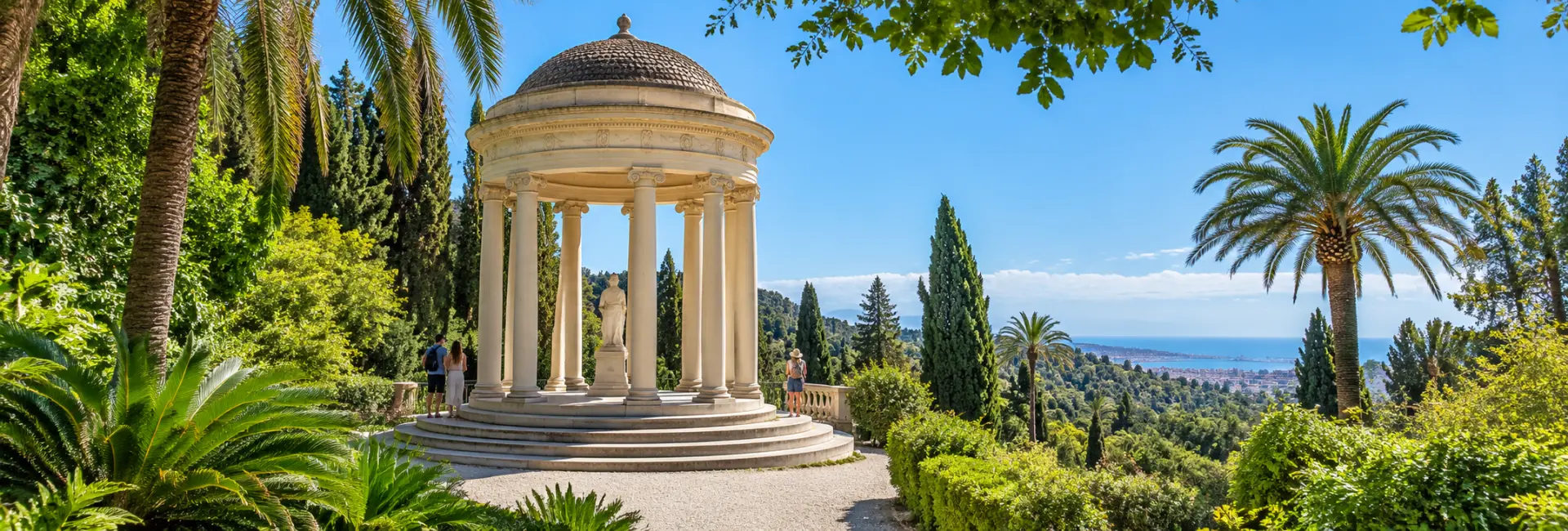
Jardín Botánico-Histórico La Concepción offers a more substantial garden visit than the public green spaces in central Málaga. Located north of the historic centre, it combines a nineteenth-century landscape garden with botanical collections, walking routes and views across the surrounding terrain.
Its appeal comes from the contrast between dense, mature planting and more open areas organised around particular plant groups or themes. Visitors can enjoy the atmosphere without specialist knowledge, while those interested in botany have plenty to examine through the collections and interpretation.
Allow at least two to three hours as a planning estimate, plus transport time. A shorter route is possible, but rushing through the garden can undermine the main pleasure of the visit: noticing changes in scale, light and planting as the paths unfold.
This is a managed collection of living plants and a protected historic place. It should be approached with the care given to a museum, while also preparing for the slopes and outdoor conditions of a garden walk.
The Loring Family and the Historic Estate
La Concepción was created in 1855 by Jorge Loring and Amalia Heredia, the Marquises of Casa Loring. Their estate brought together existing agricultural land and developed a landscape shaped by an interest in gardens, plants and collecting.
The family’s archaeological interests also became part of the property’s identity. The small Loringian museum structure recalls a collection assembled on the estate, although important original objects are now held elsewhere. Visitors should not assume that every artefact associated with the estate remains in the garden.
A new ownership period began in 1911 with Rafael Echevarría and Amalia Echevarrieta, who expanded aspects of the landscape. The garden later received historic protection, and Málaga City Council acquired the estate in 1990. It opened to the public in 1994 after work to prepare it for that role.
Those successive phases explain why the site contains more than a single garden design. Private collecting, landscape development, decline and public conservation all contributed to the place visitors encounter today.
The Historic Garden: Scale, Shade and Water
The historic core is best experienced slowly. Mature trees, palms and winding routes create enclosed views that can change within a short distance. Instead of offering everything at once, the garden often reveals a new feature through movement around planting or a change in level.
Water features and small structures add points of focus within the vegetation. Their role is not only decorative: they help organise the sequence of spaces and encourage visitors to pause. Follow the designated paths rather than stepping closer through planted areas.
Notice the scale of leaves and trunks as well as flowers. Large foliage and established trees provide much of the garden’s character even when a particular seasonal display is absent. This makes the visit rewarding beyond a single bloom period.
The landscape contains slopes, roots and changes of surface, so looking upwards should be balanced with attention to footing. A slow pace is both practical and visually rewarding. Comfortable shoes matter more here than they might on a short paved city promenade.
Wisteria Arbour and Memorable Garden Corners
The wisteria arbour is one of La Concepción’s best-known features. Its iron structure supports a plant associated with a brief flowering period around early spring, when hanging clusters can transform the space. Exact timing depends on the season and should be checked before travelling specifically for blossom.
Outside flowering, the arbour remains interesting as an architectural and botanical feature. Look at the relationship between the support and the mature climbing growth rather than treating the absence of flowers as a failed visit. A garden has different visual strengths at different times.
Other notable corners include the waterfall area and the Nymph’s pond and stream. These features help explain the picturesque character of the landscape, where water, sculpture and planting are brought into a sequence of views.
Choose a few focal points rather than attempting to photograph every turn. The garden’s charm can be diluted by constantly stopping to record it. Spending several quiet minutes in one place often reveals more about light, sound and scale than a rapid collection of images from the whole estate.
Botanical Collections and a World of Plant Forms
Beyond the historic core, collections organise plants by group, origin or theme. The garden lists palms, bamboos, aquatic plants, cactus and succulents, fruit trees and other collections, making it possible to build a visit around a particular interest.
The route known as Around the World in 80 Trees introduces plants associated with different continents. The title is a way into a broader collection, not a reason to count exactly eighty specimens. Use the labels to compare origins and forms, and notice how plants from different places respond to Málaga’s conditions.
The Mediterranean planting provides an important counterpart to the more exotic-looking areas. Comparing smaller, tougher-looking leaves with larger subtropical foliage can start a useful conversation about different plant strategies, without assuming that appearance alone proves a species’ exact needs.
Do not collect leaves, seeds or fruit as souvenirs. A botanical collection depends on intact specimens and controlled care. Photographs and notes are the appropriate way to remember a plant, and a clear image of its label can be useful for later reading.
Viewpoints and Choosing the Right Walking Route
The garden includes higher routes that offer a different perspective from the historic core. The viewpoint route looks across the canopy, while the forest route follows higher ground and introduces more Mediterranean vegetation. These are optional additions, not requirements for every visitor.
Consult the current garden map before choosing a circuit. It distinguishes easier walking, wheelchair-suitable sections and a forest route described as moderately difficult. The routes therefore should not be treated as interchangeable simply because they lie within the same attraction.
For a first visit, begin with the historic garden and one collection area, then decide whether there is time and energy for the higher paths. This leaves flexibility for weather and avoids committing to a long circuit before understanding the terrain.
Visitors interested mainly in plants may prefer to remain longer in a smaller area, while those seeking views may allocate more time to the elevated route. Both can be satisfying. The best itinerary follows your interests and physical comfort rather than a fixed list of every named feature.
The official map gives the forest route a length of about 1.1 kilometres, while the viewpoint route is a shorter circuit of roughly 415 metres. These distances are useful, but they do not describe effort on their own: gradient, surface, stops and the approach from another part of the garden all affect the experience. Choose by route character as well as length.
Looking across the canopy can also change how you understand the historic garden. At ground level, a large tree may appear mainly as a trunk and overhead shade; from an elevated route, its crown becomes part of a wider pattern. That is a different kind of botanical observation from reading labels beside specimens. If time is limited, decide which perspective interests you more rather than trying to hurry through both. The garden rewards a coherent choice of route more than a hurried attempt to cover every numbered point.
Seasonal Visits, Guided Options and Families
Spring can be especially appealing for visitors interested in flowering, but no garden can promise a particular display on a fixed date. Use current information from the garden if wisteria or another plant is central to your plans. Mature structure and foliage remain reasons to visit at other times.
In warmer periods, start early enough to avoid making the most exposed walking coincide with the hottest part of the day. The historic garden offers shaded areas, but the entire estate is not equally sheltered. Carry water and allow time for rests.
Guided visits and special programmes can add historical or botanical context. These require checking the current calendar and reservation process; ordinary entry should not be assumed to include an organised activity. Night events, when offered, are separate experiences with their own arrangements.
For families, choose a manageable route and a few themes, such as different leaf sizes or plants from different regions. The garden’s rules make clear that it is not a general play park. Children need supervision around water, slopes and valuable planting.
Transport, Admission and Garden Rules
The garden is outside the compact old-town walking area, approximately six kilometres from the centre according to the operator. Plan the outward and return journeys before travelling. If using a city bus, check the current route and the additional walk from the stop rather than assuming a door-to-door service.
Consult the official website for current opening days, seasonal hours, prices and purchase arrangements. At the research date, the garden stated that ordinary tickets were bought at the entrance rather than online; reconfirm this before travel. Guided activities require their own advance arrangements.
- Remain on paths and avoid collecting plant material.
- Eat only in areas designated for that purpose.
- Follow restrictions on bicycles, drones and play equipment.
- Ask about permission for organised or commercial photography.
- Check the current dog policy before bringing an animal.
For access needs, use the official route map and contact the garden about the precise experience required. A wheelchair-suitable path exists within the mapped options, but that does not make every slope or higher route accessible. A carefully selected circuit can still provide a rich visit.
FAQs about visiting Jardín Botánico-Histórico La Concepción
How far is La Concepción from central Málaga? +
The operator places it approximately six kilometres from the centre. Allow separate transport time in both directions.
How long should I spend there? +
Two to three hours is a useful starting estimate, with longer for detailed botanical interests or the higher routes.
When does the wisteria bloom? +
Usually around early spring, often late March or early April, but the exact period varies and should be checked locally.
Is the whole garden wheelchair accessible? +
No. The official map identifies suitable sections as well as more demanding routes; contact the garden to plan a suitable circuit.
Can I buy standard tickets online? +
At the research date, the operator directed visitors to buy ordinary admission at the entrance. Recheck the current policy before travel.
Can I bring food? +
Use only the designated eating areas and follow the garden’s current rules.
Is it the same as Parque de Málaga? +
No. La Concepción is a separate botanical-historical estate north of the centre; Parque de Málaga is a central public garden.
