
Table of Contents
Overview
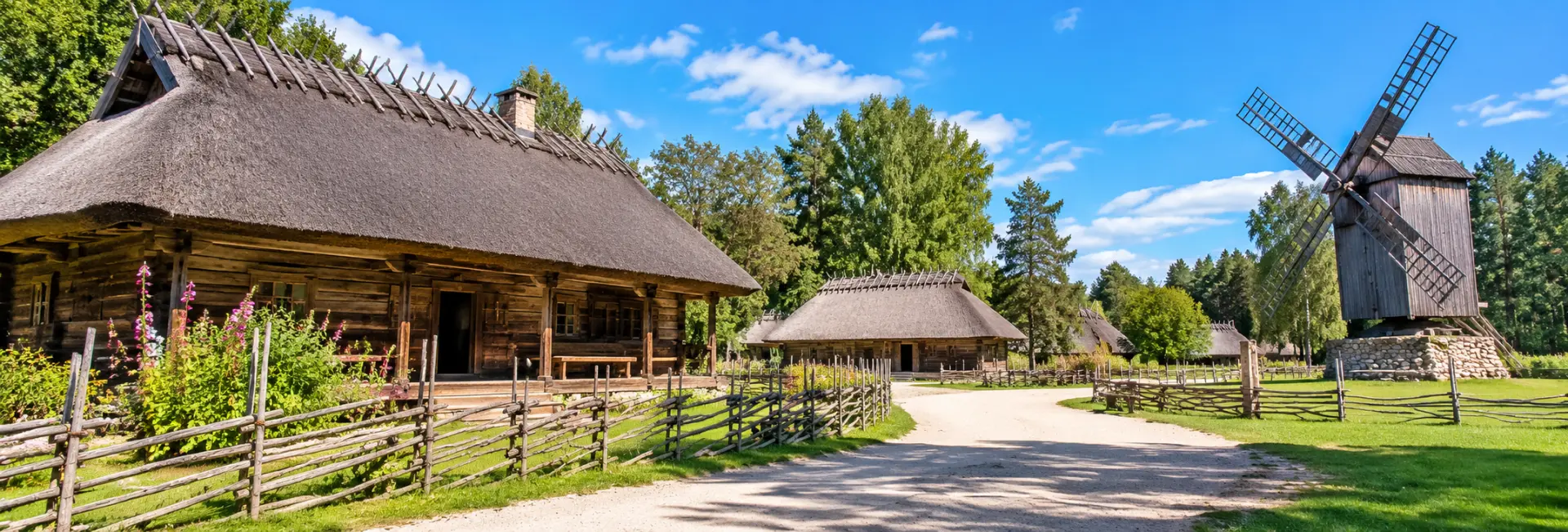
The Estonian Open Air Museum, or Eesti Vabaõhumuuseum, is a village-sized collection of historic rural buildings set among woodland, meadow and shoreline on the western edge of Tallinn. Nearly 80 buildings from the past two centuries have been moved here from all over Estonia and arranged like real villages, complete with farmyards, a chapel, an inn, a school, a shop, a fire station, mills and fishing sheds.
Walking the grounds feels more like visiting a living countryside than browsing a gallery. Paths run between thatched farmhouses and wooden outbuildings, sea air drifts in from Kopli Bay, and in season you can watch craftspeople at work, ride in a horse-drawn cart or taste traditional food in the inn.
It is one of the best places in the capital for understanding how ordinary Estonians lived, worked and celebrated before modern life changed the countryside. It suits families, history lovers, photographers and anyone who wants a green, unhurried half day away from the city centre.
History of the Museum
An Idea Decades in the Making
The idea of an Estonian open-air museum first took shape in 1913, when writers and cultural figures inspired by Scandinavian examples argued that the country's vanishing farm architecture deserved to be preserved. Two world wars and long periods of occupation pushed those plans aside for decades.
Founding and Growth
The museum was finally established on 22 May 1957 on the grounds of the former Rocca al Mare summer estate, a seaside property that dates back to the 1860s. The first building brought in, in 1958, was a cattle shed from western Estonia, which now serves as a summer kitchen at one of the farms. The grounds opened to the public in the 1960s, and the collection has kept growing ever since.
Over the decades the museum has moved from simply rescuing old buildings to telling broader stories about rural life. Recent additions include a 20th-century Soviet-era apartment building and a modern prefabricated wooden house, showing that the countryside kept changing right up to recent times.
Layout and Architecture
A Map of Estonia in Miniature
The museum is organised by region rather than by date. Farms from western and northern Estonia stand in a row, like a chain village. Island farms cluster tightly around a village green. Farms from southern Estonia are scattered more loosely across the landscape, just as they would be in the real countryside. Four regional areas, plus a set of stand-alone public buildings, give the grounds a natural flow.
The Barn-Dwelling
The heart of each of the dozen farmyards is the barn-dwelling, a house type that is characteristic of Estonia. It combines a kiln room with a large stove, which doubled as living space and grain-drying room, with a threshing floor where grain was processed and animals were sheltered in winter. Later centuries added extra chambers.
Because the dwellings vary by region, comparing them is part of the fun. Northern examples have a tall, narrow kiln room, while southern and island versions have a kiln room and threshing floor of equal size. Alongside them you will spot the humbler homes of fishermen and landless workers, and even a modern dwelling from the 1930s.
The Village Centre and the Coast
Public buildings such as the school, chapel, inn, village shop and fire station form a small village centre. Windmills, a watermill and net sheds by the sea complete the picture and give the western end of the grounds a distinctly coastal feel.
Must-See Highlights
- Sutlepa Chapel - the oldest building in the collection, dating to the late 17th century and brought from the Noarootsi area. It is still used for concerts and quiet moments.
- Kolga Farm - home to the oldest farmhouse on display, dated to 1723, and a good place to see how a South-Estonian and island barn-dwelling works from the inside.
- Kolu Inn - a working tavern serving traditional Estonian dishes, ideal for a mid-visit meal in a historic setting.
- Kuie School and Lau Village Shop - a schoolhouse with an education role and a 1930s-style village shop with sweets and handicrafts.
- Kolkhoz Apartment Building - the newest major exhibit, opened in 2021. This furnished apartment block from a 1960s collective farm offers a rare look at everyday Soviet-era rural life.
- Windmills and Net Sheds - photogenic landmarks near the water, especially good in late afternoon light.
- Orgmetsa Fire Station - a small public building that shows how villages organised their own safety.
If you only have time for a few stops, combine a western farm, Kolga Farm and the Kolkhoz building to see the full span of rural housing from the 18th to the 20th century.
Living History and Activities
The museum works hard to keep the past from feeling frozen. In season you can watch demonstrations of crafts, baking and traditional household skills, and the staff often bring buildings to life with seasonal tasks and stories.
Horse-Drawn Rides
A horse and cart carries visitors around part of the grounds, which is a pleasant way to rest your legs. Sleigh rides are offered when there is snow. Availability depends on weather and the animals' schedule, so ask at the ticket office.
For Families and Children
A trail led by a fictional herd boy winds through the farms and natural areas, with ten stops of games and challenges. Near the entrance, a family-friendly exhibition explores farm life through hands-on activities, and it includes animals traditionally kept on Estonian farms. A living farm and a playful orienteering game in the museum's free mobile app add to the choices for younger visitors.
Food and Shopping
Kolu Inn serves hearty traditional food, and the museum shop and Lau village shop sell crafts and nostalgic treats. Picnic baskets and cafes in the farmyards are available at selected times, and the grounds have plenty of spots where you can sit and take in the setting.
Events Through the Year
The museum follows the old Estonian folk calendar, so its events change with the seasons and many have deep roots in village tradition. Spring and summer bring open-air celebrations, craft days and music, and the grounds sometimes open for special evening programmes such as Midsummer Eve.
Autumn is a particularly atmospheric time, with traditional holidays such as Martinmas and St Catherine's Day, when costumed guisers go from house to house. In December, a Christmas village offers decorating workshops, carols and festive treats, and the chapel hosts choir performances.
On Museum Night, the park and a selection of farms, the inn and the village shop are usually open into the evening. Check the official events calendar before you go, as dates, themes and ticket arrangements for special events differ from regular visits.
Best Time to Visit
The museum is open year-round, and each season offers something different. Late spring to early autumn is the busiest period, with longer opening hours, more buildings open, lush greenery and the widest range of events. It is the best time for first-time visitors who want to see everything.
Autumn brings golden light and harvest-themed traditions, while winter is quiet and atmospheric. Snow on thatched roofs makes for striking photos, and sleigh rides add a seasonal treat. However, some buildings close during the cold months and daylight is short.
Weekdays are calmer than weekends, and early morning is the best time to enjoy empty lanes. For softer light and thinner crowds, aim for the last couple of hours before closing.
Visitor Tips
- Most visitors spend between two and four hours. Plan on the longer side if you want to eat, join a demonstration or explore all four regions.
- Opening hours change with the season, with a winter season and a summer season, and different parts of the museum may have different hours. Confirm hours and ticket prices on the official website before you travel.
- Tickets are sold on site and online. Discounts are available for students, seniors and families, and an evening ticket is offered later in the day.
- Almost everything is outdoors, so dress for the weather, wear comfortable walking shoes and bring layers. Paths can be muddy after rain.
- Free parking is available for visitors. Bikes can be brought in or left at the entrance, and rentals are available at the ticket office.
- For public transport, bus 41 runs from Balti Jaam and Vabaduse Väljak to the museum gate at the Rocca al Mare stop. Buses 8 and 42 stop at the zoo, about a 15-minute walk away.
- A tactile map and a described route for people with reduced mobility are available, although some historic buildings are not fully accessible.
- A free audio guide app covers the whole exhibition, so download it and bring headphones.
Nearby Attractions
The Estonian Open Air Museum sits in Rocca al Mare, a coastal area that it shares mostly with Tallinn Zoo, which is a short walk along the seaside road and makes a popular pairing for a family day out. The seashore itself has pleasant paths and views across Kopli Bay.
The Rocca al Mare shopping centre is close to the access road if you need a meal or supplies. From here it is also an easy trip back toward the city centre, where Tallinn Old Town, the Kalamaja district and Telliskivi Creative City make good follow-up stops for a full day of sightseeing.
FAQs about visiting the Estonian Open Air Museum
What is the Estonian Open Air Museum? +
It is Estonia's largest outdoor museum of rural life, with nearly 80 historic buildings arranged in village-style groups on a coastal site in Tallinn. You can walk between farms, a chapel, an inn, a school, mills and net sheds.
How long should I spend at the museum? +
Allow two to four hours for a relaxed visit. A quick look at the highlights can be done in under two hours, but families and photographers often stay longer.
How do I get to the Estonian Open Air Museum? +
By bus, take line 41 from Balti Jaam or Vabaduse Väljak to the Rocca al Mare stop at the museum gate. By car it is about a 15-minute drive from the centre, with free parking on site.
What are the opening hours and ticket prices? +
Hours and prices change with the season, with a longer summer season and a shorter winter one. Check the official website for current details, and look for family, discount and evening tickets.
Is the museum good for children? +
Yes. There is a herd boy trail, a hands-on family exhibition, farm animals, horse-drawn rides in season and plenty of open space to run around.
What is the best time to visit? +
Late spring to early autumn offers the most events and open buildings, while winter is quieter and has a snowy charm. Weekdays and early mornings are less crowded.
Can I eat at the museum? +
Yes. Kolu Inn serves traditional Estonian food, and there are seasonal cafes and a village shop with snacks and sweets. You can also bring a picnic to enjoy in the grounds.
Is it accessible for wheelchair users? +
Parts of the museum are accessible, and a route for people with reduced mobility is described. Some historic buildings have steps and uneven floors, so contact the museum before you visit if mobility is a concern.
What can I combine with a visit? +
Tallinn Zoo is a short walk away, and the seashore paths are pleasant. You can head back to the city for Old Town or Telliskivi Creative City afterwards.
