Table of Contents
Overview
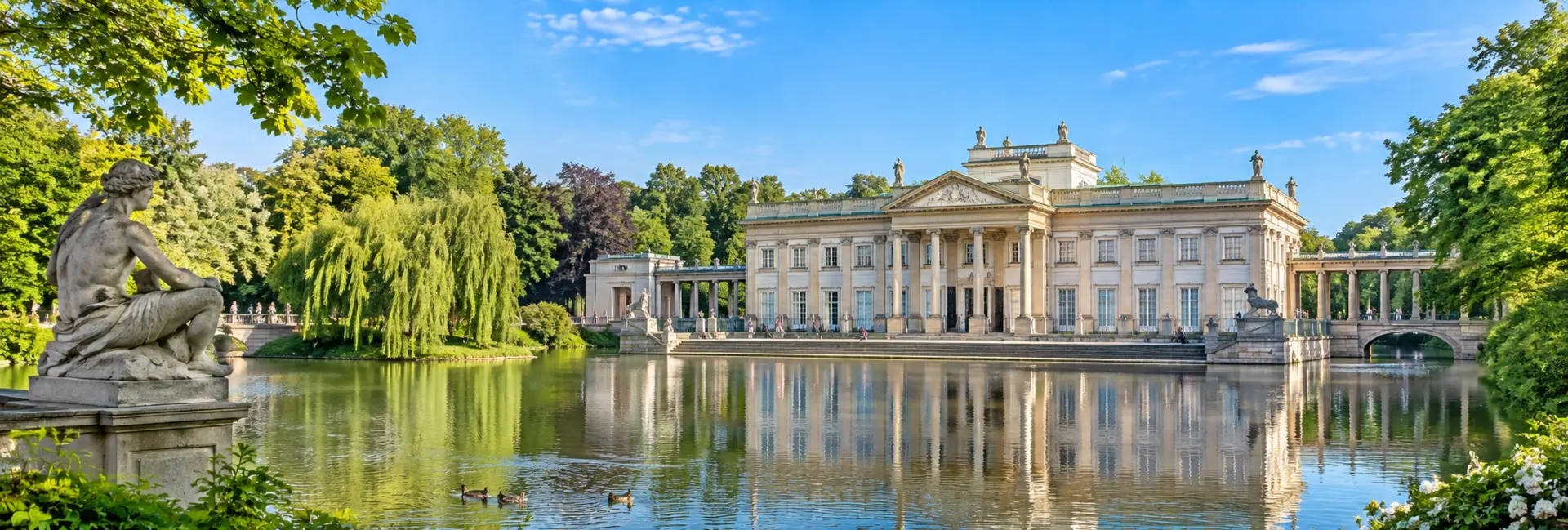
Łazienki Park is Warsaw's largest and most celebrated green space, a former royal retreat spread across 76 hectares in the heart of the city. Its centrepiece, the elegant Palace on the Island, sits reflected in an ornamental lake, surrounded by manicured gardens, wooded paths and a scattering of smaller palaces, pavilions and follies built up over more than two centuries.
Once the private grounds of Poland's last king, the park is now a much-loved public space where locals stroll on weekends, free open-air concerts draw crowds in summer, and peacocks wander freely among the walkways, making it one of Warsaw's most relaxing and popular attractions.
History
From Hunting Ground to Royal Retreat
The land now occupied by the park was originally used as a hunting ground before a small bathhouse pavilion was built here in the 17th century for a wealthy nobleman who owned the surrounding estate. The site's transformation into a grand royal garden began in earnest in 1764, when Poland's last king acquired the property and spent much of the following three decades reshaping it to his taste.
Building the Palace on the Island
Under royal ownership the original bathhouse pavilion was expanded into a refined summer residence set on a small island within an artificial lake, giving both the residence and the wider park their shared name, which translates roughly as "baths." Formal gardens, pavilions and additional buildings were added throughout this period, laid out according to fashionable landscape design ideas of the era.
War and Restoration
Much of the park's built heritage suffered serious damage during the Second World War, particularly during the 1944 Warsaw Uprising, when several structures were burned. Because the underlying architecture and layout had survived well enough to work from, restoration efforts were able to begin relatively quickly after the war, gradually returning the park and its buildings to something close to their historic appearance.
Key Areas & Gardens
The Royal Garden
Laid out during the 18th century in a formal Italianate style, this area forms the historic core of the park immediately surrounding the Palace on the Island and its lake.
The Romantic Garden
Added in the 19th century on the slope behind another of the park's palaces, this more naturalistic area includes a scattering of decorative follies designed to evoke a sense of picturesque ruin and mystery.
The Modernist Garden
Developed in the early 20th century, this section is centred on an Art Nouveau monument to the composer Frédéric Chopin, now one of the park's most photographed landmarks.
The Chinese Garden
A more recent addition inspired by the chinoiserie style once fashionable at the royal court, this small garden includes a decorated pavilion and arbour added in the 2010s.
Flora & Fauna
Łazienki Park's mature trees, ornamental lake and varied garden styles support a noticeably rich range of plant and animal life for a city-centre park. Free-roaming peacocks are among its best-known residents, often seen wandering the main pathways near the Palace on the Island.
The park's lake and wooded areas also attract a variety of waterfowl and songbirds throughout the year, adding to the sense of calm that draws so many Warsaw residents here for weekend walks.
Ways to Experience It
Most visitors explore Łazienki Park on foot, following pathways between the palace, lake and surrounding gardens at a relaxed pace. A combined ticket allows entry into several of the park's historic buildings, including the Palace on the Island itself, for those wanting to see the interiors as well as the grounds.
- Free open-air Chopin piano recitals are held at the composer's monument on summer Sundays, drawing large crowds.
- A small theatre set on an island in the lake occasionally hosts performances, with seating arranged along the lakeshore.
- Combined tickets cover entry to several palaces and pavilions within the grounds, with some sites open only during the warmer months.
Best Time to Visit
Spring and summer bring the park's gardens fully into bloom and coincide with the popular Sunday Chopin concerts, making these the most lively times to visit. Weekday mornings offer a quieter alternative for those wanting a more peaceful walk away from weekend crowds.
Autumn also has its own appeal, with the park's mature trees turning colour across the Romantic Garden in particular, while winter visits offer a quieter, starker view of the palace and lake.
Visitor Tips
- General access to the park grounds is free, though a separate combined ticket is required to enter the Palace on the Island and several other historic buildings.
- Arrive early for the free Sunday Chopin concerts in summer, since seating near the monument fills up quickly.
- The park is large, so comfortable walking shoes are recommended if planning to see most of its gardens in one visit.
- Some buildings within the park are only open seasonally, so it's worth checking opening details in advance.
Nearby Attractions
Łazienki Park sits along Warsaw's historic Royal Route, placing it within reach of several other major city landmarks.
- The Royal Castle and Old Town, a walk or short ride north along the Royal Route.
- Ujazdów Castle, standing at the northern edge of the park grounds.
- The Belweder Palace, a former presidential residence bordering the park.
- Wilanów Palace, further south along the same historic royal route.
FAQs about visiting Łazienki Park
Is Łazienki Park free to visit? +
Yes, general access to the park grounds is free, though a combined ticket is needed to enter the Palace on the Island and several other historic buildings inside.
What is the Palace on the Island? +
It is the park's centrepiece building, a former royal summer residence set on a small island within the park's ornamental lake, and one of Łazienki's most photographed landmarks.
When are the Chopin concerts held at Łazienki Park? +
Free open-air piano recitals are typically held at the Chopin monument on Sunday afternoons during the summer months.
How long does it take to see Łazienki Park? +
A relaxed walk through the main gardens takes around one to two hours, longer if visiting several of the park's palaces and pavilions as well.
Are there peacocks in Łazienki Park? +
Yes, free-roaming peacocks are a well-known feature of the park and are commonly seen wandering near the Palace on the Island and surrounding pathways.
Is Łazienki Park suitable for a family visit? +
Yes, its open lawns, wildlife and relaxed atmosphere make it popular with families, though some buildings and formal gardens ask visitors to keep to marked paths.
Is Łazienki Park connected to Warsaw's Royal Route? +
Yes, it lies along the historic Royal Route linking the Royal Castle in the Old Town with Wilanów Palace further south.