
Table of Contents
Introduction
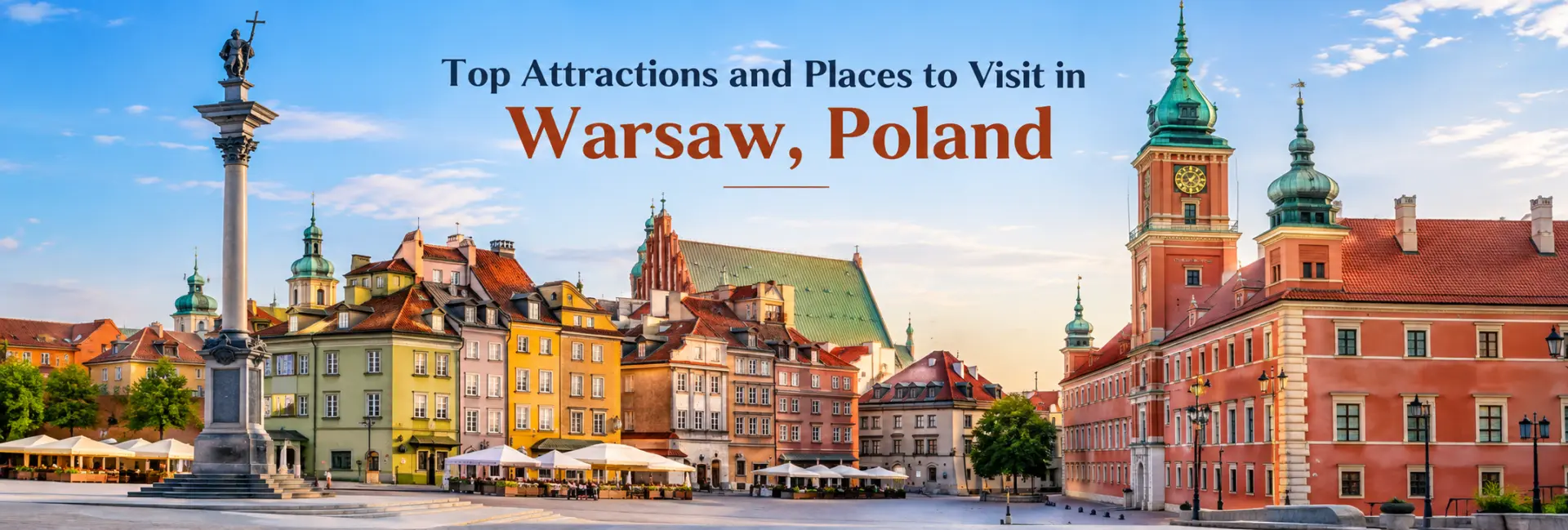
Warsaw is often overshadowed on Poland itineraries by Kraków, but that reputation undersells a city with one of the more remarkable stories in Europe. Roughly 85 percent of Warsaw was destroyed during World War II, and what visitors see in the Old Town today is a painstaking postwar reconstruction, rebuilt largely from paintings, photographs, and architectural drawings. The result earned the Old Town UNESCO World Heritage status, not for age but for the scale and precision of the rebuilding itself.
Beyond that history, Warsaw is a genuinely modern European capital, with glass towers rising around a Soviet-era skyscraper, a growing food and cocktail scene, and neighborhoods like Praga that swapped wartime scars for street art and creative studios. This guide covers Warsaw's essential sights along with practical notes for planning a visit.
Warsaw's Old Town
Warsaw's Old Town (Stare Miasto) sits at the heart of the city and is the natural starting point for most visits, even though almost everything within it was rebuilt after 1945.
Old Town Market Square
The Old Town Market Square is lined with colorful merchant houses and anchored by the Warsaw Mermaid statue, the city's symbol, whose legend tells of a mermaid who chose to protect Warsaw rather than return to the sea. Street performers, outdoor cafes, and horse-drawn carriages keep the square lively for much of the year.
Royal Castle
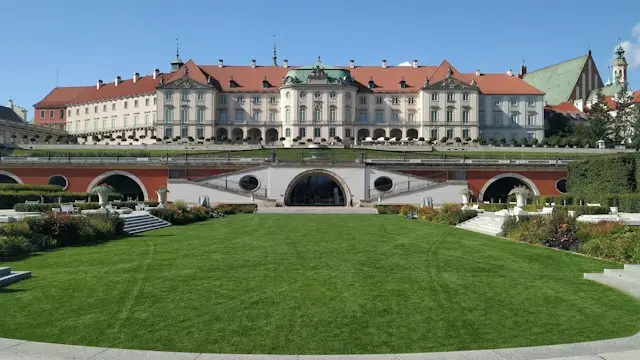
The Royal Castle, at the entrance to the Old Town on Castle Square, was the official residence of Polish monarchs for centuries and, like the rest of the district, was rebuilt after wartime destruction. Inside, the Great Assembly Hall and the Canaletto Room, named for paintings that helped guide the reconstruction, are among the highlights.
The Barbican and City Walls
The Barbican, a semicircular fortification connecting the Old and New Towns, is one of the few structures that survived in part from the original medieval defenses. Walking the remaining stretch of city walls gives a sense of Warsaw's layout before the war.
- Visit early morning or evening to see the Market Square without peak-hour crowds
- Look for the low city wall markers indicating the 1943 Warsaw Ghetto boundary as you move toward New Town
- Church of the Holy Cross, on the edge of the Old Town, holds the heart of composer Frédéric Chopin

World War II History and Museums
Warsaw's 20th-century history is unavoidable, and several of its best museums confront it directly rather than glossing over it.
Warsaw Rising Museum
The Warsaw Rising Museum, opened on the 60th anniversary of the 1944 Warsaw Uprising, uses interactive exhibits, personal accounts, and archival film to document the 63-day resistance against German occupation. Most visitors find it one of the most affecting museums in the city and recommend setting aside at least two hours.
POLIN Museum of the History of Polish Jews
POLIN traces a thousand years of Jewish life in Poland, from medieval settlement through the flourishing prewar community to the Holocaust and postwar period. The museum sits on the site of the former Warsaw Ghetto and is widely regarded as one of the most significant museums of its kind in Europe.
Warsaw Citadel and Katyń Museum
The Warsaw Citadel complex includes the Polish Army Museum and the Katyń Museum, dedicated to the 1940 massacre of Polish military officers by Soviet forces. It's a denser, more specialist stop than the Rising Museum, better suited to visitors with a deeper interest in military history.
Palace of Culture and Science
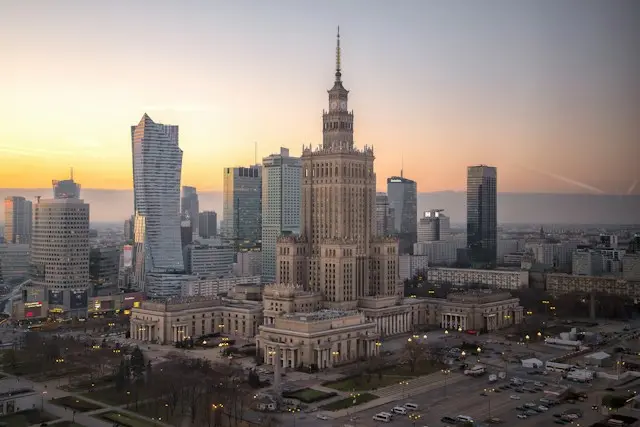
The Palace of Culture and Science, a 1955 gift from the Soviet Union, remains Poland's tallest building and one of Warsaw's most recognizable, if debated, landmarks. Its Stalinist architecture is a deliberate contrast to the rest of the modern skyline that has grown up around it.
An observation deck near the top of the tower offers panoramic views over the city, arguably the best in Warsaw precisely because the Palace itself is left out of the frame. The building also houses theaters, a cinema, and exhibition space, making it worth more than a quick photo stop.

Royal Parks and Palaces
Warsaw's royal history extends well beyond the Old Town, into a pair of palace grounds that show a very different, more pastoral side of the city.
Łazienki Park
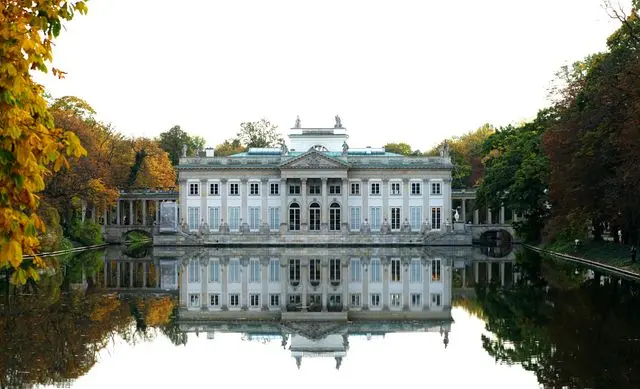
Łazienki Park, Warsaw's largest, was once the summer residence grounds of King Stanisław August Poniatowski and centers on the Palace on the Isle, a neoclassical residence set on an artificial lake. Free open-air Chopin concerts are held at the park's Chopin Monument on summer weekends, drawing large crowds of both locals and visitors.
Wilanów Palace
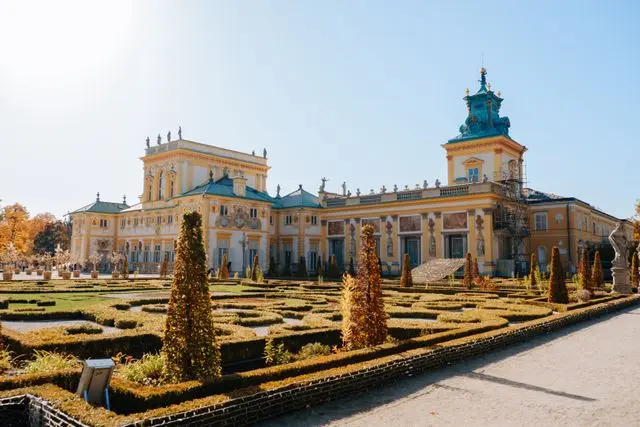
Wilanów Palace, about 10 kilometers south of the city center, is a Baroque royal residence built in the late 17th century for King Jan III Sobieski. Its interiors, art collections, and formal gardens are often compared favorably to Versailles on a smaller scale, and the grounds host seasonal events like an illuminated garden display.
Praga District
Praga, on the eastern bank of the Vistula River, avoided the worst of the wartime destruction that leveled the rest of Warsaw, which means it retains more original prewar buildings, some still bearing bullet scars, than almost anywhere else in the city.
Neon Museum
The Neon Museum, in Praga's Soho Factory district, preserves more than 60 Cold War-era neon signs rescued from Warsaw's shopfronts and street corners. It's a compact but atmospheric stop that captures a specific slice of communist-era design culture.
Street Art and Local Life
Praga's grittier, more lived-in streets have become a magnet for artists and creative businesses over the past two decades, and its courtyards and side streets are dotted with murals. The district feels distinctly different from the polished Old Town, and it's a good area for visitors who want a sense of Warsaw beyond its main tourist sights.

Food and Vodka Culture
Polish food culture in Warsaw ranges from no-frills milk bars, a holdover from the communist era offering cheap, homestyle meals, to an increasingly ambitious fine-dining scene.
What to Eat
Pierogi, filled dumplings served boiled or fried, are the dish most associated with Poland, and Praga is a particularly good neighborhood to try them. Other staples include żurek, a sour rye soup, and bigos, a slow-cooked hunter's stew of cabbage and meat.
Vodka Museum and Culture
The Polish Vodka Museum, housed in a converted distillery, walks visitors through the history and production of Poland's national spirit and ends with a guided tasting. Several bars in the same complex extend the theme into the evening for visitors who want to keep exploring Polish vodka culture after the museum closes.
Where to Stay
Warsaw's city center is compact enough that most neighborhoods within it put major sights within easy reach, but each has a distinct character.
Old Town and New Town
Staying in or near the Old Town puts you inside the rebuilt historic core, within walking distance of the Royal Castle and Market Square, though it can feel quieter at night compared to more central districts. It's the best pick for visitors prioritizing atmosphere and history over nightlife.
City Center (Śródmieście)
Śródmieście, around the Palace of Culture and Science, is Warsaw's commercial heart, with the widest choice of hotels, restaurants, and direct transport connections. It suits travelers who want convenience and don't mind a more modern, business-district feel.
Praga
Praga offers a more local, alternative base with lower prices and a growing number of design hotels and hostels, connected to the center by metro and tram. It's a good choice for longer stays or travelers who prefer a neighborhood pace over a tourist-heavy center.
- Warsaw is generally more affordable than Western European capitals for hotels and dining
- Hotels near Warszawa Centralna (Central Station) suit travelers planning day trips or onward rail journeys
- Public transport (metro, trams, buses) is efficient enough that a central location matters less than in some other capitals
Practical Tips for Visiting
Warsaw is a compact, walkable city for its main sights, with strong public transport connecting anything too far to cover on foot.
- Two full days covers the essential sights, including the Old Town and one or two major museums; three to five days allows time for Wilanów, Praga, and a deeper look at Warsaw's food scene
- Summers are warm and pleasant for exploring the Vistula Boulevards and parks; winters are cold, and daylight hours are short
- Uber and Bolt operate reliably around the clock, useful for early flights or late-night travel between neighborhoods
- Many major museums, including the Warsaw Rising Museum, are closed or on reduced hours on certain days, so check schedules before planning a route
- English is widely spoken in tourist areas and among younger Varsovians, though a few basic Polish phrases are appreciated
Conclusion
Warsaw rewards visitors willing to look past its reputation as a stopover on the way to Kraków. Its Old Town tells a story of reconstruction as much as history, its museums confront the 20th century directly rather than softening it, and its parks, palaces, and neighborhoods like Praga round out a city that's as much about resilience as it is about any single landmark.
A few days is enough to see the highlights, but Warsaw is the kind of city that opens up further the longer you stay, whether that means a slow afternoon in Łazienki Park, an evening exploring Praga's back streets, or simply people-watching from a Market Square cafe.
Frequently Asked Questions
How many days do you need in Warsaw? +
Two full days covers the essential sights, including the Old Town and a major museum, while three to five days allows time for Wilanów Palace, Praga, and a slower pace overall.
Is Warsaw expensive to visit? +
Warsaw is generally more affordable than Western European capitals for hotels, dining, and transport, making it a good value option within Poland's growing tourism scene.
Why does Warsaw's Old Town look so new if it's a UNESCO site? +
Around 85 percent of Warsaw was destroyed in World War II, and the Old Town was meticulously rebuilt afterward using historical paintings and records; its UNESCO status recognizes the scale and accuracy of that reconstruction rather than the age of the buildings themselves.
What is the best time of year to visit Warsaw? +
Late spring through early autumn offers the mildest weather and the best conditions for exploring parks and the Vistula riverside; winters are cold with short daylight hours but quieter and less crowded.
Is Warsaw easy to get around without a car? +
Yes, the city center is compact and walkable, and the metro, trams, and buses connect outer districts like Praga and Wilanów efficiently.
Which museum should I prioritize if I only have time for one? +
The Warsaw Rising Museum is the most commonly recommended first stop for understanding Warsaw's WWII history, though POLIN is an equally strong choice for those interested in the city's Jewish heritage.
Is Warsaw safe for tourists? +
Warsaw is generally considered a safe city for visitors, with the usual precautions around belongings in crowded tourist areas and public transport.
What's a good day trip or half-day addition beyond the main sights? +
Wilanów Palace, about 10 kilometers south of the center, and the Praga district's Neon Museum and street art both make strong half-day additions to a Warsaw itinerary.