Table of Contents
Overview
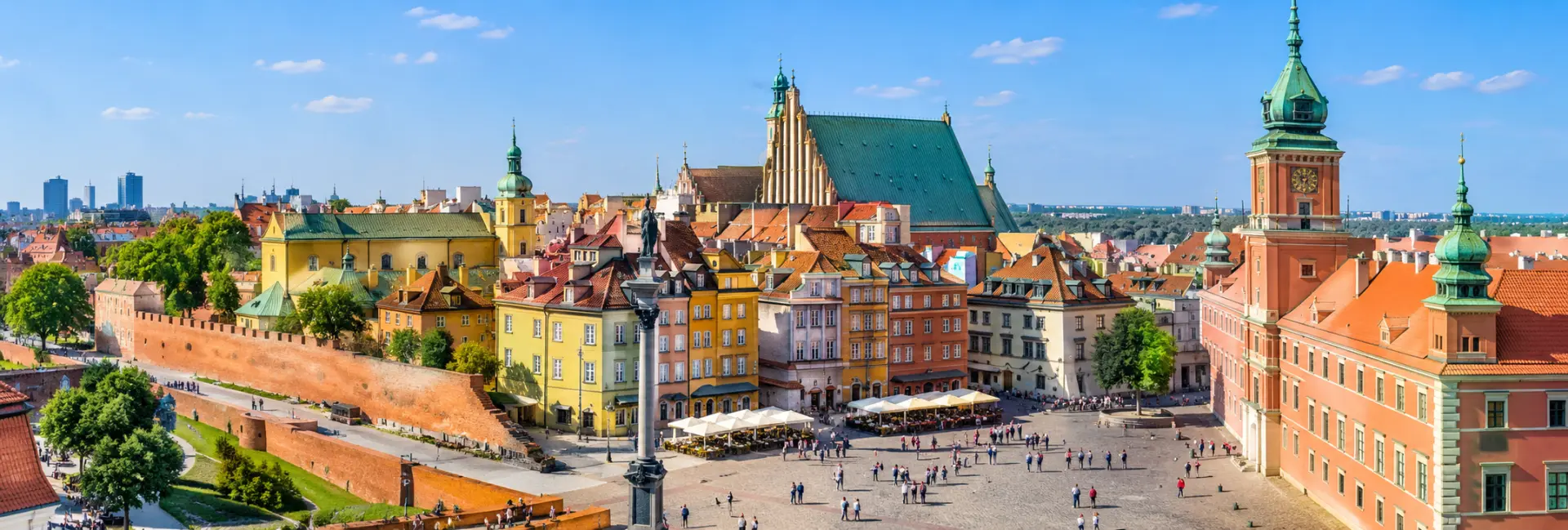
The Royal Castle sits at the entrance to Warsaw's Old Town, marking the point where the city's historic core meets the grand boulevard once used for royal processions. For centuries it served as the working residence of Polish monarchs and, later, the seat of parliament and president, making it one of the most historically significant buildings in the country.
What visitors see today is a careful, large-scale reconstruction, since the castle was almost entirely destroyed during the Second World War. Its painstaking rebuilding, completed using surviving fragments, old drawings and historic paintings of the city, has made it as much a symbol of national resilience as of royal history.
History
From Ducal Stronghold to Royal Residence
The site's history stretches back to the 14th century, when a wooden stronghold belonging to the local ruling dukes stood here overlooking the Vistula river. Its transformation into a grand royal residence began in earnest at the end of the 16th century, after Warsaw was chosen as the new capital of the Polish-Lithuanian Commonwealth, prompting a major building campaign to create a palace fit for the monarchy and parliament.
Centuries of Change
Over the following two centuries the castle was expanded and remodelled repeatedly by successive rulers, gaining new wings, towers and decorative schemes as fashions changed. It also endured repeated damage from invading armies during conflicts in the 17th and 18th centuries, requiring extensive repair on more than one occasion, and it was here that a landmark 18th-century constitution, among the earliest of its kind in Europe, was drafted by the national parliament.
Destruction and Reconstruction
The castle suffered serious damage during the German invasion of Poland in 1939 and was then deliberately demolished by occupying forces in 1944 following the Warsaw Uprising, leaving little more than rubble on the site. Reconstruction did not begin until the 1970s, when a dedicated national effort, funded substantially through public donations both at home and from Poles living abroad, rebuilt the castle using surviving architectural fragments, historic photographs and detailed 18th-century paintings of the city as reference, with the main phase of work completed in 1984.
Architecture & Notable Rooms
Exterior and Layout
The castle's exterior reflects the Mannerist and early Baroque styles favoured during its major building phases, with a tall clock tower rising above the main courtyard and a long river-facing facade overlooking the Vistula. Its layout, arranged around an inner courtyard, reflects centuries of expansion by different monarchs rather than a single unified design.
The Great Apartments and Canaletto Room
Inside, restored state rooms recreate the grandeur of the castle's royal era, including a lavishly decorated throne room and a grand assembly hall used for major state occasions. One of the most visited spaces is a room hung with detailed 18th-century cityscape paintings of Warsaw, valued today both as art and as key historical evidence used during the castle's own reconstruction.
Grounds & Surroundings
Adjoining the main castle building, a smaller palace and a set of riverside arcades form part of the wider historic complex, having survived or been reconstructed alongside the main structure. Castle Square in front of the building serves as a natural gathering point and marks the formal entrance into the surrounding Old Town district.
Cultural Significance
Beyond its royal history, the Royal Castle holds deep symbolic importance in Poland as a monument to national identity and resilience, having been rebuilt largely through voluntary public fundraising rather than state funding alone. Its reconstruction is frequently cited internationally as an exceptional example of restoring a historic monument after near-total destruction.
Today the castle also functions as a major national museum, holding a significant collection of Polish and European art, including donated works connected to the country's royal and cultural heritage.
Ways to Experience It
Most visitors join the self-guided or guided route through the state apartments, following a set path through the most significant historic rooms. Audio guides are commonly available for those wanting more detailed context on individual rooms and artworks along the way.
- A standard visit through the main apartments typically takes between one and two hours.
- Guided tours are available in multiple languages and often provide deeper historical context than a self-guided visit.
- Temporary exhibitions are occasionally held within the castle, sometimes requiring separate tickets.
Best Time to Visit
Weekday mornings tend to be the quietest time to visit, particularly outside the busiest summer travel months when Castle Square and the surrounding Old Town see heavy foot traffic. Visiting earlier in the day can also make it easier to secure a preferred entry time for the guided route through the state apartments.
Visitor Tips
- Tickets are often timed, so booking in advance is worth considering during peak season.
- Photography rules can vary by room, so it is worth checking current guidance on arrival.
- The castle is accessed on foot from Castle Square, with no on-site parking available nearby.
- Comfortable shoes are recommended, since the visit involves a reasonable amount of walking and some stairs.
Nearby Attractions
Standing at the entrance to the Old Town, the Royal Castle is within easy walking distance of several major Warsaw landmarks.
- The Old Town Market Place, a short walk through the historic district.
- The Sigismund's Column, standing directly in front of the castle on Castle Square.
- St. John's Archcathedral, a short walk into the Old Town.
- Krakowskie Przedmieście, the grand boulevard leading south from Castle Square.
FAQs about visiting the Royal Castle, Warsaw
Is the Royal Castle in Warsaw an original building? +
No, the castle was almost entirely destroyed during the Second World War and was rebuilt between the 1970s and 1984 using surviving fragments, historic photographs and detailed period paintings as reference.
How long does it take to visit the Royal Castle? +
Most visitors spend one to two hours exploring the main state apartments, longer if joining a guided tour or visiting a temporary exhibition.
What is the Canaletto Room? +
It is a room within the castle hung with detailed 18th-century cityscape paintings of Warsaw, which proved valuable both as art and as historical reference during the castle's post-war reconstruction.
Is the Royal Castle connected to Warsaw's Old Town? +
Yes, it sits directly on Castle Square at the formal entrance to the Old Town district, making it easy to combine with a wider walk through the area.
Why was the Royal Castle rebuilt so long after the war? +
Reconstruction did not begin until the 1970s due to the scale of the project and the need for extensive historical research and fundraising, much of which came from public donations both in Poland and abroad.
Is the Royal Castle free to visit? +
No, entry to the castle's museum and state apartments requires a paid ticket, though walking through the surrounding Castle Square is free.
What can I see inside the Royal Castle? +
Highlights include restored royal apartments, a grand assembly hall, a decorated throne room, and notable artworks including paintings connected to the Polish royal court.