Table of Contents
Overview
The Warsaw Uprising Museum stands in the Wola district as one of the city's most visited and emotionally powerful cultural institutions, dedicated to the 1944 uprising in which Polish resistance fighters attempted to liberate the capital from German occupation. Housed in a converted former power station, the museum tells the story of those 63 days of fighting through an immersive, multi-sensory exhibition.
Rather than presenting a distant, purely academic account, the museum aims to place visitors inside the atmosphere of wartime Warsaw, combining thousands of photographs, personal artefacts, recorded testimonies and reconstructed spaces to convey both the courage and the devastating cost of the uprising.
History of the Museum
A Long-Delayed Tribute
Efforts to properly commemorate the Warsaw Uprising date back decades, but for much of the postwar communist period, official accounts of the event were suppressed or distorted, and no dedicated museum was permitted. It was only after the political changes of 1989 that plans for a genuine, independent museum to the uprising could move forward.
Opening on the 60th Anniversary
The museum opened to the public on 31 July 2004, deliberately timed to coincide with the 60th anniversary of the uprising's outbreak, and was attended by surviving veterans of the Home Army resistance movement. Its opening was widely seen as a long-overdue act of recognition for those who fought and died during the uprising.
Growth and Recognition
In the years since opening, the museum has expanded its collection to include tens of thousands of artefacts, documents and recorded personal accounts, and has welcomed millions of visitors from Poland and abroad, becoming one of the country's most significant sites of historical memory.
The Building
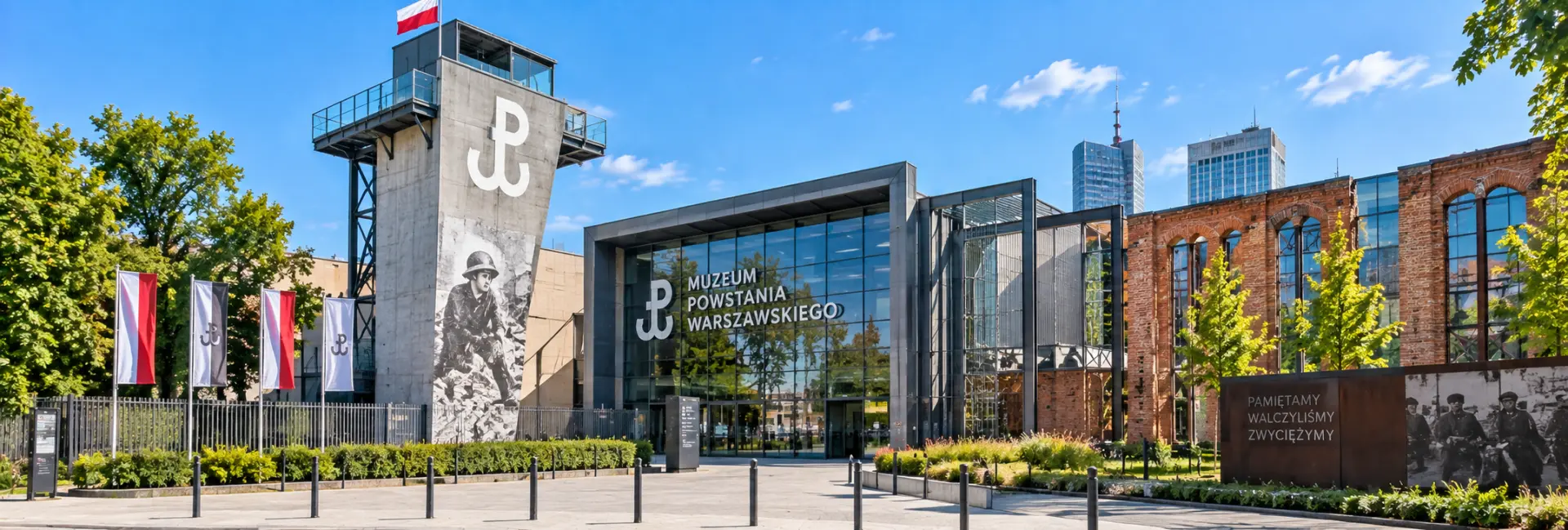
The museum occupies a former municipal tram power station, a solid industrial brick building that once supplied electricity to Warsaw's tram network. Rather than disguising this industrial past, the museum's design deliberately exposes original brickwork and structural elements, giving the interior a raw, atmospheric quality suited to its subject matter.
A modern reinforced concrete structure was inserted within the historic shell to create flexible, multi-level exhibition spaces, while an adjoining outdoor area known as Freedom Park includes landscaped greenery shaped to evoke the appearance of ruins, along with vehicles connected to the uprising on public display.
Exhibits & Collections
The museum's core exhibition unfolds across multiple floors, presenting a day-by-day account of the uprising alongside broader context on the German occupation, the underground resistance movement, and the political situation both within Poland and internationally. Visitors move through reconstructed spaces designed to evoke wartime Warsaw, including sections recreating the city's ruined streets and underground sewer passages used by fighters.
A central steel monument rises through several floors of the building, accompanied by the sound of a beating heart, intended as a symbolic representation of the city's endurance during the uprising. Elsewhere, extensive audiovisual displays combine period photographs and film footage with recorded testimonies from surviving participants.
Must-See Highlights
- The reconstructed sewer passage, evoking the underground routes used by resistance fighters to move through the city.
- A short 3D aerial film recreating the appearance of ruined wartime Warsaw.
- The museum's central symbolic monument, with its distinctive sound of a beating heart running through several floors.
- An observation tower offering panoramic views over present-day Warsaw.
- Freedom Park, the museum's outdoor area featuring uprising-era vehicles and landscaped ruins.
Ways to Experience It
Most visitors follow the museum's chronological, multi-floor exhibition route at their own pace, with audio guides available to add context to individual displays and artefacts. Given the depth and emotional weight of the material, many visitors choose to spend a significant part of a day exploring the museum thoroughly.
- Audio guides are available in multiple languages to support a self-guided visit.
- Guided tours can offer deeper historical context, particularly for visitors less familiar with the uprising's background.
- The outdoor Freedom Park area is worth setting aside separate time to explore.
Best Time to Visit
Weekday visits, particularly earlier in the day, tend to be quieter than weekends, when the museum can draw large numbers of both domestic and international visitors. Given the amount of material on display, arriving with ample time before closing helps ensure a full, unhurried visit.
Visitor Tips
- The exhibition covers difficult and often distressing historical material, so it may not suit very young children.
- Allow at least two to three hours to explore the museum thoroughly, including the outdoor Freedom Park area.
- Audio guides are recommended for visitors without prior detailed knowledge of the uprising's history.
- The museum is well served by public transport, with several bus and tram stops within easy walking distance.
Nearby Attractions
Located in the Wola district, the museum is within reach of several other notable Warsaw sites connected to the city's wartime history.
- The Palace of Culture and Science, a short journey to the east.
- Warsaw's Old Town and Royal Castle, a short distance further into the city centre.
- Other memorial sites within Wola connected to the events of 1944, including local uprising monuments.
FAQs about visiting the Warsaw Uprising Museum
What was the Warsaw Uprising? +
The Warsaw Uprising was a 1944 rebellion by the Polish resistance against German occupying forces, lasting 63 days before being suppressed, and the museum documents this event in detail.
When did the Warsaw Uprising Museum open? +
It opened on 31 July 2004, timed to mark the 60th anniversary of the uprising's outbreak, in the presence of surviving resistance veterans.
How long does it take to visit the Warsaw Uprising Museum? +
Most visitors spend two to three hours exploring the exhibition, longer if also visiting the outdoor Freedom Park area.
Is the Warsaw Uprising Museum suitable for children? +
The subject matter is often intense and covers wartime violence and loss, so it generally suits older children and teenagers better than very young visitors.
Where is the Warsaw Uprising Museum located? +
It stands in the Wola district of Warsaw, housed in a converted former tram power station on Grzybowska Street.
What is Freedom Park at the Warsaw Uprising Museum? +
It is the museum's outdoor area, featuring landscaped greenery shaped to resemble ruins and a display of vehicles connected to the uprising.
Are guided tours available at the Warsaw Uprising Museum? +
Yes, guided tours and multilingual audio guides are available to help visitors understand the detailed historical context behind the exhibits.