
Table of Contents
Overview
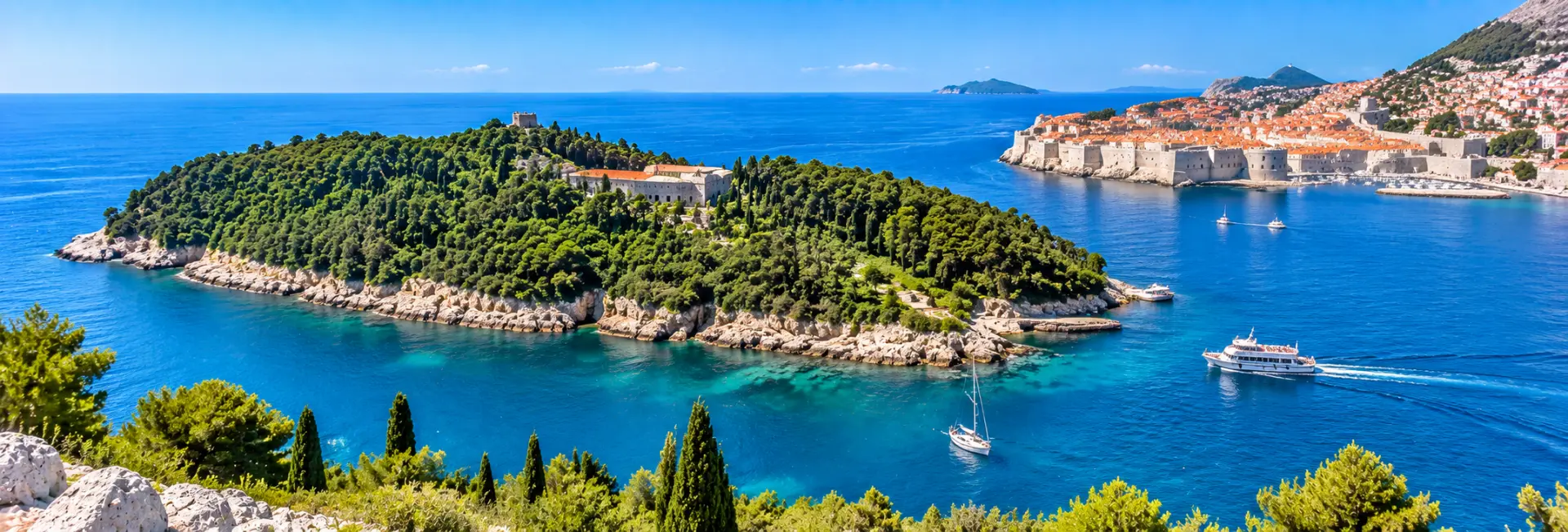
Lokrum is a small, forested island lying about 600 meters off the coast of Dubrovnik, close enough to see clearly from the Old Town walls and from the summit of Mount Srđ. The whole island is a protected nature reserve, with no permanent residents, no cars and no hotels, so it feels like a different world from the busy streets across the water.
A boat from the Old Port takes around 10 to 15 minutes to reach Portoč Bay, the island's landing point. From there, shaded paths lead to the ruins of a Benedictine monastery, a 19th-century Habsburg residence, a botanical garden, a small salt lake nicknamed the Dead Sea and a star-shaped fort on the highest hill. Peacocks and rabbits wander freely, and rocky coves around the shore offer clear water for swimming.
Lokrum works as a half-day escape or a full day of walking, swimming and picnicking. It is also a chance to see how the area looked before modern development, which is why many visitors count it among the most rewarding trips from Dubrovnik.
History
Benedictine Beginnings
The first written reference to Lokrum dates to 1023, in a document connected with the founding of a Benedictine abbey and monastery. The monks lived on the island for centuries, farming the land and introducing exotic plants, which started a gardening tradition that continues in a different form today.
The Richard the Lionheart Legend
A local legend says that King Richard I of England, returning from the Third Crusade in 1192, was caught in a storm near Dubrovnik and came ashore on Lokrum. According to the story, he promised to build a church where he landed, but the citizens persuaded him to fund a cathedral in the city instead. The tale is hard to verify, yet it remains part of Dubrovnik's heritage.
Napoleonic Era
When French forces took control of the region in the early 1800s, Benedictine life on the island came to an end. The French built Fort Royal on the island's highest point in 1806, a star-shaped defensive position that gave a commanding view of Dubrovnik and the sea approaches.
Archduke Maximilian
In the mid-19th century the island was acquired by Archduke Maximilian of Habsburg, who later became Emperor of Mexico. He converted part of the monastery into a summer residence, laid out garden paths and brought in exotic trees and plants. He also introduced the peacocks that still roam the reserve, which were brought from the Canary Islands.
The Reserve Takes Shape
In the 20th century Lokrum was set aside for conservation. It was declared a managed nature reserve in the 1960s, and the botanical garden was founded in 1959 to study how exotic plants adapt to the local climate. In 1976 the island gained further protection as a Special Forest Vegetation Reserve.
Recognition / Status
Lokrum covers about 72 hectares and is protected as a nature reserve in its entirety. It is managed by a public institution, which also organizes the official boat service from Dubrovnik.
The island is also included in the UNESCO World Heritage listing for the Old City of Dubrovnik, which was extended in 1994. Its monastery, fort and other historic buildings are recognized as cultural monuments, which is why visitors are asked to stay on marked paths and treat the site with care.
- Protected nature reserve covering the entire island
- Special Forest Vegetation Reserve since 1976
- Part of the UNESCO-listed historical complex of Dubrovnik
- Every historic building on the island is treated as a cultural monument
Flora & Fauna
Mediterranean Forest
Forest covers most of the island, with holm oak, Aleppo pine, cypress and typical Mediterranean scrub forming dense shade over the trails. This cover is part of what makes Lokrum so much cooler than the Old Town on hot days.
The Botanical Garden
The botanical garden is a continuation of a gardening tradition that stretches from the monks to Maximilian. It includes palms, agaves, cacti and other exotic species that have adapted to the island's mild climate. The garden can be affected by cold winters, so its appearance changes from year to year.
Peacocks and Rabbits
The island's best-known residents are its peacocks, descendants of birds brought over in the 19th century. Rabbits also roam the paths and lawns. Visitors should keep their distance and avoid feeding the animals, as human food harms them and the reserve rules prohibit it.
Underwater Life
The clear water around the island supports seagrass meadows, sea urchins, starfish and a variety of fish. Snorkeling along the rocky shoreline gives a close look at this marine life, especially in the calmer coves.
Key Areas & Sights
Portoč Bay
Portoč is where the boat arrives and where most visitors begin. A snack bar near the landing offers light food and drinks, and the rocky shore beside it has easy entry points for a first swim.
The Benedictine Monastery and Maximilian's Residence
A short walk from the landing, the monastery complex combines medieval ruins with the later Habsburg residence. Cloisters, arches and garden spaces blend with the surrounding greenery, and information panels explain the layers of history. The area around the monastery also has a cafe and restaurant during the season.
The Dead Sea
On the south-west side of the island lies Mrtvo More, a small salt lake linked to the open sea by underground channels. It is calm and shallow in places, and rocky ledges around it make it a favorite spot for children and less confident swimmers.
Fort Royal
The star-shaped fort on the island's summit, about 96 meters above the sea, is a rewarding climb. From its walls you can see the Old Town, Cavtat to the south-east and the nearby islands. The route up, known as the Path of Paradise, passes through an old olive grove planted by the Benedictines.
Other Historic Features
Smaller landmarks include the old quarantine building, the forest ranger's house and a well associated with Maximilian's wife, Charlotte. They are scattered along the main paths and are worth a quick look as you walk.
Legends & Cultural Significance
The Curse of Lokrum
Local tradition holds that the Benedictine monks, forced to leave the island, placed a curse on anyone who tried to own or profit from it. People point to the troubled fortunes of later owners, including the Habsburgs, as evidence. The story is also sometimes offered as a playful explanation for why nobody is allowed to stay on the island overnight.
A Habsburg Retreat
Maximilian's affection for Lokrum shaped its character, and his gardens, paths and animals remain central to the experience. His story also connects this quiet corner of the Adriatic to the wider history of the 19th-century European empires.
On Screen
The island appeared in the second season of Game of Thrones as the city of Qarth, with scenes filmed in the botanical garden and among the monastery ruins. Fans of the show often add Lokrum to a trip that also includes the walls and gates of the Old Town.
Ways to Experience It
Walking and Hiking
A network of easy paths crosses the island, linking the landing area, the monastery, the Dead Sea and Fort Royal. Most routes are short and well shaded, and a full loop that includes the fort takes a couple of hours with stops.
Swimming and Snorkeling
There are no sandy beaches here. Visitors swim from smooth rock platforms and small coves, so water shoes are a smart choice. The Dead Sea offers a gentler alternative, while the open coast has deeper, clearer water.
Picnics and Cafes
You can bring your own food and drinks and settle in a shaded spot, or use the cafes and restaurants near the landing and the monastery. Because prices on the island can be higher than in town, many visitors pack water and snacks.
Kayak and Boat Tours
Sea kayak tours often circle the island, offering views of the cliffs and coves that are hard to reach on foot. Other private boats and taxi boats also run in season, though those arriving outside the official ferry may need to pay reserve admission separately.
Best Time to Visit
Season
The official boat service runs during the main tourist season, roughly from spring to late autumn, with the most frequent departures in summer. Late spring and early autumn give a pleasant balance of warm sea, comfortable walking weather and thinner crowds. Midsummer is ideal for swimming but can be hot and busy.
Time of Day
Morning departures give you cooler temperatures for climbing to Fort Royal and quieter paths. Afternoons are better for swimming and relaxing, while the last boats leave in the early evening, so plan your return in advance.
Visitor Tips
- Check the current ferry timetable and ticket details on the official Lokrum reserve website or at the ticket point in the Old Port, since schedules change by month and weather.
- The ferry ticket normally includes reserve entry, but arrivals by other transport pay admission on the island.
- Overnight stays are prohibited, so you must catch the last official boat back to Dubrovnik.
- Stay on marked paths, take rubbish with you and do not feed the animals.
- Smoking, open fires and drones are not allowed, and pets are generally not permitted in the reserve.
- Bring water, sunscreen, a hat and sturdy shoes, plus water shoes for the rocky shoreline.
- The boat does not run in bad weather, so keep a backup plan for stormy days.
- Allow at least three to four hours if you want to see the monastery, climb to the fort and swim.
Nearby Attractions
Lokrum is easy to combine with sights on the mainland, since the boat leaves from the heart of the Old Town.
- Old Port: The departure point for the ferry, with the harbor wall and city fortifications overhead.
- Ploče Gate and Revelin Fortress: The eastern entrance to the Old Town, a short walk from the port.
- City Walls: The famous circuit offers a view over Lokrum from above.
- Mount Srđ and the cable car: A viewpoint from which the island appears in the middle of the Adriatic.
- Banje Beach: The city beach near the Old Town, facing Lokrum.
- Cavtat: A seaside town to the south-east, visible from Fort Royal.
FAQs about visiting Lokrum Island
What is Lokrum Island and why is it famous? +
Lokrum is a small nature reserve off Dubrovnik, known for its Benedictine monastery ruins, botanical garden, peacocks, the Dead Sea lake and Fort Royal. It is also a filming location for Game of Thrones and the subject of local legends about a curse.
How do I get to Lokrum from Dubrovnik? +
Boats run from the Old Port to Portoč Bay in about 10 to 15 minutes during the season. Tickets are sold at the Lokrum reserve ticket point near the harbor, and the crossing is the only way to reach the island.
Does the ferry run all year? +
No, the official boat operates mainly from spring to late autumn and does not sail in bad weather. Check the timetable at the Old Port or on the official website for the day you plan to go.
How much time do I need on Lokrum? +
A minimum of three to four hours lets you see the monastery, walk to Fort Royal and have a swim. Many visitors spend most of the day, especially in summer.
Can I swim on Lokrum? +
Yes, swimming is one of the main reasons people visit. The shoreline is rocky rather than sandy, so water shoes help, and the Dead Sea lake is a calmer option for children and weaker swimmers.
Can I stay overnight on Lokrum? +
No, overnight stays are forbidden because the island is a protected nature reserve. All visitors must return on the last official boat of the day.
Are dogs and other pets allowed? +
Pets are generally not permitted in the reserve, and smoking and fires are also banned. Check the current rules before you travel if you plan to bring an animal.
Is there food and drink on the island? +
Yes, there is a snack bar near the landing and a cafe and restaurant near the monastery during the season. Many visitors bring their own water and picnic items, since options are limited and prices can be higher than in town.
