
Table of Contents
Overview
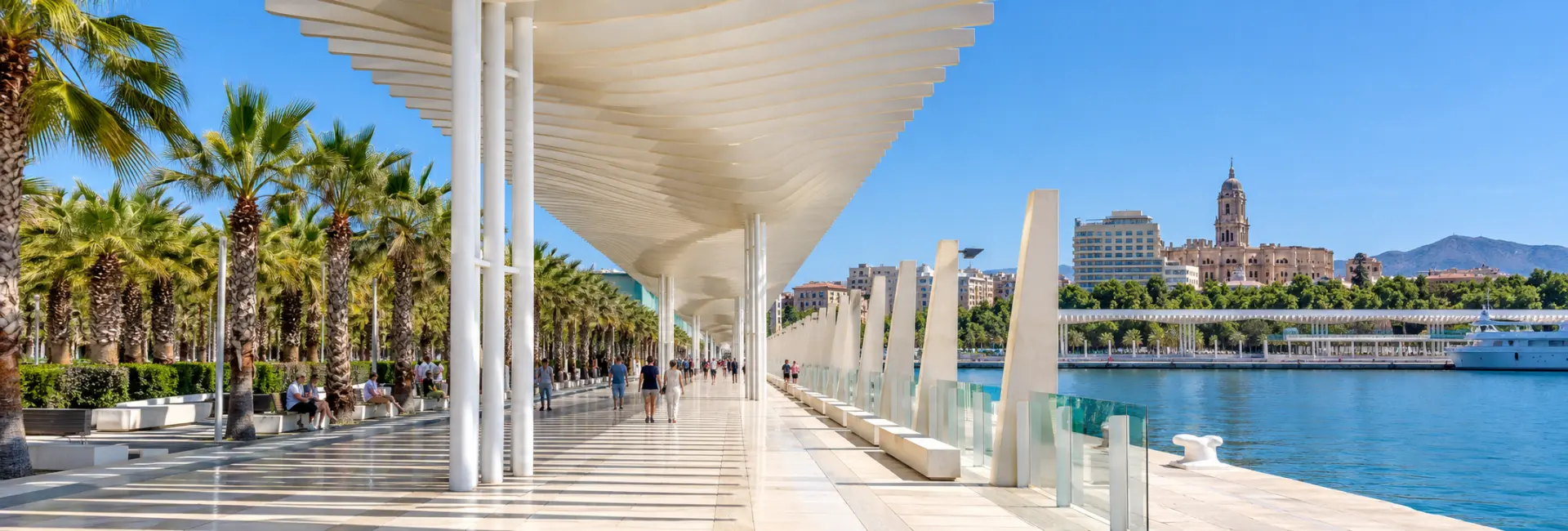
Palmeral de las Sorpresas is a landscaped public promenade along Muelle 2 in Málaga’s port. Palms, a long white pergola and the open harbour edge give it a distinctive appearance, while its position makes it a natural link between the central city and Muelle Uno.
The attraction is best understood as designed public space. There is no single object that completes the visit; the experience comes from walking through the arrangement of shade, planting, views and routes. It can be enjoyed briefly, but slowing down reveals more of the design.
For visitors who have spent time in the old town, the promenade offers a marked change of atmosphere. Enclosed streets give way to longer views, and the water becomes an immediate part of the city experience. The connection is practical as well as scenic.
Allow around thirty to sixty minutes for a relaxed walk and pauses, extending the outing with a museum or meal nearby. The promenade itself does not require a conventional sightseeing ticket.
Reconnecting the Port and the City
The Palmeral opened to the public in 2011 as part of the integration of Málaga’s port with the city. Its development changed how people could use an area close to the centre but historically shaped by port operations. Public leisure became more directly connected with the waterfront.
The Port Authority attributes the design to Jerónimo Junquera and Liliana Obal. The project combines landscape and architecture rather than treating planting as decoration added after the main works. The palms, pergola and routes form a coordinated setting for movement and stopping.
This history is useful because the promenade can otherwise appear to be simply an attractive path beside water. Its broader significance lies in making the port edge part of ordinary city life. A place once understood mainly through maritime activity became a shared public destination.
The working port has not disappeared. Public and operational areas still need to be distinguished, and security boundaries remain part of the setting. The design allows visual contact with harbour activity without implying that every quay or vessel area is open to visitors.
The Pergola and the Rhythm of the Walk
The long pergola is the promenade’s most recognisable architectural element. Its repeated white forms create a rhythm along the route, changing appearance as you move beneath or beside them. A photograph from one end gives a different impression from a side view across the planting.
Pay attention to the relationship between the structure and sunlight. The design can produce changing patterns of light and shade, making the walk feel different according to the time and conditions. That effect is part of the experience, although the pergola should not be assumed to provide complete shelter from sun or rain.
A useful way to explore is to walk one direction near the structure and return along a different permitted line. Small changes in viewpoint reveal how the architecture frames the harbour and how the planting interrupts the long perspective. You do not need to cover a large distance to notice these differences.
Keep the route clear when photographing repeated lines or symmetrical views. A carefully composed image is easier to make when you step aside and wait, rather than asking everyone else to stop using a public promenade.
Palms, Planting and the Harbour Setting
The palms give the Palmeral its name and establish a vertical counterpart to the long horizontal quay. Their repeated trunks help organise the space without creating the dense enclosure of a woodland garden. The resulting landscape remains visually connected to the water and surrounding city.
Other planting adds variety at a lower level, but the main impression is one of openness. Compare that with Málaga Park across the road, where mature vegetation creates a more enclosed atmosphere. The two spaces demonstrate different ways of making green public environments in the same central area.
Look at how planting and circulation are separated. A landscaped promenade is not an invitation to walk through every planted bed, and protecting roots and soil helps keep the design viable under heavy public use. Stay on the intended routes even when taking a closer look.
The harbour provides an ever-changing background through light, reflections and vessels. Those changes are part of the pleasure of returning at another time, but specific boats or activities cannot be promised. Enjoy what is present without treating working maritime activity as a scheduled visitor performance.
Public Spaces, Cultural Uses and Alborania
The development includes buildings and uses that support more than a simple walk. The Port Authority identifies cultural and educational activity in the area, including Alborania, which focuses on the marine environment. Any indoor visit requires its own check of current opening and admission arrangements.
This relationship between promenade and learning is useful for families or visitors interested in the sea beyond the view. A harbour walk can introduce questions about marine life, coastal environments and the human use of the waterfront. A relevant cultural venue may provide a more detailed continuation.
Do not assume that every pavilion is a public exhibition building. Some port-related functions serve passengers or operations, and access depends on purpose. Follow signs rather than entering simply because a building lies within the wider landscaped setting.
The public space itself remains a valid destination without an indoor addition. A pause on the promenade, a slow walk and time looking across the basin can be enough, especially after a morning of concentrated sightseeing. Its value includes giving visitors room to stop.
The placement of the buildings also matters to the overall design. The Port Authority describes an intention to retain visual permeability, allowing people to see through the public space rather than meeting a continuous built barrier. Notice the gaps between structures and how they keep the harbour present during the walk.
This makes a useful comparison with an enclosed shopping frontage or a walled historic monument. At the Palmeral, the experience depends on maintaining connections across the space as well as along it. A route can therefore be enjoyed from several positions without losing its relationship with the water. Looking for those cross-views gives architecture-minded visitors a specific feature to examine and helps explain why the promenade feels integrated with its surroundings rather than separated into an isolated garden.
Photography, Families and a Relaxed Route
The Palmeral is particularly suited to photographs that combine structure and movement. Repeated pergola elements can lead the eye through an image, while palms and glimpses of water provide contrast. Look for a clear composition rather than trying to include every feature at once.
Families can make the walk engaging through simple observation: comparing shadows, counting a short sequence of columns or identifying how a boat differs from another. Keep children close near the harbour boundary and avoid encouraging play that interrupts the main walking route.
A short route can begin near Plaza de la Marina and continue towards the Centre Pompidou area. You can then choose whether to turn back, continue along Muelle Uno or move inland. This flexibility makes the Palmeral easy to fit around weather and energy levels.
Visitors who prefer a quieter experience should be prepared to adjust their pace or timing if groups arrive. The area serves residents, tourists and port users, so its atmosphere is not fixed. A public promenade is most enjoyable when that shared use is accepted as part of the place.
Comfort, Accessibility and Practical Advice
The broad promenade can be a convenient option for a less strenuous central walk, but assess the complete approach from your accommodation or transport stop. Road crossings and onward routes are separate from the landscaped quay itself. Use marked pedestrian access points.
Sun and wind can affect comfort beside the water. Bring drinking water in warm conditions and do not rely on the pergola as full protection from the weather. If conditions become uncomfortable, nearby indoor attractions or the more planted environment inland may provide alternatives.
- Keep clear of operational port boundaries.
- Use the public paths rather than planted areas.
- Check cultural-venue hours separately from promenade access.
- Allow space for wheelchairs, pushchairs and passing pedestrians.
- Keep personal belongings attended during rests and photographs.
Visitors with specific mobility requirements should verify surfaces, toilets and any intended venue access before setting out. The absence of a steep hill does not answer every accessibility question. A short route with known facilities may be preferable to a longer unplanned waterfront circuit.
Nearby Attractions and a Varied Waterfront Day
Muelle Uno continues the waterfront experience with a stronger emphasis on shops and dining. The Centre Pompidou adds a substantial modern-art visit at the meeting point of the harbour routes. These are complementary attractions, each with its own purpose and practical arrangements.
Málaga Park offers an easy change from open quay to denser planting. It is especially useful if you want greenery to remain part of the day but prefer a different degree of enclosure. Crossing between the two also shows how closely the port and central civic landscape are connected.
The cathedral and old-town streets can form the inland part of a wider walk, while La Malagueta provides an onward coastal option beyond the port. Choose according to the time available rather than treating the promenade as an obligation to complete the entire waterfront.
A balanced plan might combine one museum, the Palmeral and a meal. This leaves room to enjoy the design and setting without rushing, and it makes the promenade a meaningful part of the day rather than merely the shortest route between two other attractions.
FAQs about visiting Palmeral de las Sorpresas
Is Palmeral de las Sorpresas the same as Muelle Uno? +
No. The Palmeral is the landscaped public area on Muelle 2; Muelle Uno is the adjoining commercial waterfront.
What is the white structure? +
It is the long pergola that forms a central part of the promenade’s design.
Is there an entry charge? +
The public promenade is normally free to use; individual cultural venues and services have separate arrangements.
How long should I spend here? +
Around thirty to sixty minutes is suitable for a relaxed walk, with extra time for nearby attractions.
Can I enter the port’s operational areas? +
No. Remain within public routes and respect security boundaries.
What can I combine it with? +
Muelle Uno, the Centre Pompidou, Málaga Park and the old town are natural nearby options.
