Table of Contents
Overview
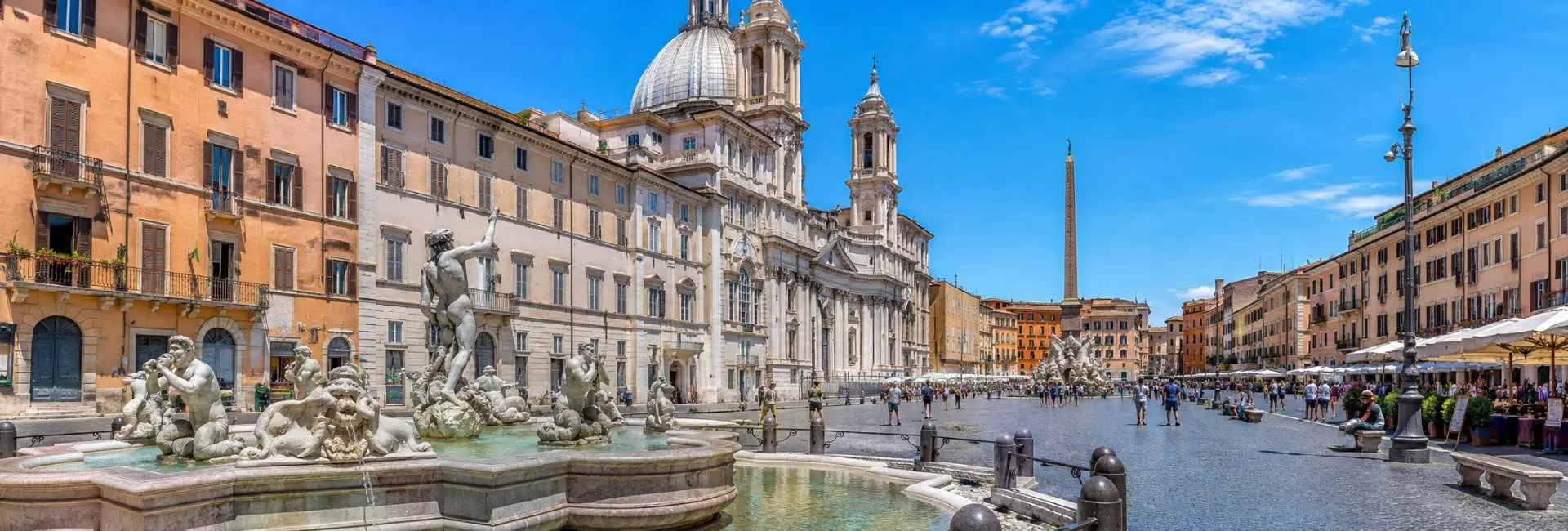
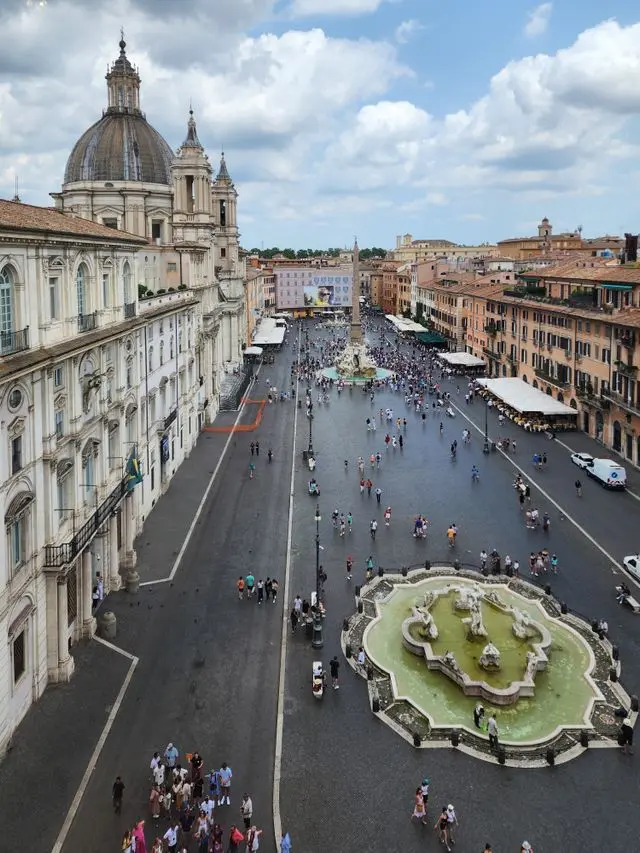
Piazza Navona is Rome's grandest Baroque square, a long oval stage set in the heart of the historic center where fountains, churches, and street life have mixed for centuries. Its elegant curved shape traces the outline of an ancient Roman stadium buried beneath the modern paving, making the piazza both an open-air museum and a living neighborhood square at once.
At its center stands Gian Lorenzo Bernini's Fountain of the Four Rivers, one of the most celebrated works of Baroque sculpture in the world, flanked by two further fountains and the dramatic facade of the church of Sant'Agnese in Agone. Cafes, street artists, and musicians keep the square animated from morning until late into the night.
History
An Ancient Stadium
The piazza's distinctive elongated oval shape comes from its origins as the Stadium of Domitian, built around 86 AD to host athletic contests, foot races, and Greek-style games for as many as 30,000 spectators. The stadium's outline has survived almost unchanged for nearly two thousand years, quietly shaping the streets and buildings that grew up around and eventually over it.
From Ruin to Public Square
As the stadium fell into disuse in late antiquity, the area was gradually built over, and by the late 15th century the space had been repaved and opened as a public square, hosting markets, festivals, and even a mock naval battle staged by flooding the piazza in summer.
The Baroque Transformation
The square's modern character took shape in the 17th century under Pope Innocent X, whose family, the Pamphilj, held their palace on the piazza's western side. Determined to turn a rough, market-worn square into a monument to papal and family prestige, Innocent X commissioned a wave of new building and sculpture, drawing on the two great rival architects of the age, Gian Lorenzo Bernini and Francesco Borromini, to give the piazza the Baroque splendor still visible today.
The Three Fountains
Fontana dei Quattro Fiumi
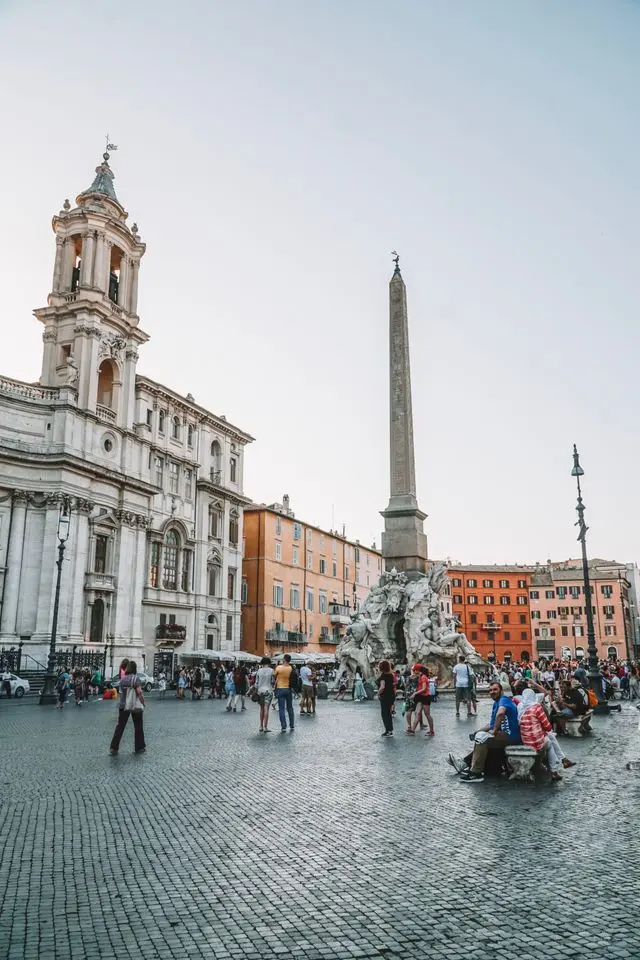
The centerpiece of the piazza is Bernini's Fountain of the Four Rivers, unveiled in 1651 after a construction process financed partly through an unpopular tax on bread. Four colossal marble figures, representing the Nile, the Ganges, the Danube, and the Río de la Plata, recline around a rocky base beneath a genuine ancient Egyptian obelisk, together symbolizing the four continents then known to Europeans and the reach of papal authority across them.
- The Nile's head is veiled, since its source was still unknown to Europeans at the time
- The Ganges holds an oar to signal the river's navigability
- The Danube wears a crown of flowers beside a rearing horse
- The Río de la Plata sits near scattered coins, evoking the riches of the New World
Fontana del Moro and Fontana di Nettuno
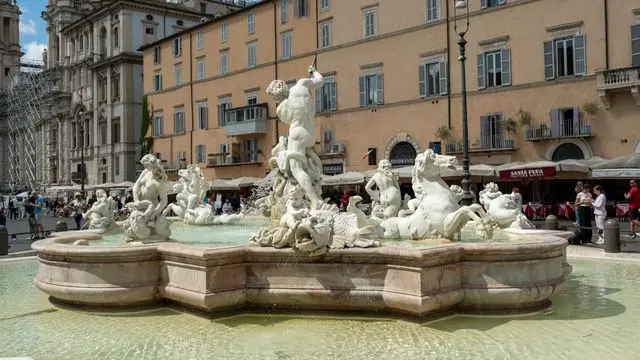
At the piazza's southern end stands the Fontana del Moro, its central Moor figure wrestling a dolphin, originally designed with input from Bernini and completed by other sculptors. At the northern end, the Fontana di Nettuno depicts Neptune locked in combat with an octopus and sea creatures; it was left undecorated for over two centuries before matching sculptures were added in the 19th century to balance the composition of the square.
Sant'Agnese in Agone and Palazzo Pamphilj
Facing the Fountain of the Four Rivers is the church of Sant'Agnese in Agone, its concave Baroque facade designed largely by Francesco Borromini, Bernini's great professional rival. The church marks the traditional site where Saint Agnes was martyred, and its twin bell towers and dome give the piazza its recognizable skyline.
Next to the church stands the Palazzo Pamphilj, built as the family residence of Pope Innocent X and still one of the square's grandest buildings. The palace today houses the Brazilian Embassy, and while it is not generally open to casual visitors, its long facade remains a key part of the piazza's Baroque ensemble.
Beneath the Piazza: The Stadium of Domitian
Beneath the paving stones of the northern end of Piazza Navona lie the excavated remains of the Stadium of Domitian, the ancient arena that gave the square its shape. A dedicated underground archaeological site allows visitors to walk among original arches, walls, and vaulted passages, with reconstructions and displays explaining how the stadium once looked and functioned.
The site offers a striking contrast to the Baroque exuberance above ground, revealing the layers of Roman history stacked directly beneath the piazza's cafes and fountains.
Cultural Significance and Local Legends
Piazza Navona has functioned as a public stage for Roman life for centuries, hosting markets, festivals, and, until the 19th century, deliberate summer flooding that turned the square into a shallow lake where Romans could cool off and splash about.
The Rivalry of Bernini and Borromini
A popular legend claims that the figure representing the Nile on Bernini's fountain shields its eyes to avoid looking at Borromini's church facade across the square, a symbol of the bitter rivalry between the two architects. The story is a charming piece of Roman folklore rather than fact, since the fountain was completed before construction began on the church facade.
The Talking Statue of Pasquino
Just off the piazza's southwestern corner stands the battered statue of Pasquino, one of Rome's famous "talking statues." For centuries, Romans have anonymously pinned satirical notes and criticisms of public figures to the statue, a tradition of political commentary that continues in a much-reduced form today.
Best Time to Visit
Piazza Navona is open around the clock and free to enter at any hour, so the best time to visit depends entirely on the experience you're after. Spring and autumn bring mild weather and thinner crowds compared with the peak summer months.
- Before 9am: the square is at its quietest, with fountains running and few vendors or tour groups around
- Midday: liveliest atmosphere, but also the most crowded and the hottest in summer
- Evening: fountains lit from below, cafe terraces filling up, and street performers at their most active
- December: a festive Christmas market takes over much of the piazza
Visitor Tips
- The square itself is free to visit; only the underground Stadium of Domitian site charges an entrance fee
- Set aside 30–45 minutes to see the fountains and church, or 1.5–2 hours if adding the stadium excavations
- Wear comfortable shoes, since the piazza and surrounding streets are paved with uneven cobblestones
- Check menu prices before sitting down at a cafe terrace, as this is one of Rome's more tourist-priced areas
- Stay alert for pickpockets, especially in the densest crowds around the fountains
- There is no metro station directly on the piazza; the closest stops require a further walk from Barberini or Termini
Nearby Attractions
Piazza Navona sits in the pedestrian-friendly Parione district, within easy walking distance of several of Rome's must-see landmarks, making it a natural anchor for a historic-center itinerary.
- The Pantheon, one of the best-preserved buildings of ancient Rome, is about a five-minute walk away
- Campo de' Fiori, known for its morning market and lively terraces, is roughly four minutes away
- The Trevi Fountain and Spanish Steps are both within a comfortable walking distance for a combined itinerary
- Castel Sant'Angelo and the Vatican can be reached on foot in around 15 to 20 minutes via the scenic Via dei Coronari
FAQs about Piazza Navona
What is Piazza Navona famous for? +
Piazza Navona is famous for its Baroque architecture and three fountains, above all Bernini's Fountain of the Four Rivers, as well as its elongated oval shape inherited from the ancient Stadium of Domitian that once stood on the site.
Is Piazza Navona free to visit? +
Yes, the piazza itself is open to the public at all times and free to enter; only the underground Stadium of Domitian excavation charges an admission fee.
How much time should I spend at Piazza Navona? +
Plan on 30 to 45 minutes to see the fountains, church, and surrounding architecture at a relaxed pace, or 1.5 to 2 hours if you also visit the underground stadium ruins.
What is the best time of day to visit? +
Early morning, before around 9am, offers the quietest experience with fewer crowds, while evening brings illuminated fountains and a lively atmosphere with street performers and cafe terraces in full swing.
Is Piazza Navona close to the Pantheon? +
Yes, the Pantheon is about a five-minute walk from Piazza Navona, making the two easy to combine in a single stroll through Rome's historic center.
Is Piazza Navona suitable for kids and older visitors? +
Yes, the square is flat, pedestrian, and easy to navigate, though the cobblestones can be uneven, so comfortable, supportive footwear is recommended for visitors of all ages.
What should I watch out for at Piazza Navona? +
Keep an eye on your belongings in crowded areas, since pickpockets are known to target tourists here, and check prices before sitting down at a cafe terrace, as the area carries a noticeable tourist markup.
Is there a metro station at Piazza Navona? +
No, there is no metro stop directly on the square; the nearest stations are a further walk away, so most visitors arrive on foot or by bus from elsewhere in the historic center.