Table of Contents
Overview
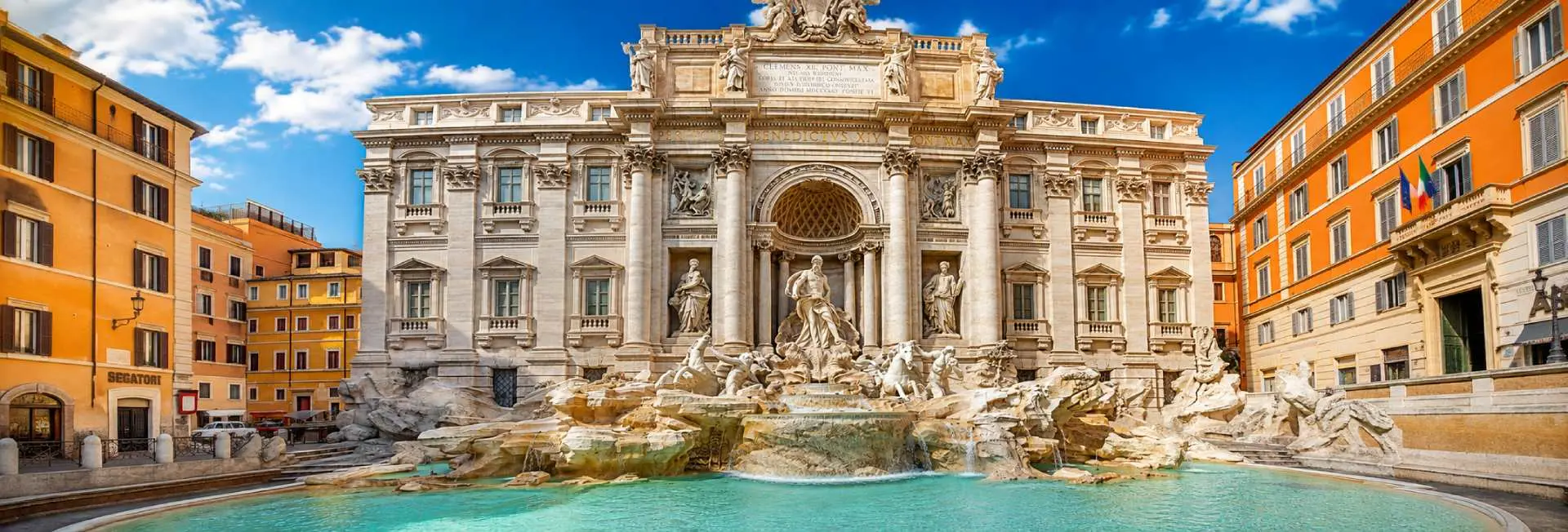
The Trevi Fountain, or Fontana di Trevi, is the largest and most famous fountain in Rome, filling an entire small piazza in the city's historic center. Carved from travertine stone and completed in 1762, it depicts the sea god Oceanus riding a shell chariot through a dramatic rocky seascape set against the facade of the Palazzo Poli.
Beyond its scale and artistry, the fountain is known worldwide for the tradition of tossing a coin over one's shoulder to guarantee a return trip to Rome, a ritual that has made it one of the most visited and photographed monuments in Italy.
History
Ancient Roots
The fountain marks the endpoint of the Acqua Vergine, an aqueduct built in 19 BC under Emperor Augustus to bring clean water into Rome. For centuries, a simpler fountain stood on the site, and the water was considered among the best-tasting in the city.
The Design Competition
In 1730, Pope Clement XII launched a competition to build a grander fountain worthy of the location. The commission initially went to Florentine architect Alessandro Galilei, but public objection to a non-Roman winning such a prominent Roman project led the Pope to instead select local architect Nicola Salvi.
Construction and Completion
Salvi began work in 1732 and dedicated much of his career to the project, overseeing not just the architecture but the full program of statuary. He died in 1751, more than a decade before the fountain was finished. Sculptor Giuseppe Pannini completed the work, and the fountain was formally inaugurated by Pope Clement XIII in 1762.
Design and Architecture
A Theatrical Baroque Composition
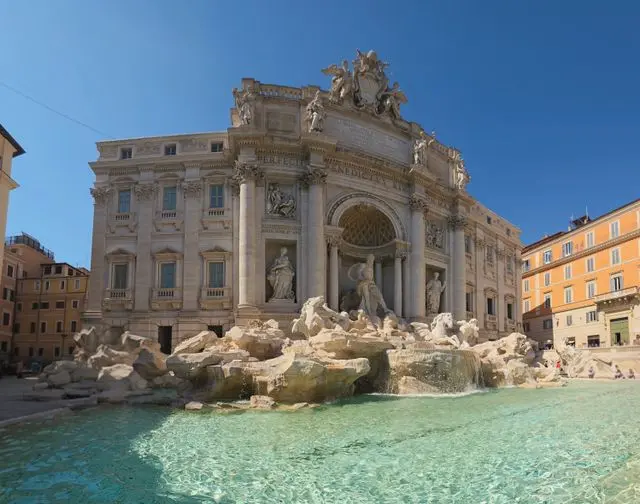
Standing roughly 26 meters high and 49 meters wide, the Trevi Fountain is considered Rome's finest example of late Baroque design. Salvi merged the front of the Palazzo Poli with an artificial rocky grotto, blurring the line between architecture and natural landscape in a way few fountains of the era attempted.
Travertine and Water
The fountain is built almost entirely from travertine, the same pale limestone used in the Colosseum, chosen for its durability and warm tone. Water still flows from the ancient Acqua Vergine aqueduct, tumbling over sculpted rock formations into the main basin below.
Statues and Symbolism
Oceanus and His Chariot
At the center of the fountain stands Oceanus, the Titan god of water, carved by Pietro Bracci. He rides a shell-shaped chariot pulled by two sea horses, each guided by a Triton, representing the changing moods of the sea, one calm and one turbulent.
Abundance and Salubrity
Flanking Oceanus are two allegorical figures: Abundance, pouring water from an urn, and Salubrity, holding a cup from which a snake drinks, symbolizing health. Together with reliefs above depicting the aqueduct's origin story, the statues turn the fountain into a visual narrative about Rome's relationship with water.
The Coin-Tossing Tradition
The custom of throwing a coin into the Trevi Fountain has become one of Rome's best-known rituals, popularized internationally by the 1954 film Three Coins in the Fountain and later immortalized by Federico Fellini's La Dolce Vita.
- One coin, thrown over the left shoulder with the right hand, is said to guarantee a return to Rome.
- Two coins are said to bring a new romance in the city.
- Three coins are said to lead to marriage.
Coins are swept from the basin several times a week and donated to Caritas, a Catholic charity that uses the funds to support food banks and shelters for Rome's homeless population, turning a simple wish into meaningful local aid.
Best Time to Visit
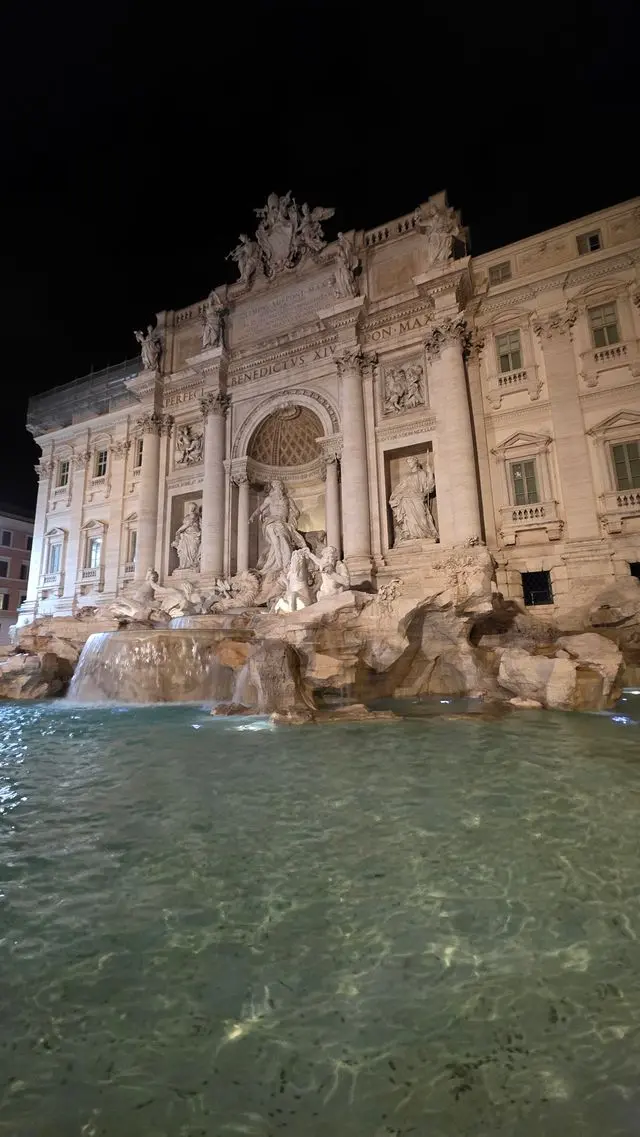
The Trevi Fountain is open and lit at all hours, but when you go changes the experience significantly. Early morning, roughly between 4am and 7am, is the closest visitors get to having the piazza to themselves, especially in the busy summer months.
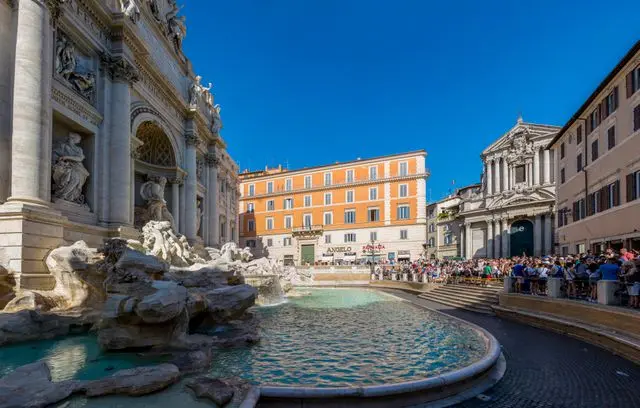
Midday and early evening tend to draw the largest crowds year-round, particularly from late spring through early autumn. Visiting in the evening after dinner offers a middle ground, with the fountain beautifully illuminated and somewhat thinner crowds than during the day.
Visitor Tips
- Close-up access to the fountain's edge now requires a paid ticket, bookable online or via QR codes on-site; children under five, visitors with disabilities, and Rome residents are exempt.
- Keep valuables close and stay aware of your surroundings, as the piazza's crowds attract pickpockets.
- Throwing coins is welcomed, but climbing into the basin, wading, or collecting coins yourself is illegal and enforced with fines.
- The piazza has no shade, so bring water and sun protection if visiting midday in warmer months.
- Public benches around the piazza fill quickly; nearby cafés offer a more comfortable spot to sit and take in the view.
Nearby Attractions
- Spanish Steps – A short walk away, this famous stairway and piazza pair well with a Trevi visit.
- Pantheon – One of Rome's best-preserved ancient buildings, roughly ten minutes on foot.
- Quirinal Palace – The official residence of Italy's president, sitting just uphill from the fountain.
- Column of Marcus Aurelius – A lesser-visited ancient monument a few minutes away in Piazza Colonna.
FAQ about Trevi Fountain
What is the Trevi Fountain famous for? +
It is Rome's largest Baroque fountain, celebrated for its dramatic sculpture of the sea god Oceanus and the tradition of tossing a coin over your shoulder to guarantee a return trip to Rome.
Do you need a ticket to visit the Trevi Fountain? +
Viewing the fountain from the piazza is free, but close-up access to the fountain's edge now requires a paid ticket bought online or via an on-site QR code, with exemptions for young children, visitors with disabilities, and Rome residents.
How much time should I spend at the Trevi Fountain? +
Most visitors spend 20 to 30 minutes taking photos and tossing a coin; allow more time if you plan to linger at a nearby café or visit early morning for a quieter experience.
What is the best time of day to visit? +
Early morning, roughly 4am to 7am, offers the smallest crowds, while midday and evening are the busiest; an after-dinner visit is a good compromise since the fountain is illuminated at night.
Is it true you have to throw a coin over your left shoulder? +
Yes, tradition holds that a coin thrown over the left shoulder with the right hand guarantees a return to Rome, with two coins said to bring romance and three said to lead to marriage.
What happens to the coins thrown in the fountain? +
They are swept from the basin several times a week and donated to Caritas, a Catholic charity that funds food banks and support services for Rome's poor.
Is the Trevi Fountain worth visiting with kids or elderly travelers? +
Yes, it's a flat, open piazza with no entry barriers to simply view the fountain, though the crowds and lack of shade can be tiring, so an early or evening visit is easier for families and older visitors.
What's nearby that I can combine with a Trevi Fountain visit? +
The Spanish Steps, the Pantheon, and Quirinal Palace are all within a short walk, making it easy to build a half-day route through this part of central Rome.