Table of Contents
Overview
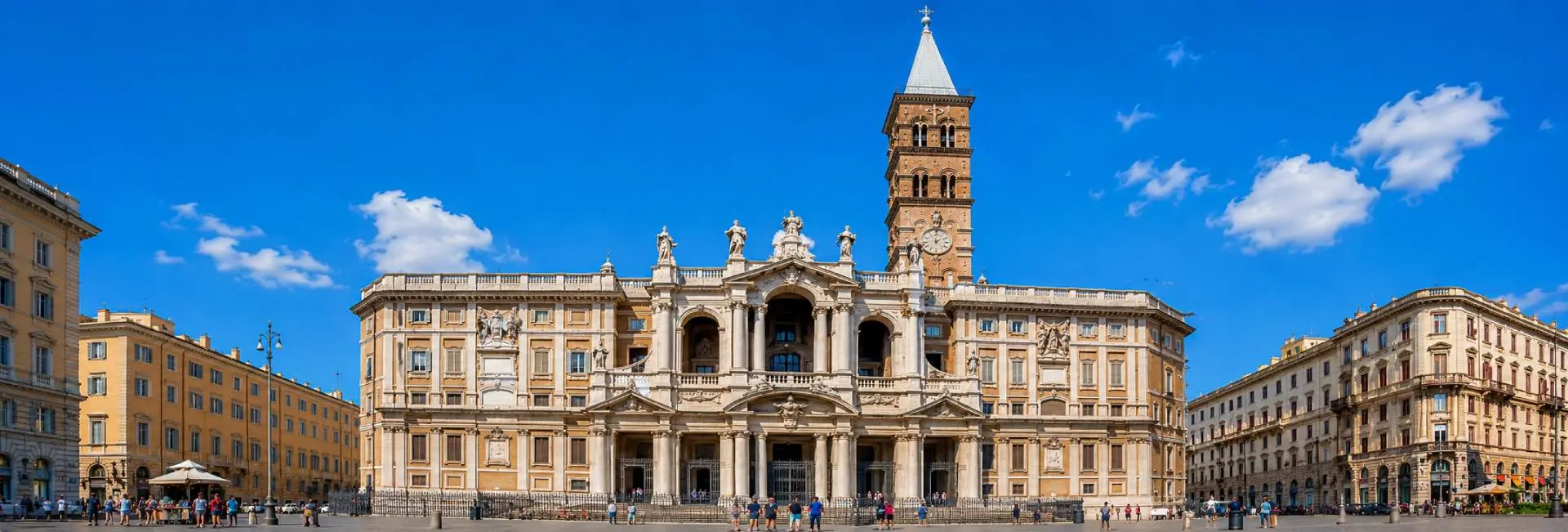
The Basilica di Santa Maria Maggiore is the largest of Rome's churches dedicated to the Virgin Mary and one of only four basilicas in the world to hold the rank of "papal major basilica." Rising on the Esquiline Hill above the bustle near Termini station, it has stood on the same spot since the 5th century, making it one of the oldest continuously used churches in the city.
What makes it remarkable isn't just its age, but how many layers of history it holds at once: paleo-Christian mosaics, a Romanesque bell tower, a gilded Renaissance ceiling, and a Baroque façade all sit within a single building. It's also become newly significant in recent years as the final resting place of Pope Francis, drawing visitors well beyond the traditional pilgrimage crowd.
History
Origins and the Legend of the Snow
Tradition holds that in 352 AD, a wealthy Roman couple and Pope Liberius each had the same dream: the Virgin Mary asking them to build a church on the spot where snow would fall. On the morning of August 5th, snow reportedly appeared on the Esquiline Hill despite the summer heat, and its outline was used to mark the church's foundations. This is why the basilica was long known as "Our Lady of the Snows."
Construction Under Sixtus III
The basilica as it largely stands today was built under Pope Sixtus III between 432 and 440 AD, shortly after the Council of Ephesus formally declared Mary the "Mother of God." That declaration fueled a wave of Marian church-building across the Christian world, and Santa Maria Maggiore became its grandest expression in Rome.
Centuries of Expansion
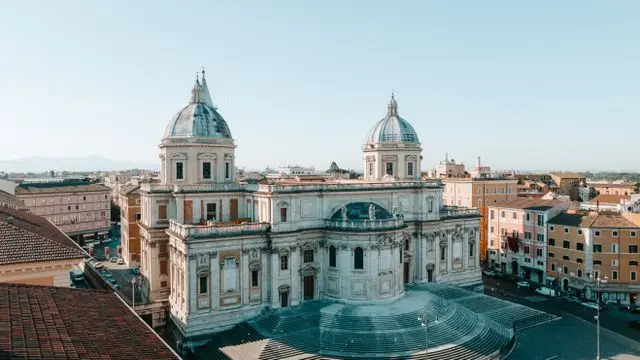
Later popes added to the structure rather than replacing it. A 75-meter bell tower, the tallest in Rome, was built in the 14th century. Sixtus V and Paul V added two large side chapels in the 16th and 17th centuries, and Ferdinando Fuga gave the basilica its current Baroque façade in 1743 for the Jubilee year. Despite all these additions, the core paleo-Christian structure and its original mosaics have survived largely intact.
Recognition & Status
Santa Maria Maggiore holds the title of papal major basilica, a rank shared with only St. Peter's, St. John Lateran, and St. Paul Outside the Walls. Like the others, it has its own Holy Door, opened during Jubilee years.
- Inscribed by UNESCO in 1980 as part of the "Historic Centre of Rome, the Properties of the Holy See in that City Enjoying Extraterritorial Rights and San Paolo Fuori le Mura."
- One of only four papal major basilicas in the world.
- Home to the tombs of several popes, including Pius V, Sixtus V, and, since 2025, Pope Francis.
- Extraterritorial property of the Holy See, despite standing on Italian soil.
Architecture & Design
The Interior and Original Mosaics
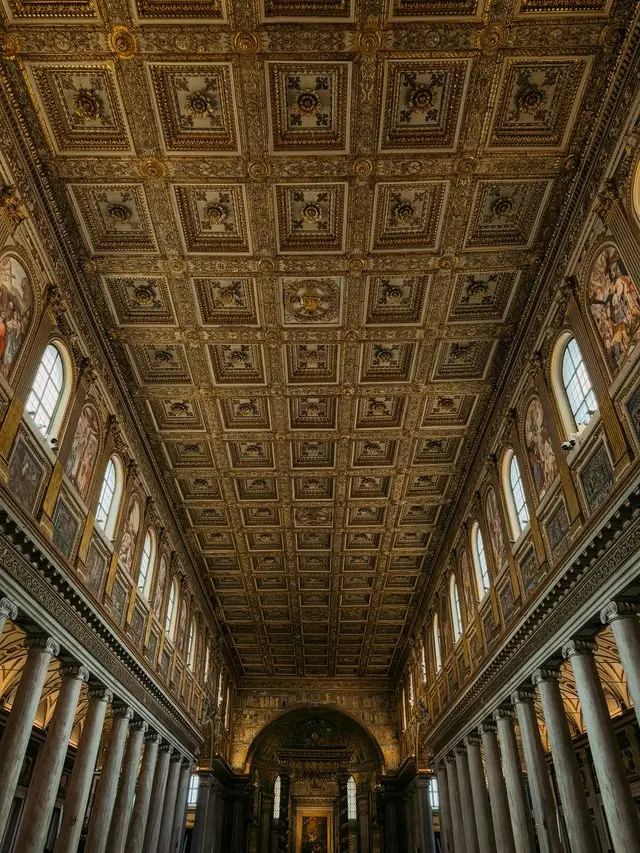
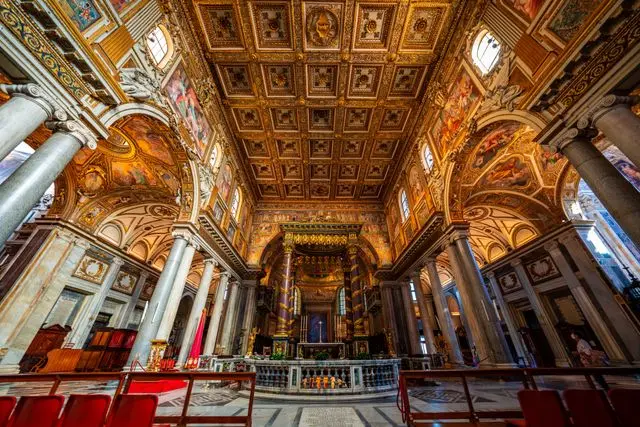
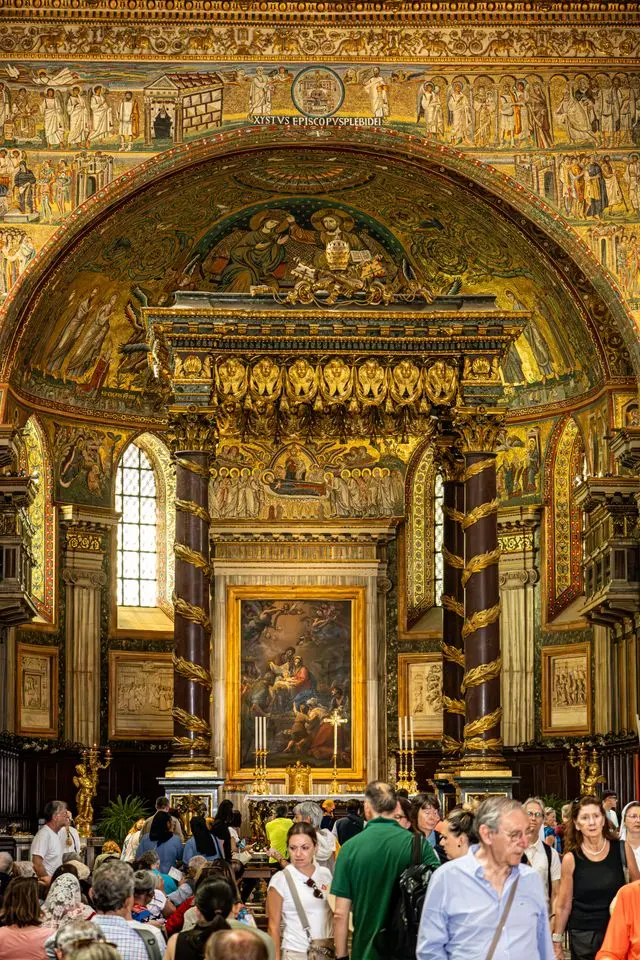
The nave is lined with 36 marble columns, many salvaged from earlier Roman temples, and its walls carry a cycle of 5th-century mosaics depicting Old Testament scenes. These are among the oldest surviving mosaic cycles in Rome and offer a rare direct look at how the basilica appeared when it was first built.
The Gilded Ceiling
The coffered ceiling, designed in the late 15th century, is gilded with what is traditionally said to be some of the first gold brought back from the Americas, gifted to the papacy by the Spanish monarchy. It remains one of the basilica's most photographed features.
The Façade and Bell Tower
The current front, added by Ferdinando Fuga in 1743, wraps a Baroque loggia around the medieval mosaics beneath it, so 14th-century artwork by Filippo Rusuti is still visible from the Loggia of the Blessings. Behind it stands Rome's tallest bell tower, a Romanesque structure dating to the 1370s.
Highlights Inside the Basilica
The Holy Crib Relic
Beneath the main altar, in an area known as the Confessio, a crystal reliquary designed by Giuseppe Valadier holds fragments traditionally venerated as relics of the Nativity manger. It's one of the most visited points inside the church.
The Salus Populi Romani
Housed in the Pauline (Borghese) Chapel, this Byzantine-style icon of the Virgin Mary is among the most venerated Marian images in Rome. It gained global attention when it was carried through Rome during the COVID-19 pandemic as a symbol of protection, and it was frequently visited by Pope Francis throughout his papacy.
The Sistine and Pauline Chapels
Not to be confused with the Vatican's Sistine Chapel, this Sistine Chapel houses the tombs of Popes Pius V and Sixtus V beneath richly frescoed domes. The adjoining Pauline Chapel is equally ornate and centers on the Salus Populi Romani icon.
Tombs of Bernini and Pope Francis
The sculptor Gian Lorenzo Bernini and his family are buried in a modest floor tomb in the basilica, easy to miss without knowing where to look. In 2025, Pope Francis chose to be buried here rather than in the Vatican grottoes, becoming the first pope in over a century interred outside St. Peter's, in a simple tomb near the Pauline Chapel.
Cultural Significance & Legends
Every year on August 5th, the basilica reenacts the legend of the miraculous snowfall: white rose petals are released from the ceiling during a special Mass, drifting down onto the congregation below.
Beyond its founding legend, Santa Maria Maggiore has long been a pilgrimage site tied to the veneration of Mary in Rome, and it continues to draw both religious visitors and travelers interested in its layered art history. Its recent role as Pope Francis's chosen resting place has added a new, contemporary layer to that significance, bringing renewed attention from visitors who may not otherwise seek out the basilica.
Ways to Experience It
- Free self-guided visit to the main nave, mosaics, and Holy Crib relic.
- Ticketed access to the museum complex, including the Liberian Historical Museum, the Loggia of the Blessings, and the Hall of the Popes.
- Terrace access for panoramic rooftop views over Rome, ticketed separately or bundled with the museum.
- Guided tours covering the underground archaeological area, revealing Roman-era walls beneath the current structure.
- Evening or small-group tours offering after-hours access away from daytime crowds.
- Combined tickets that pair the basilica with other Rome attractions, such as the Colosseum and Roman Forum.
Best Time to Visit
Early morning, shortly after opening, is the quietest time to see the nave and mosaics without crowds. Because the basilica is an active place of worship, parts of it may close briefly during daily Masses, so it's worth checking the schedule before planning a visit around a specific chapel or area.
August 5th brings the Feast of Our Lady of the Snows and its petal-dropping ceremony, which is worth experiencing but also draws large crowds. Jubilee years and major religious holidays like Christmas and Easter also see heavier traffic and tighter security, so allow extra time during those periods.
Visitor Tips
- Basic entry to the nave is free; tickets are only required for the museum, terraces, and upper areas.
- Dress modestly, covering shoulders and knees, as this remains a working church.
- Book upper-area or terrace tickets in advance during peak season, as timed slots can sell out days ahead.
- Bring binoculars or use a phone camera zoom to appreciate the 5th-century nave mosaics, which sit high on the walls.
- Check Mass times before visiting if you want unrestricted access to every chapel.
- The basilica is a short walk from Termini station, making it an easy add-on at the start or end of a day of sightseeing.
Nearby Attractions
- Rome Termini Station, a short walk away and a major transport hub.
- Santa Maria degli Angeli e dei Martiri and the Baths of Diocletian.
- Basilica of San Clemente, layered over an ancient Roman building.
- Basilica of St. John Lateran, another of Rome's four papal major basilicas.
- The Colosseum and Roman Forum, reachable by metro or a moderate walk.
FAQ about Basilica di Santa Maria Maggiore
What is Santa Maria Maggiore known for? +
It's the largest of Rome's churches dedicated to the Virgin Mary and one of only four papal major basilicas, known for its 5th-century mosaics, gilded ceiling, and, since 2025, as the burial site of Pope Francis.
Is entry to the basilica free? +
Yes, walking into the main nave to see the mosaics, chapels, and Holy Crib relic is free. Tickets are only needed for the museum complex, the Loggia of the Blessings, and the rooftop terraces.
How much time should I plan for a visit? +
A self-guided look at the nave and main chapels takes around 30 to 45 minutes, while adding the museum, terraces, or a guided tour can extend a visit to 1.5 to 2 hours.
What's the best time of day to visit? +
Early morning shortly after opening is quietest. Midday and early evening tend to be busier, and parts of the basilica may briefly close during daily Masses.
How do I get to Santa Maria Maggiore? +
It's a short walk from Rome Termini station, and also accessible via Cavour station on Metro Line B or Vittorio Emanuele on Metro Line A.
Is the basilica accessible for visitors with mobility needs? +
A ramp at the entrance allows wheelchair access to the main basilica, though the underground archaeological area can be difficult to navigate for visitors with limited mobility.
Is Santa Maria Maggiore suitable for kids or a first-time visit to Rome? +
Yes, it's a manageable, relatively uncrowded introduction to Rome's basilicas compared to St. Peter's, with enough visual detail in the mosaics and chapels to hold most visitors' interest.
What should I combine with a visit to Santa Maria Maggiore? +
It pairs well with nearby sites like Santa Maria degli Angeli, the Baths of Diocletian, or San Clemente, and works as a stop on the way to or from the Colosseum and Roman Forum.