Table of Contents
- About Vatican City
- Climate in Vatican City
- Getting to Vatican City
- Transportation in Vatican City
- Things to Do in Vatican City
- Neighborhoods to Explore
- Food in Vatican City
- Accommodation in Vatican City
- Day Trips from Vatican City
- Safety Tips in Vatican City
- Budget & Costs in Vatican City
- Local Customs & Etiquette
- Suggested Itineraries
About Vatican City
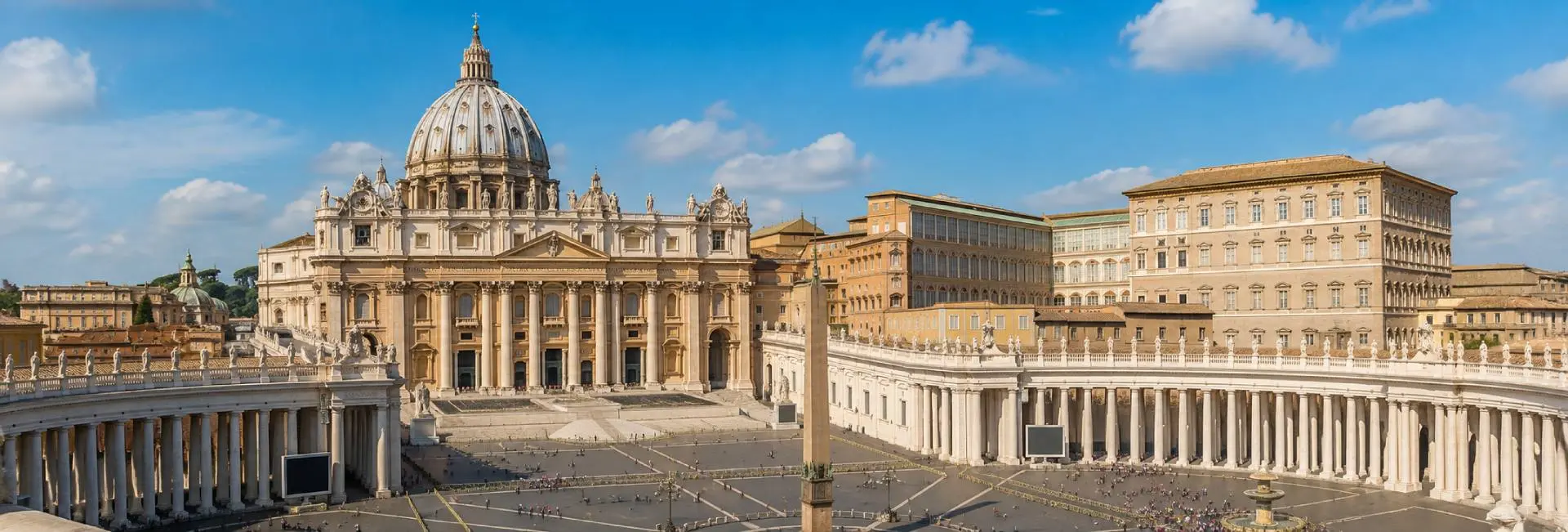
Vatican City is the smallest sovereign state in the world, an independent city-state of under half a square kilometer entirely enclosed within Rome. It is the spiritual and administrative center of the Roman Catholic Church, home to the Pope, the Roman Curia, and some of the most significant religious and artistic treasures on Earth. Despite its tiny footprint, it draws millions of visitors each year, most of them coming specifically for St. Peter's Basilica, the Vatican Museums, and the Sistine Chapel.
What sets Vatican City apart from other destinations is that it functions as a working nation-state rather than a neighborhood or district. It has its own postal service, radio station, newspaper, security force, and license plates, and it is governed by the Pope as an absolute monarchy. Yet for visitors, the experience feels less like crossing a border and more like moving between distinct zones of the same city, since Rome surrounds the Vatican on every side and the transition happens without checkpoints for most tourist areas.
The Vatican is compact and almost entirely walkable in a single visit, centered on St. Peter's Square and the Basilica, with the Vatican Museums complex wrapping around the northern edge. Most visitors approach on foot from the surrounding Roman neighborhoods of Prati or Borgo, or arrive by metro, and once inside there is little need for transit. The main practical challenge is not distance but crowd management, since the major sites can involve long queues and require some planning around timed entry.
Climate in Vatican City
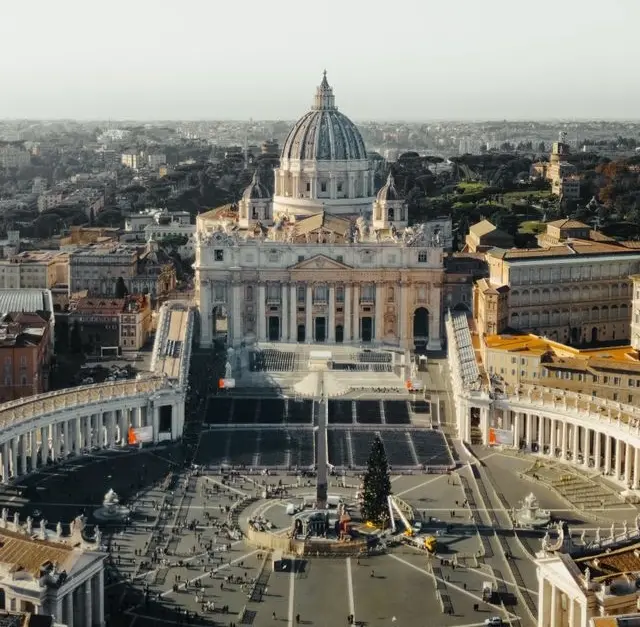
Vatican City shares Rome's Mediterranean climate, with hot, dry summers and mild, wetter winters. Because the entire state is a small urban enclave with no coastline or elevation of its own, its weather is effectively identical to that of central Rome.
- Spring (March to May): Mild and increasingly warm, ranging from about 10-20°C (50-68°F), with occasional rain showers and blooming gardens visible from St. Peter's Square.
- Summer (June to August): Hot and dry, typically 22-33°C (72-91°F), with July and August bringing intense midday heat and minimal shade in outdoor queues.
- Autumn (September to November): Warm early on, cooling steadily, from about 12-24°C (54-75°F), with rain becoming more frequent by November.
- Winter (December to February): Cool and damp rather than cold, generally 4-13°C (39-55°F), with occasional rain but rare frost or snow.
The most comfortable months to visit are April, May, September, and October, when temperatures are pleasant for standing in outdoor queues and touring on foot. Visitors who come in July or August should plan indoor visits for early morning or late afternoon to avoid both the heat and the largest crowds.
Getting to Vatican City
Vatican City has no airport or train station of its own, so all visitors arrive via Rome's transport network.
- Leonardo da Vinci–Fiumicino Airport (FCO): Rome's main international hub, about 30 km from the Vatican. The Leonardo Express train runs to Roma Termini in around 32 minutes, followed by a short metro or taxi connection; taxis to the Vatican area take roughly 45-60 minutes depending on traffic.
- Ciampino Airport (CIA): Used mainly by low-cost European carriers, about 15 km southeast of central Rome. Shuttle buses connect to Termini, with a total journey to the Vatican of around an hour combining bus and metro or taxi.
- International rail: High-speed and international trains arrive at Roma Termini, Rome's main station, which connects to the Vatican area via Metro Line A (Ottaviano or Cipro stations) in about 15-20 minutes.
Entry to Vatican City itself does not require a separate visa or passport check for tourist visits, since it is treated as part of the Rome visit for border purposes. Travelers should check current Italian Schengen visa and entry requirements from an official government source before departure, as these can change.
Transportation in Vatican City
Vatican City is small enough to cover entirely on foot once you arrive, so transportation planning mostly concerns getting there from elsewhere in Rome.
Rome's Metro Line A stops at Ottaviano-San Pietro and Cipro, both a 10-15 minute walk from St. Peter's Square, and is generally the fastest way in from central Rome. Numerous city bus routes also serve the area, including lines that stop directly on Via della Conciliazione, the avenue leading to St. Peter's Square. A single Rome public transit ticket (valid across metro, bus, and tram) covers all of these options and can be purchased at metro stations, tobacco shops, or via the city's transit app.
Walking is by far the best way to move around within Vatican City itself, since St. Peter's Square, the Basilica, and the Museums entrance are all within a few minutes of each other. Taxis and rideshare services are available for reaching the area but are rarely useful once inside, and no bikes, boats, or trams operate within the Vatican's own boundaries.
Things to Do in Vatican City
Vatican City's attractions are concentrated but world-class, and several require advance booking to avoid the longest queues.
- St. Peter's Basilica: The largest church in the world and the centerpiece of Vatican City, free to enter but often with a long security line; climbing the dome offers sweeping views over Rome for an additional fee.
- Vatican Museums: A vast complex of galleries covering classical sculpture, Renaissance painting, and papal collections, culminating in the Sistine Chapel; advance timed-entry tickets are strongly recommended and often essential in peak season.
- Sistine Chapel: Michelangelo's ceiling and Last Judgment fresco, accessed as the final stop of the Vatican Museums route; photography is prohibited inside.
- St. Peter's Square: Bernini's colonnaded plaza in front of the Basilica, free and open at all hours, and the site of the Pope's Sunday blessing and Wednesday general audiences.
- Vatican Necropolis (Scavi): The excavated ancient burial ground beneath the Basilica, believed to include the tomb of St. Peter; visits require a separate advance booking through the Vatican's excavations office and are limited to small guided groups.
- Vatican Gardens: Landscaped grounds covering much of the state's territory, visitable only by guided tour booked in advance.
- Castel Sant'Angelo: A former papal fortress and mausoleum just outside the Vatican border along the Tiber, connected historically to the Vatican by a fortified passage and well worth combining with a Vatican visit.
Neighborhoods to Explore
Vatican City itself has no residential neighborhoods, but the Roman districts that surround it each offer a distinct way to extend a visit.
- Borgo: The historic quarter immediately southeast of the Vatican walls, with narrow medieval streets, tourist-friendly restaurants, and the closest lodging to St. Peter's Square.
- Prati: An elegant, grid-planned residential district just north of the Vatican, known for upscale shopping on Via Cola di Rienzo and a more local, less touristy dining scene.
- Trastevere: Across the Tiber to the south, a lively, cobblestoned neighborhood with a strong nightlife and trattoria culture, reachable on foot or by a short bus ride.
- Centro Storico: Rome's historic core, a 20-30 minute walk or short bus ride east, home to the Pantheon, Piazza Navona, and the city's densest concentration of classical sights.
- Aventine Hill: A quiet, leafy area south of the center known for the famous keyhole view of St. Peter's dome through the Knights of Malta gate, offering a slower, more residential pace.
Prati and Aventine reward a slower visit best, since both are largely residential and better suited to lingering over a coffee or a view than to checklist sightseeing.
Food in Vatican City
Vatican City has almost no restaurants within its own borders, so eating well here really means eating well in the surrounding Roman neighborhoods of Borgo and Prati, which follow classic Roman culinary traditions.
- Cacio e pepe, carbonara, and amatriciana: The trio of Roman pasta dishes that define the city's food identity, built on pecorino, guanciale, and black pepper rather than cream or bacon.
- Supplì: Fried, breaded rice balls with a molten mozzarella center, a classic Roman street food snack.
- Carciofi alla romana or alla giudia: Roman-style braised artichokes or Jewish-style deep-fried artichokes, both seasonal specialties worth seeking out.
- Gelato: Best sought at artisanal shops labeled "gelato artigianale" rather than those with garishly piled, neon-colored displays near major tourist sites.
- Mercato Trionfale: A large covered food market in Prati, a few minutes from the Vatican, good for fresh produce, cheese, and cured meats away from tourist pricing.
To avoid lower-quality, overpriced tourist traps, walk a few blocks away from Via della Conciliazione and St. Peter's Square itself, where restaurant quality and prices improve noticeably just a short distance from the main sightseeing routes.
Accommodation in Vatican City
Vatican City is extremely safe, with a low-crime, heavily monitored environment thanks to the Swiss Guard, Vatican Gendarmerie, and Italian police presence around St. Peter's Square. The most common real risk to visitors is petty theft, particularly pickpocketing in the dense queues for the Basilica and Museums.
- Keep bags zipped and in front of you while waiting in security or entry lines.
- Be alert around street vendors and unofficial "skip the line" ticket sellers near the Museums entrance, some of whom overcharge or sell invalid tickets.
- Dress code is strictly enforced at the Basilica: shoulders and knees must be covered for both men and women, or entry will be refused.
- Stay hydrated and pace yourself in summer, as the outdoor queues offer little shade and heat exhaustion is a real risk during peak hours.
- Keep photocopies or photos of your passport separate from the original while sightseeing in crowds.
Theft or incidents should be reported to the Vatican Gendarmerie if they occur within Vatican City itself, or to the nearest Italian Carabinieri or Polizia station for anything happening in the surrounding Roman streets.
Day Trips from Vatican City
Since Vatican City is a small enclave within Rome, most "day trips" are really excursions from Rome itself, easily combined with a Vatican visit.
- Rome's Historic Center (10-20 minutes): The Colosseum, Roman Forum, Pantheon, and Trevi Fountain are all a short metro or bus ride away, making a natural extension of the same day.
- Castel Gandolfo (about 45 minutes by train): The traditional papal summer residence in the Alban Hills, with gardens open to the public and views over Lake Albano.
- Ostia Antica (about 40 minutes by train): The remarkably preserved ruins of ancient Rome's port city, less crowded than the Forum but comparably extensive.
- Tivoli (about 1-1.5 hours by train or bus): Home to the Renaissance gardens of Villa d'Este and the sprawling ruins of Hadrian's Villa.
- Orvieto (about 1.5 hours by train): A hilltop Umbrian town with a striking Gothic cathedral, popular as a longer half-day or full-day escape.
All of these are straightforward to reach independently by regional train or public bus without needing an organized tour, though Ostia Antica and Tivoli are the easiest for a self-guided half-day trip.
Safety Tips in Vatican City
Vatican City is extremely safe, with a low-crime, heavily monitored environment thanks to the Swiss Guard, Vatican Gendarmerie, and Italian police presence around St. Peter's Square. The most common real risk to visitors is petty theft, particularly pickpocketing in the dense queues for the Basilica and Museums.
- Keep bags zipped and in front of you while waiting in security or entry lines.
- Be alert around street vendors and unofficial "skip the line" ticket sellers near the Museums entrance, some of whom overcharge or sell invalid tickets.
- Dress code is strictly enforced at the Basilica: shoulders and knees must be covered for both men and women, or entry will be refused.
- Stay hydrated and pace yourself in summer, as the outdoor queues offer little shade and heat exhaustion is a real risk during peak hours.
- Keep photocopies or photos of your passport separate from the original while sightseeing in crowds.
Theft or incidents should be reported to the Vatican Gendarmerie if they occur within Vatican City itself, or to the nearest Italian Carabinieri or Polizia station for anything happening in the surrounding Roman streets.
Budget & Costs in Vatican City
Visiting Vatican City itself is relatively affordable compared to the cost of staying nearby, since St. Peter's Basilica is free to enter and the main expenses are the Museums ticket, food, and lodging in central Rome.
- Budget: Free entry to the Basilica, a standard Vatican Museums ticket, and simple meals from bakeries or casual trattorias in Prati or Borgo can keep a day well under a modest daily spend, especially staying in a hostel or budget hotel near Termini.
- Mid-range: A guided Museums tour or skip-the-line ticket, a sit-down lunch and dinner, and a comfortable hotel in Borgo or Prati represent the typical mid-range visitor experience.
- Higher end: Private early-access or after-hours Museums tours, Scavi excavation tickets, dome climbs, and boutique accommodation directly on or near St. Peter's Square push costs considerably higher.
The biggest money-saving move is booking Vatican Museums tickets online in advance rather than through resellers or in person, since official pricing is far lower than third-party markups, and choosing accommodation in Prati rather than Borgo can meaningfully cut lodging costs without adding much walking time.
Local Customs & Etiquette
Vatican City is an active place of worship as well as a tourist site, and etiquette here is more strictly observed than a typical visitor might assume.
- Modest dress is mandatory, not optional: shoulders and knees must be covered to enter St. Peter's Basilica, and guards will turn away visitors in shorts, sleeveless tops, or short skirts.
- Silence and quiet conversation are expected inside the Basilica, even outside of active Mass, since it remains a functioning church rather than a museum.
- Photography is banned entirely inside the Sistine Chapel, including phones, and flash photography is discouraged throughout much of the Museums.
- During the Pope's Wednesday general audience or Sunday blessing, visitors are expected to remain respectfully attentive rather than treating it purely as a photo opportunity.
- Hats should be removed by men when entering the Basilica, a small but commonly overlooked point of respect.
None of this is meant to intimidate visitors; it simply reflects that Vatican City is first a place of active religious life, and tourism operates within that context rather than the other way around.
Suggested Itineraries
One Day in Vatican City
Arrive early, ideally before opening, to join the Vatican Museums with a pre-booked timed entry, allowing two to three hours to move through the galleries toward the Sistine Chapel before the mid-morning crowds peak. From there, exit toward St. Peter's Basilica, pass through security, and spend an hour exploring the interior and, time permitting, climbing the dome for views over Rome. Finish in St. Peter's Square itself before heading into Borgo or Prati for a late lunch, since a single focused day is enough to see the core sites without rushing.
Three Days in Vatican City
- Day 1: Vatican Museums and Sistine Chapel in the morning, St. Peter's Basilica and dome climb in the afternoon, dinner in Borgo.
- Day 2: A pre-booked Vatican Necropolis (Scavi) tour in the morning, followed by a guided Vatican Gardens tour if available, then an afternoon exploring Castel Sant'Angelo and a stroll into Prati.
- Day 3: A half-day trip into Rome's historic center to see the Pantheon and Piazza Navona, returning for a relaxed evening in Trastevere.
One Week in Vatican City
With a full week based near the Vatican, the extra time is best used pairing the core Vatican sites with unhurried exploration of the surrounding city and its outskirts. This allows for attending a Wednesday general audience if the schedule aligns, taking day trips to Ostia Antica, Tivoli, or Castel Gandolfo, and returning to the Basilica or Museums a second time on a quieter day, since first visits often feel rushed given the scale of the collections.
Common Questions About Vatican City
Is Vatican City actually its own country? +
Yes, it is an independent sovereign state, the smallest in the world by both area and population, governed by the Pope and separate from Italy despite being entirely surrounded by Rome.
Do I need to book tickets in advance? +
St. Peter's Basilica is free and does not require a ticket, but the Vatican Museums and Sistine Chapel should be booked online in advance, since walk-up lines can run several hours during peak season.
Is there a dress code? +
Yes, shoulders and knees must be covered for both men and women to enter St. Peter's Basilica and the Vatican Museums, and guards actively enforce this at the entrance.
How can I see the Pope during my visit? +
The Pope generally holds a general audience in St. Peter's Square or the Paul VI Audience Hall on Wednesday mornings and gives a blessing from his window on Sunday at noon, though both are subject to his travel schedule and should be checked closer to your visit.
What currency is used in Vatican City? +
Vatican City uses the euro, the same currency as Italy, and most purchases can be made with card as easily as cash.
What is the best time of day to avoid crowds? +
Arriving right at opening time, or booking a late-afternoon or evening Museums slot where available, generally offers the shortest lines and the most comfortable viewing conditions.