
Table of Contents
Overview
Vērmanes Garden (Vērmanes dārzs) is a compact, tree-filled park in the middle of central Riga, bordered by Tērbatas, Elizabetes, Krišjāņa Barona and Merķeļa streets. Covering about five hectares, it is one of the city's oldest public gardens and a favourite pause point for anyone exploring the centre on foot.
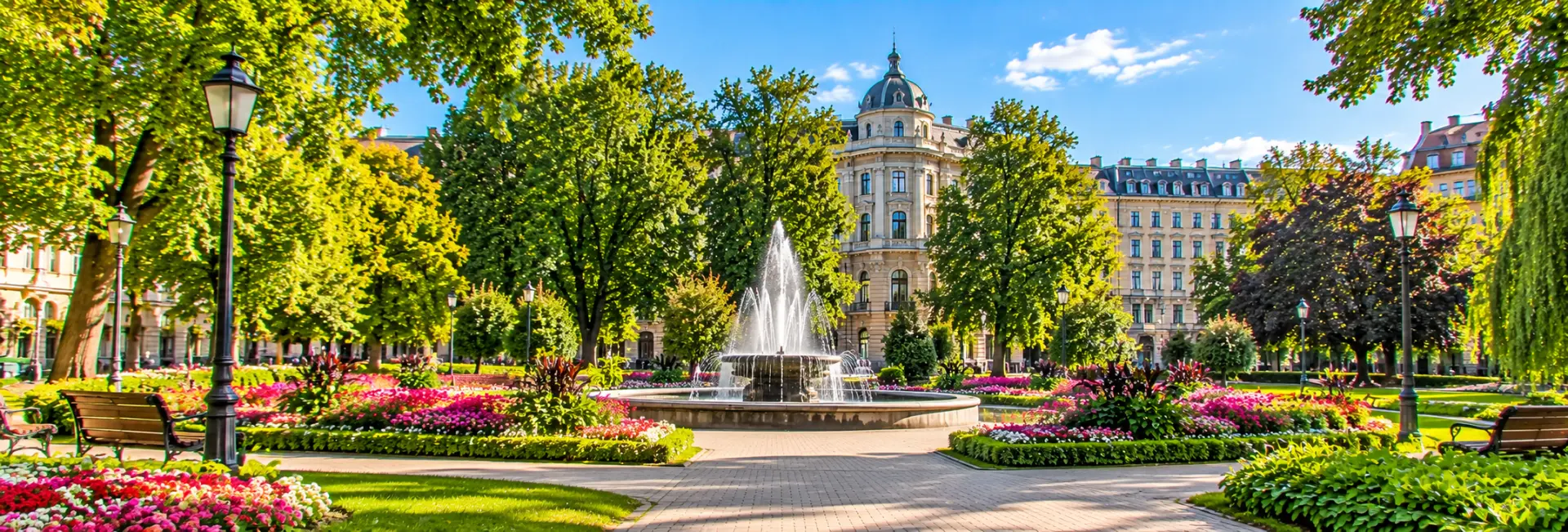
The garden is not a showpiece in the grand palace-park sense. Its appeal lies in its character: shaded avenues, flowerbeds, benches that always seem to be occupied, a historic fountain, a scattering of monuments and a steady stream of everyday city life. Office workers eat lunch on the grass, families head for the playground, and chess players gather around the wooden stage.
Because it sits between the Old Town, the Art Nouveau streets and the main shopping and transport corridors, the garden works well as a green break between sightseeing stops. It is free to enter, easy to cross and open to everyone, just as its founders intended.
It is also a place where Riga's social history can be read in the details. For more than two centuries it has been a gathering spot for residents, and its name, monuments and even its fountain have been shaped by the city's changing rulers, tastes and priorities. A short walk here therefore offers both a breath of fresh air and a compact lesson in how Riga has lived with its public spaces.
History
A Garden Born from Wartime Ruins
The garden's story begins in the aftermath of 1812, when the outskirts of Riga were burned during the Napoleonic invasion of Russia. In 1814, the Governor General of Livonia, Philip Paulucci, supported the creation of a public park on cleared land outside the city, and the Wöhrmann family, prominent Riga merchants, provided the land and funds. Popular tradition particularly honours Anna Gertrud Wöhrmann as the benefactor, which is why the garden carries her family's name in its Latvian form.
Wöhrmann Park, as it was first called, opened with festivities on 8 June 1817. It was a fenced area of under one hectare, planted with exotic trees and a rose garden and equipped with a restaurant, and it quickly became a fashionable place for townspeople to stroll and socialise.
Growth and Refinement
The park gradually gained amenities. In 1836 a mineral water shop opened in the restaurant, and the building was later expanded in the 1860s and 1870s to designs by architect Heinrich Scheel. A sundial and a fountain were added in 1869. In 1881, Riga's city gardens director, Georg Kuphaldt, enlarged the garden considerably by absorbing nearby square space and part of a neighbouring seminary's land, and he introduced flower parterres and a rich selection of ornamental trees and shrubs.
These changes transformed the garden's scale. From the small fenced plot of 1817, which covered well under one hectare, it grew over the 19th century into the roughly five-hectare park seen today. The mineral water shop and restaurant also reflect how the garden functioned as a social venue as well as a green space, a place to take refreshments, listen to the city's chatter and be seen.
The Soviet Era and After
Under Soviet rule, the park was renamed Kirov Park, and it carried that name from around 1950 until 1990. The historic name Vērmanes dārzs was reinstated in 1991, a small but symbolic step in the restoration of Riga's pre-Soviet heritage. Since then, monuments have been recreated, the fountain has been restored and the garden has resumed its role as one of the city's most-used public spaces.
Layout & Landscape
A Four-Sided Green Block
The garden occupies a rough rectangle in the heart of the city, so it is easy to cross and almost impossible to get lost in. Paths run between the four bordering streets, with the most formal planting and the central fountain near the main entrance area facing Krišjāņa Barona iela. The terrain is flat, which makes it simple to walk or push a pram.
Trees and Planting
Much of the garden's charm comes from its mature trees. Kuphaldt's 19th-century planting introduced a wide range of species that were unusual in Riga at the time, including copper beech, honey locust, magnolia, black locust and various ornamental shrubs such as box and holly. Today, shaded avenues create a cool canopy in summer, while flowerbeds add colour through the warmer months.
Buildings on the Edge
On the Elizabetes side, the garden hosts a wooden open-air stage and a tea house or café, while a restaurant occupies a historic building at the corner of Tērbatas and Merķeļa streets. These edges give the park a lively social frame without disturbing its calm interior.
Monuments & Sculptures
The Seasons Fountain
The centrepiece is a historic fountain featuring a monumental vase on a pedestal, decorated with sculptures of the four seasons. The central sculpture was made in Berlin and installed in 1869, and the fountain is regarded as the oldest in Riga. After a thorough restoration of both the basin and the sculpture, it resumed operation in August 2022, and it runs in the warmer months.
The restoration work included cleaning and repairing the basin walls, waterproofing the interior and conserving the central vase and its seasonal figures. Riga's heritage authorities had pressed for the fountain to be returned to a look consistent with its historical appearance, so what you see today is a deliberate effort to protect one of the garden's oldest features.
Memorial to Anna Wöhrmann
A granite obelisk commemorating Anna Wöhrmann was first erected in 1829. It was dismantled before the Second World War and recreated in 2000, so visitors today can again see the garden's founding benefactor honoured in the place she helped create.
Krišjānis Barons and Stone Lions
A monument to Krišjānis Barons, the collector of Latvian folk songs known as dainas, honours one of the nation's cultural icons. Elsewhere in the park, imposing stone lions add a touch of classical drama to the paths.
The Bronze Dandy
Just beyond the garden's fence, a bronze figure of a dandy commemorates Kārlis Padegs, the Latvian artist and designer. It is a popular photo stop and a nice detour for anyone interested in the city's creative history.
Things to Do
Vērmanes Garden is best enjoyed at an unhurried pace. There is no ticket, no queue and no fixed route, so you can follow your curiosity or simply find a bench.
- Stroll the shaded paths and look for the fountain, monuments and sculptures along the way
- Watch the chess players who gather near the wooden open-air stage on the Elizabetes side
- Take children to the playground, which makes the garden a practical family stop
- Pause at the tea house or café, or grab a takeaway coffee and sit under the trees
- Enjoy a picnic on the lawns when the weather is good
- Catch a small concert, dance performance or seasonal event if one is scheduled
If you have only half an hour, a simple loop works well: enter from the Krišjāņa Barona side, pass the fountain, continue toward the Elizabetes edge for the stage and café, and then circle back along the Tērbatas side to see the historic restaurant building. Those who have longer can slow down to read the monuments and watch the activity on the paths.
The garden has also hosted festival programming, including contemporary circus and street-art events, so it is worth checking the city's events calendar if your visit coincides with the summer festival season.
Best Time to Visit
Spring and Summer
From late spring through summer, the garden is at its greenest. Trees are in full leaf, flowerbeds are colourful and the fountain is running. Early mornings are peaceful, while weekday lunchtimes, roughly between noon and two, bring office workers onto the benches and lawns.
Autumn
Autumn colour makes the garden especially photogenic, with fallen leaves covering the paths and softer light between the trees. It is a good time for a quiet walk without summer crowds.
Winter
In the darkest part of the year, the garden is transformed by festive lighting, music and large snowmen, which turn it into a seasonal attraction in its own right. It is a cheerful stop during the Christmas period, though you will want warm clothing and sturdy shoes.
Visitor Tips
The garden is simple to visit, but a few practical points will help you get the most from it.
- Entry is free, and as a public park it is generally accessible year-round.
- Allow anywhere from ten minutes for a quick crossing to an hour or more if you want to linger, picnic or watch the chess games.
- Paths are flat and easy to navigate, which suits families with pushchairs and visitors who prefer level ground.
- Numerous tram and bus routes stop beside the park, and it is about a ten-minute walk from Riga Central Station and roughly ten to fifteen minutes from the Old Town.
- Check the city's events listings before you go if you hope to see a concert, festival performance or winter lights display.
- Remember that the Padegs monument stands just outside the fence, so look beyond the park boundary if you want to see it.
- Be mindful of weekday lunch hours, when benches fill quickly and the garden feels busier.
Nearby Attractions
The garden's central position makes it easy to link with other sights, and most can be reached comfortably on foot.
- The Freedom Monument, a short walk away and one of Latvia's best-known national symbols
- The Old Town, within roughly ten to fifteen minutes on foot
- The Art Nouveau district around Alberta iela, reachable by walking north along Elizabetes iela
- Riga Central Station and the central market area, useful for onward travel or a food stop
- The shopping and café streets around Krišjāņa Barona iela, directly beside the garden
A simple half-day route might start in the Old Town, continue past the Freedom Monument, rest in Vērmanes Garden and finish with a stroll through the Art Nouveau streets.
FAQs about visiting Vērmanes Garden
What is Vērmanes Garden? +
It is a historic public park of about five hectares in central Riga, opened in 1817. It is known for its shaded paths, restored fountain, monuments and relaxed local atmosphere.
Is Vērmanes Garden free to enter? +
Yes. The garden is a public park with no admission fee, and it is generally accessible throughout the year.
Where is the garden located? +
It sits in the city centre between Tērbatas, Elizabetes, Krišjāņa Barona and Merķeļa streets. It is within walking distance of the Old Town, the Freedom Monument and Riga Central Station.
How long should I spend there? +
Ten to fifteen minutes is enough for a quick walk through, while thirty minutes to an hour suits most visitors who want to see the fountain and monuments or take a break.
What is the best time of year to visit? +
Late spring and summer offer the greenest scenery and a running fountain, autumn is especially pretty, and winter brings festive lights and decorations. Each season has its own appeal.
Is it suitable for children and families? +
Yes. The paths are flat, there is a playground, and the lawns and benches make it easy to spend relaxed time with younger visitors.
Why was the garden once called Kirov Park? +
During the Soviet period, from around 1950 to 1990, the park was renamed Kirov Park. Its historic name, Vērmanes dārzs, was restored in 1991.
Can I get food or drinks nearby? +
Yes. A tea house or café stands on the Elizabetes side, a restaurant occupies a historic building at the corner of Tērbatas and Merķeļa streets, and the surrounding streets are full of other cafés and shops.
