
Table of Contents
Overview
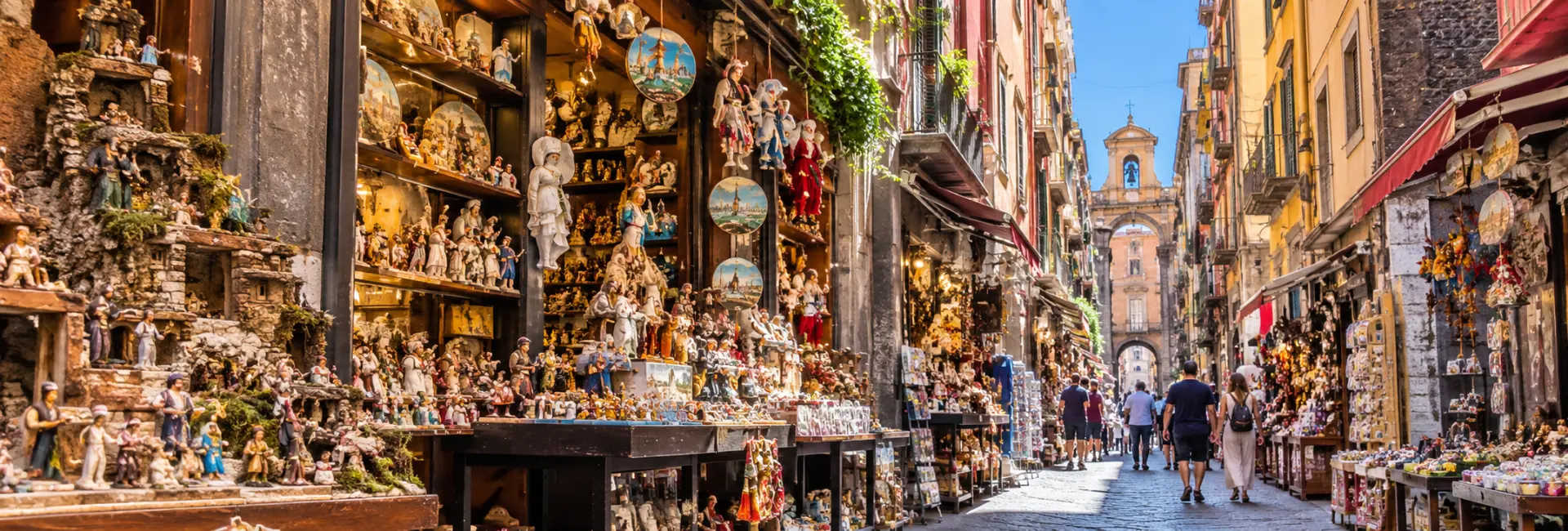
Via San Gregorio Armeno is a short, narrow, cobbled lane in the heart of Naples' historic centre, and it is the city's best-known address for nativity art. Both sides are lined with small workshops and stalls where artisans model, paint, and dress the figurines that fill a Neapolitan presepe, from the Holy Family and the Three Kings to bakers, fishmongers, and the occasional footballer.
The lane links two of the old city's great axes: Via dei Tribunali to the north and Via San Biagio dei Librai, part of the Spaccanapoli line, to the south. It is only a few hundred metres long, yet it can easily take an hour or more to walk, because every doorway pulls you in. Locals sometimes call it Christmas Alley, and unlike most seasonal attractions, the festive mood here does not switch off in January.
What makes the street worth a visit is that it is a working craft district rather than a staged display. You can watch clay being shaped, tiny glass eyes being set, and miniature food stalls being assembled, then step outside and find a Baroque bell tower, a centuries-old convent, and a plaque tied to the city's patron saint within a few paces.
History
Ancient Roots
The street follows a line laid out when Naples was first a Greek city and then a Roman one, running as a cross street between the two main east-west avenues of the old grid. Local tradition places a temple of Ceres, the goddess of grain and harvest, somewhere in this district, and says that worshippers left small terracotta offerings there. Whether or not the details are exact, the story gives the street a very old association with clay figures.
An older name for the lane recalls Nostrianus, a bishop said to have built public baths for the poor in the area. Locals also use a shortened, affectionate name for the street, San Liguoro, since Liguoro is an archaic Neapolitan form of Gregorio.
The Monastery That Gave the Street Its Name
The present name comes from the church and monastery of San Gregorio Armeno, traditionally dated to around the 10th century. It was founded to shelter the relics of Gregory, the bishop of Armenia, who is venerated as a saint in Naples. Over the following centuries the convent grew into one of the city's most important religious complexes, and the street developed around it as a place of devotion and daily trade.
From Saints' Statues to Nativity Scenes
The practice of recreating the birth of Christ spread across Italy after Saint Francis staged a living crib at Greccio in the early 13th century. Naples took to the idea with special enthusiasm. One of the oldest surviving wooden nativity groups in the city, carved around 1480 for the church of San Giovanni a Carbonara, is credited to the sculptors Pietro and Giovanni Alamanno.
Workshops on this street had long supplied churches with religious images. As demand for nativity figures grew among churches, palaces, and eventually ordinary households, many of those shops turned their attention to the presepe and never looked back.
The Eighteenth-Century Golden Age
The presepe reached its peak in the 1700s, when the Bourbon court and Naples' noble families treated the crib as a fashionable art form. Households competed to stage the grandest scene, and leading sculptors and painters were commissioned to make figures. The scenes grew to include taverns, markets, shepherds, and street vendors, turning the sacred story into a portrait of Neapolitan life. That blend of the holy and the everyday is still the signature of the craft.
Recognition / Status
Via San Gregorio Armeno sits inside the Historic Centre of Naples, which was inscribed on the UNESCO World Heritage List in 1995. The listing covers the whole layered urban fabric of the old city, from the Greek and Roman street plan to medieval churches and Baroque palaces, and this lane is a clear example of how those layers still shape everyday life.
The street itself is not a single protected monument. Its standing comes from several things working together:
- Its position on the ancient street grid of one of Europe's oldest continuously inhabited cities
- The historic church, bell tower, and monastery that anchor its middle stretch
- The unbroken tradition of family workshops that keep the nativity craft alive
- Its reputation as the place where the Neapolitan presepe is made and sold, known well beyond Italy
The Craft of the Neapolitan Presepe
The Figures
A traditional Neapolitan nativity figure, often called a pastore, is built in layers. The head and limbs are usually terracotta, the eyes are glass, and the body is a jointed frame of wire and wood so the figure can be posed. Each one is then dressed by hand in small garments made of silk, linen, and lace, echoing the fashions of the 18th century.
The finest pieces are displayed under a glass dome or in a glass-fronted case known as a scarabattola, which protects the delicate fabrics and gives the scene a jewel-box quality.
Scenery and Miniatures
The figures are only part of the story. Workshops also make stables, ruins, taverns, fountains, and market stalls, plus tiny versions of the foods that fill a Neapolitan market: cheeses, cured meats, fish, fruit, and bread. Some artisans specialize in miniatures so small that their details only show up under close inspection.
Faces from Today
The craft has never been frozen in the past. Alongside shepherds and angels, you will find figurines of politicians, actors, singers, and sports stars, and the city's footballing heroes appear regularly. This habit of commenting on current affairs in clay is part of the tradition, and each year new characters join the shelves.
Pulcinella, the hook-nosed mask of Neapolitan comic theatre, is another constant presence. He turns up as a figurine, a mask, and a mascot of the street, a reminder that the presepe here is as much about humour and local character as about devotion.
Key Sights Along the Street
The street rewards slow walking. Beyond the workshops, several historic landmarks sit within a short distance of each other.
- Church of San Gregorio Armeno - Entered directly from the street, the church is known for its gilded ceiling, its collection of 17th-century paintings, and its richly decorated organs.
- The cloister - A peaceful courtyard of the monastery with its own separate entrance a little further along. Many visitors walk past it without realizing it is there.
- The bell tower arch - Midway along the street, the tall campanile and the arch that connects the church to the monastery cross over the lane, creating one of its most photographed views.
- San Gennaro all'Olmo - Near the southern end, this small historic church is run by the Fondazione Giambattista Vico.
- Domus Ianuaria - Opposite that church, a plaque from 1949 marks the building traditionally regarded as the birthplace of San Gennaro, the patron saint of Naples.
Just beyond the street's ends, the San Lorenzo Maggiore complex, with its underground Greek and Roman remains, and the famous Doll Hospital, a quirky doll repair workshop on Via San Biagio dei Librai, are both a short stroll away.
Ways to Experience It
Wander at Your Own Pace
The easiest way to enjoy the street is simply to walk it slowly in both directions. Entering a shop costs nothing, and many artisans are happy to explain how a figure is made. Look for workshops where pieces are in various stages of completion on the shelves, since these are the clearest sign of genuine hand production.
Join a Guided Nativity Walk
Several local operators run guided walks of around two hours that place the street in the wider story of the Neapolitan nativity. Some routes pair it with other presepe-related sites in the historic centre, including a celebrated 15th-century Florentine nativity at the Sant'Anna dei Lombardi complex and a collection of tiny nativity works by a priest that is viewed with a magnifying glass, before ending among the workshops here.
Take Something Home
Many visitors buy a figure or two as a keepsake. Options range from small, affordable terracotta pieces to elaborate, fully dressed figures and complete scenes that can cost far more. If you are shopping, it is worth asking whether a piece is handmade and who made it, and comparing a few shops before deciding.
Add Churches and Cloisters
Pairing the street with a visit inside the church of San Gregorio Armeno, and the cloister if its opening hours suit you, turns a shopping stroll into a fuller cultural stop. Check the current opening times and any entrance fees locally before you go, as they change.
Best Time to Visit
The Christmas Season
The lane is at its most spectacular and most crowded in the weeks leading up to Christmas, when new figures appear, decorations multiply, and the whole historic centre fills with visitors. If you want the full festive atmosphere, this is the moment, but expect slow-moving crowds and little room to stop.
The Rest of the Year
Most workshops stay open all year, so the street is never really closed to the nativity spirit. Early in the year, after the holidays, is a good time to browse in peace while the shops are still well stocked. Spring and early autumn also bring comfortable walking weather and thinner crowds.
Time of Day
Early morning, when the shutters are going up, and the evening are generally the calmest times. Midday and weekend afternoons tend to be the busiest, as tour groups and day trippers arrive together. Individual shop hours vary, so do not count on every doorway being open at the same time.
Visitor Tips
A little preparation makes a visit smoother, especially in the busy season.
- Arrive on foot or by public transport. The street is pedestrian, and the surrounding historic centre has restricted traffic, so driving close is not practical. The Duomo and San Biagio dei Librai bus stop is a few minutes' walk away.
- Wear comfortable shoes. The paving is old and uneven, and you will spend more time on your feet than you expect.
- Keep your belongings secure. As in any crowded part of a major city, hold bags in front of you and keep phones and wallets out of easy reach, particularly in the Christmas crush.
- Ask before photographing people. Browsing and photographing figures is normal, but artisans at work appreciate being asked first.
- Plan for fragile purchases. Many shops can pack figures carefully or arrange shipping, which is worth asking about before you buy larger pieces.
- Dress modestly for the church. If you plan to go inside San Gregorio Armeno, cover shoulders and knees as a courtesy.
- Allow enough time. Plan roughly one to two hours for the street alone, and longer if you add the church, the cloister, or nearby sights.
Opening hours, entrance fees, and guided tour schedules change from time to time, so confirm them locally close to your visit.
FAQs about visiting Via San Gregorio Armeno
What is Via San Gregorio Armeno famous for? +
It is the best-known street in Naples for handmade nativity scenes. Dozens of small workshops make and sell presepe figurines, from traditional shepherds and angels to modern characters such as footballers and politicians.
Is Via San Gregorio Armeno only worth visiting at Christmas? +
No. Most workshops stay open all year, so you can see artisans at work and buy figurines in any season. Christmas brings the biggest crowds and the most festive atmosphere, while other months are easier for browsing.
How much does it cost to visit? +
Walking the street and browsing the shops is free. Some of the nearby sites, such as the church cloister or the San Lorenzo Maggiore complex, may charge an entrance fee, so check current prices before you go.
How long should I spend there? +
Allow one to two hours for the street itself. Adding the church, the cloister, and a nearby sight such as San Lorenzo Maggiore can easily fill a half day.
How do I get to Via San Gregorio Armeno? +
The street is pedestrian and lies in the historic centre, so the best approach is on foot or by public transport. It runs between Via dei Tribunali and Via San Biagio dei Librai, a short walk from the Duomo area.
Are the figurines handmade? +
Many are, and the workshops here are known for hand-modelled terracotta heads, glass eyes, and costumes sewn from fine fabrics. Prices and quality vary widely from shop to shop, so it helps to ask who made a piece and compare a few before buying.
When is the best time of day to go? +
Early morning and evening are usually the quietest, while midday and weekend afternoons are the busiest. If you want to avoid crowds in December, aim for a weekday morning.
Is the street suitable for children and visitors with limited mobility? +
Children usually enjoy the colourful displays and tiny figures, but the lane is narrow and crowded in peak season. The cobbled, uneven surface and busy foot traffic can be hard going for wheelchairs, strollers, and anyone who needs a smooth path.
