

Table of Contents
Introduction
Naples is loud, layered and impossible to mistake for anywhere else. Greek settlers founded it as Neapolis, and every ruling power since has added something to the pile: Roman theatres, medieval churches, baroque chapels and Bourbon palaces. The historic centre has been a UNESCO World Heritage Site since 1995, yet the city still feels lived-in rather than polished, with washing strung across alleys and scooters threading through crowds.
This guide covers what is genuinely worth your time: the best places to visit, the top things to do, easy day trips to Pompeii, Herculaneum and Vesuvius, and the food and daily rituals that make Naples what it is. It also explains where to stay, how to get around and when to go, so you can plan a trip without juggling ten other tabs.

Best Places to Visit in Naples
Historic Centre and Spaccanapoli
The old town still follows the ancient Greek street grid, and its best-known artery is Spaccanapoli, a long, straight lane that splits the district in two. Walk it slowly, because churches, workshops, tiny cafés and balconies crowded with plants appear every few steps. Nearby Via dei Tribunali is lined with historic pizzerias and leads toward the Duomo, which holds the relics of San Gennaro, the city's patron saint.
Cappella Sansevero
This small chapel is home to the Veiled Christ, a marble sculpture completed in 1753 by Giuseppe Sanmartino. The thin shroud over the figure looks so delicate that it is hard to believe it is stone. Entry is limited, so book a timed ticket before you arrive.
National Archaeological Museum
Known locally as MANN, this museum holds much of the treasure recovered from Pompeii and Herculaneum, including mosaics, frescoes and everyday objects. The Farnese collection of classical sculpture is another major draw. Allow at least three hours, and remember that it closes on Tuesdays. Visiting before you see the ruins gives them far more context.
Piazza del Plebiscito and the Royal Palace
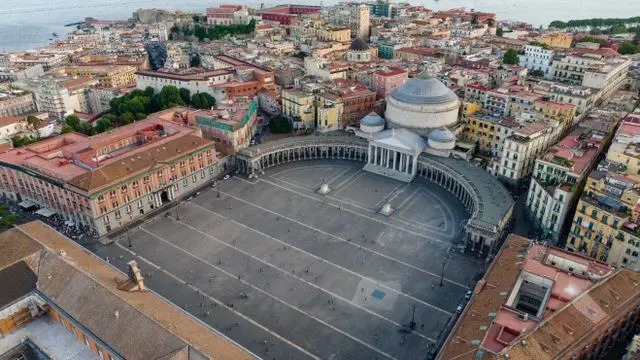
The city's grandest square is framed by the curved colonnade of San Francesco di Paola on one side and the Royal Palace on the other. Inside the palace, the state apartments show how the Bourbon court lived. Teatro San Carlo and Galleria Umberto I, a glass-roofed arcade from the late nineteenth century, are a short walk away.
Castel dell'Ovo and the Waterfront
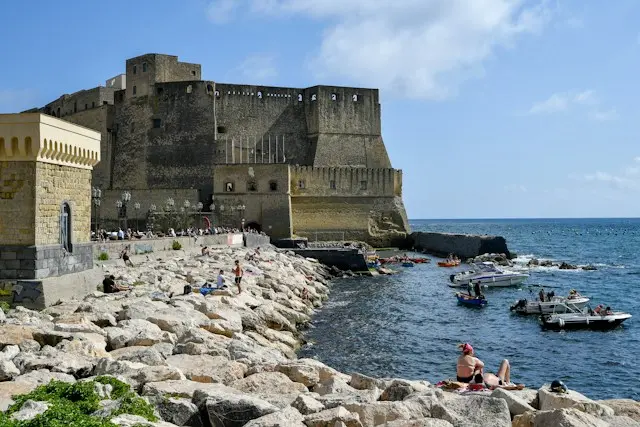
Set on a small islet joined to the mainland, Castel dell'Ovo is the oldest standing fortress in the city and offers wide views across the bay toward Vesuvius. Legend says the poet Virgil hid a magic egg in its foundations, which explains the name. Afterwards, follow the seafront promenade toward Chiaia for a sunset aperitivo.
Certosa di San Martino and Vomero
High above the centre, this former monastery combines baroque interiors, a museum of Neapolitan art and history, and gardens with some of the finest panoramas of the bay. Take a funicular up to the Vomero district, which feels calmer and more residential than the old town. Go late in the afternoon for the best light.

Day Trips from Naples
Naples is a natural base for exploring the surrounding bay, and most trips are simple by regional train or ferry.
Pompeii
The Roman city buried by the eruption of Vesuvius in 79 CE is huge, so wear comfortable shoes, carry water and a hat, and allow at least half a day. Highlights include the forum, the amphitheatre, the paved streets with worn cart ruts and the richly painted houses. The Circumvesuviana train from Naples takes roughly 35 to 40 minutes, and buying from the official park site helps you avoid reseller booking fees.
Herculaneum
Smaller and easier to cover in two or three hours, Herculaneum was sealed under volcanic material that preserved wooden beams, upper floors and even carbonised furniture. Many visitors find it more intimate than Pompeii. The Ercolano Scavi station is a short train ride from Naples, so it pairs well with a Vesuvius hike on the same day.
Mount Vesuvius
The Gran Cono trail leads to the crater rim, and the final stretch from the trailhead is an uphill walk of around half an hour. It is exposed and has little shade, so bring water and sturdy shoes. Entry is by timed ticket, and the trail can close at short notice in bad weather, so check the park's official site before you set out.
Capri, Ischia and Procida
Ferries and hydrofoils leave from the port area, and Capri is roughly an hour away. Capri offers dramatic cliffs and the Blue Grotto but is crowded and pricey in summer. Ischia is known for thermal gardens and beaches, while Procida is a quieter, colourful fishing island that suits slower travellers.
Things to Do Beyond the Landmarks
Explore Underground Naples
The city sits on a honeycomb of tunnels and cisterns dug out over more than two thousand years. Guided tours, including those starting near Piazza San Gaetano, take you through ancient aqueducts and wartime air-raid shelters. Bring a layer, because it stays cool below ground even in summer.
Ride to Toledo Metro Station
Naples runs an art stations programme on its metro, and Toledo on Line 1 is the standout, with a glowing blue mosaic tunnel that feels like a seabed. It is a quick, easy detour even if you are only passing through.
See a Show or Tour at Teatro San Carlo
Opened in 1737, this is one of the oldest opera houses still in use in Europe. Book a performance if the schedule suits you, or join a guided tour of the gilded auditorium and boxes.
Visit Rione Sanità
This neighbourhood north of the centre has grown from a place visitors once skipped into a community-led cultural hub. The Catacombs of San Gennaro and the Fontanelle Cemetery offer an atmospheric look at how Neapolitans have long related to their dead. Local cooperatives run guided visits, which are well worth choosing.

Local Food and Everyday Experiences
Pizza
UNESCO recognised the art of the Neapolitan pizzaiuolo in 2017. Classic pies are soft, charred at the edges and simply topped: tomato, mozzarella, basil and olive oil on a Margherita, or tomato, garlic and oregano on a marinara. Historic names such as L'Antica Pizzeria da Michele, Sorbillo and Starita draw queues, so aim for off-peak hours. For a quick lunch, try pizza a portafoglio, folded like a wallet and eaten on the go.
Coffee and Pastry
Coffee is a quick ritual taken standing at the bar, usually small, strong and inexpensive. Pair it with a sfogliatella, a layered pastry filled with sweet ricotta, or a rum-soaked babà. Naples is also the home of the caffè sospeso, the tradition of paying for an extra coffee that a stranger can claim later.
Street Food and Markets
Look out for crocchè (potato croquettes), frittatine di pasta and cuoppo, a paper cone of fried seafood or vegetables. For a taste of daily life, browse the stalls at Pignasecca in the centre or the fish and produce market at Porta Nolana.
San Gregorio Armeno
This short alley of workshops makes nativity figures all year, including satirical statuettes of footballers and public figures. It is busiest from late November to January, when it becomes one of the most crowded streets in the city.
Football and Maradona
Naples loves its football club, and Diego Maradona, who played here from 1984 to 1991, is remembered almost like a local saint. His murals in the Quartieri Spagnoli are a popular stop, and catching a match at the stadium that carries his name is an unforgettable way to see the city's passion first-hand.
Where to Stay in Naples
Naples is compact, so choosing the right neighbourhood matters more than choosing the right hotel. Here is how the main areas compare.
- Centro Storico: closest to major sights and full of life, but noisy late into the night.
- Chiaia and the Lungomare: elegant, with sea views, good restaurants and easy walks to the castle and the ferries.
- Vomero: quiet, residential and scenic, with funicular links down to the centre.
- Near Napoli Centrale: convenient for trains and day trips, though the area is busy and less charming.
Book early for spring and early autumn, when the best-located places fill quickly.

Getting to Naples and Around the City
Naples Capodichino Airport sits close to the city, and a shuttle bus links it with the central station and the port. High-speed trains from Rome take just over an hour, which makes Naples easy to add to a wider Italy itinerary.
Within the city, the historic centre is best explored on foot. The metro, funiculars and buses cover longer distances, and the Circumvesuviana line serves Pompeii, Herculaneum and Sorrento. Use official taxis and ask about the fixed fares for the airport and port, and do not drive in the centre, where restricted traffic zones can bring fines.

Best Time to Visit and Practical Tips
Spring (April to June) and early autumn (September to October) bring warm weather without the worst of the summer heat. July and August are hot, humid and busy, and many local restaurants close around mid-August. Winter is mild and quieter, though some island and seaside services run reduced schedules.
- Keep valuables in a zipped cross-body bag or front pocket, because pickpocketing happens in crowded areas and on public transport.
- Cross roads steadily and predictably, as drivers expect to flow around pedestrians.
- Carry some cash for small bars and market stalls, even though cards are accepted in most places.
- Many churches close in the early afternoon and museums have weekly closing days, so check hours before heading out.
- Cover your shoulders and knees when entering churches.
- Confirm ticket prices, opening hours and booking rules on official sites close to your travel date, as these change often.
Conclusion
Naples rewards visitors who arrive curious and a little flexible. A strong first trip might spend one day on the old town and MANN, another at Pompeii or Herculaneum, and a third on the waterfront, Vomero and a long dinner.
Stay longer if you can, add an island or Vesuvius, and leave room for unplanned detours, because the best moments here often come from the side streets rather than the checklist.
Frequently Asked Questions
How many days do you need in Naples? +
Three days covers the main sights and one day trip comfortably, while two days works for a quick visit and four or five lets you add Capri, Ischia or Vesuvius without rushing.
Is it better to visit Pompeii or Herculaneum if I only have time for one? +
Choose Pompeii for scale and the full sense of a Roman city, or Herculaneum if you prefer a smaller, better-preserved site that can be done in a couple of hours.
Can I visit Naples as a day trip from Rome? +
Yes, since high-speed trains take just over an hour, but you will only have time for the old town, a pizza and one major sight, so an overnight stay is much more rewarding.
Do I need a car in Naples? +
No, because public transport and walking cover almost everything, and driving in the centre is stressful and restricted. A car is only useful for exploring the wider region, such as the Amalfi Coast.
Is tap water safe to drink in Naples? +
Tap water is generally considered safe and is widely drunk by locals, though some visitors prefer bottled water for taste.
Do you tip in Naples? +
Tipping is not expected the way it is in some countries. Many restaurants add a small cover charge, and rounding up the bill or leaving a few euros for good service is plenty.
What should I eat first in Naples? +
Start with a Margherita or marinara pizza at a traditional pizzeria, then try a sfogliatella with coffee the next morning.
