Table of Contents
Overview
Wawel Cathedral sits at the summit of Wawel Hill in Kraków, sharing the same fortified rise as the Royal Castle but carrying a weight of its own as Poland's national sanctuary. For centuries this was the church where Polish monarchs were crowned and, in death, laid to rest, making it one of the most historically charged buildings in the country.
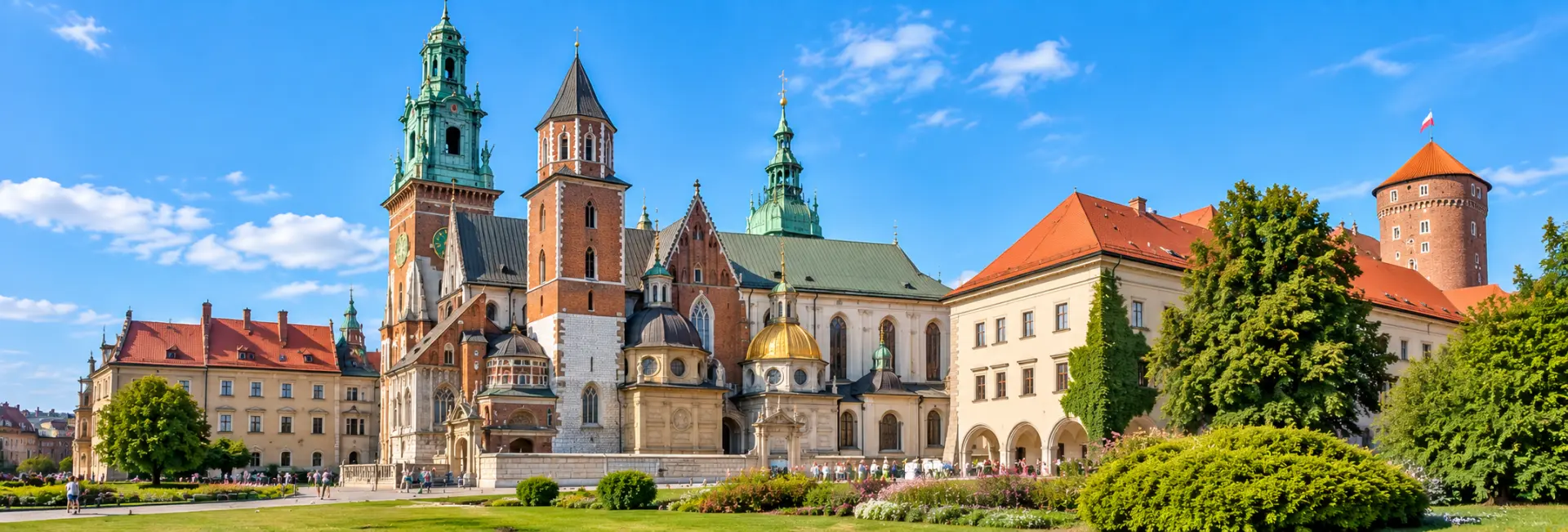
Formally the Archcathedral Basilica of Saints Stanislaus and Wenceslaus, the cathedral is a patchwork of architectural styles built up over nearly a thousand years, with royal tombs, a golden-domed Renaissance chapel, and a bell tower that continues to mark the nation's most significant occasions.
History
Three Churches on One Site
The cathedral standing today is the third church built on this spot. The first, founded in the 11th century under King Bolesław I the Brave, gave way to a Romanesque cathedral built around 1140, which was itself destroyed by fire in 1305. Construction of the present Gothic cathedral began soon after, commissioned by Bishop Nanker, and it was consecrated in 1364 under King Casimir III the Great.
Coronations and Burials
From the 14th century onward, Wawel Cathedral served as the coronation church of Polish monarchs, a role it continued to play into the 18th century. At the same time, it became the primary burial site for the country's kings, queens, and eventually a wider circle of national heroes, effectively functioning as Poland's royal necropolis and national pantheon across several centuries.
A Living Symbol Into the Modern Era
The cathedral's significance continued well past the age of monarchy. Karol Wojtyła, the future Pope John Paul II, celebrated his first Mass as a newly ordained priest in the cathedral's crypt in 1946, and later served as Archbishop of Kraków before his election to the papacy. In more recent history, the cathedral hosted the funeral of Polish President Lech Kaczyński in 2010, whose remains were interred in one of its crypts.
Architecture & Design
Because it developed over nearly a millennium, Wawel Cathedral blends Romanesque, Gothic, Renaissance, Baroque, and Neoclassical elements into a single, layered structure. Its core remains Gothic, built primarily in the 14th century, while later rulers and bishops added side chapels and mausoleums in the architectural fashions of their own eras.
The most celebrated of these additions is the Sigismund Chapel, commissioned in the 16th century and widely regarded as one of the finest examples of Renaissance architecture outside Italy. Recognizable from outside by its gilded dome, the chapel stands in vivid contrast to the cathedral's older Gothic stonework, illustrating just how many architectural chapters the building has passed through.
Cultural & Religious Significance
As the seat of the Archdiocese of Kraków and Poland's national sanctuary, Wawel Cathedral occupies a unique place in the country's religious and civic life. Its role as the coronation and burial church of Polish monarchs gave it deep symbolic weight long before it became a major visitor destination, and its crypts remain the resting place of kings, poets, generals, and revolutionaries regarded as central figures in Polish history.
The cathedral's connection to Pope John Paul II adds a further layer of significance for many visitors, tying the building's medieval and Renaissance history directly to more recent Polish and Catholic memory.
Notable Features
A handful of features draw the most attention inside and around the cathedral.
- The Sigismund Chapel, with its gilded dome and celebrated Renaissance interior
- The Sigismund Bell, a roughly 12-ton bell cast in 1520 and rung only on the most significant national and religious occasions
- The Royal Crypts, holding the tombs of Polish monarchs and national heroes including Tadeusz Kościuszko, Józef Piłsudski, and Adam Mickiewicz
- The Crypt of St. Leonard, one of the few surviving remnants of the earlier Romanesque cathedral
- Large bones, popularly said to belong to the legendary Wawel Dragon, hanging by chains near the cathedral's main entrance
Visiting Etiquette & Tips
A visit combines the practicalities of a major historic site with the etiquette expected of an active cathedral.
- Entry to the main nave is generally free, while the Royal Crypts, Sigismund Tower, and cathedral museum each require separate paid tickets, often available as a combined pass
- Dress modestly and keep noise to a minimum, since the cathedral remains an active place of worship
- Wear comfortable shoes, particularly if planning to climb the narrow stairs of the Sigismund Tower
- Photography is restricted in parts of the cathedral, including some chapels and the crypts, so check posted signage
- Visiting hours differ from the rest of the Wawel complex and can vary between weekdays and Sundays, so confirm current times before planning your visit
Best Time to Visit
Wawel Cathedral can be visited comfortably throughout the year, though mornings tend to be calmer than midday, when visitor numbers to the wider Wawel Hill complex peak. Because the cathedral sits alongside the Royal Castle, many visitors combine both in a single half-day visit, which is easiest to manage outside the busiest summer weekends.
Checking the cathedral's own opening hours separately from the castle's is worth doing, since services and religious observances can affect access to certain areas on any given day.
Nearby Attractions
Sharing the same hilltop as the Royal Castle, the cathedral is naturally paired with several other major sights nearby.
- Wawel Royal Castle, sharing the same hilltop complex just steps away
- The Dragon's Den, at the base of Wawel Hill, tied to Kraków's legend of the Wawel Dragon
- Kraków's Main Market Square, a walk of about ten minutes north through the Old Town
- St. Mary's Basilica, on the Main Market Square, offering a contrasting Gothic parish church experience
- The Vistula Boulevards, running along the riverbank directly below the hill
FAQs about visiting Wawel Cathedral
What is Wawel Cathedral known for? +
It is known as Poland's coronation church and royal necropolis, where Polish monarchs were crowned and buried for centuries, and it remains the resting place of numerous national heroes.
Is it free to visit Wawel Cathedral? +
Entry to the main nave is generally free, while the Royal Crypts, Sigismund Tower, and cathedral museum require separate paid tickets.
What is the Sigismund Chapel? +
It is a 16th-century Renaissance chapel attached to the cathedral, recognizable by its gilded dome and widely regarded as one of the finest Renaissance structures outside Italy.
When does the Sigismund Bell ring? +
The bell is rung only on the most significant national and religious occasions rather than on any regular schedule.
Who is buried in the Wawel Cathedral crypts? +
The crypts hold the tombs of Polish monarchs alongside national heroes such as Tadeusz Kościuszko, Józef Piłsudski, and the poet Adam Mickiewicz.
Is Wawel Cathedral connected to Pope John Paul II? +
Yes, Karol Wojtyła, later Pope John Paul II, celebrated his first Mass as a priest in the cathedral's crypt in 1946 and later served as Archbishop of Kraków.
How do I get to Wawel Cathedral? +
It sits atop Wawel Hill alongside the Royal Castle, within a short walk of Kraków's Main Market Square and easily reached on foot from the Old Town.
What else is nearby if I want to keep exploring? +
Wawel Royal Castle, the Dragon's Den, and Kraków's Main Market Square are all within easy walking distance, making the cathedral simple to combine with a broader visit to Wawel Hill and the Old Town.