
Table of Contents
- Introduction to Kraków
- Best Time to Visit
- Getting to Kraków and From the Airport
- Getting Around the City
- Where to Stay
- The Main Square and Old Town
- Wawel Castle and Cathedral
- Kazimierz, the Jewish Quarter
- Auschwitz-Birkenau and Wieliczka Salt Mine
- Food and Drink
- Money, Costs, and Everyday Practicalities
- Final Tips Before You Go
Introduction to Kraków
Kraków is the rare European city that survived the 20th century almost physically intact while still carrying the full weight of its history. Unlike Warsaw, which was leveled and rebuilt after World War II, Kraków's medieval old town, royal castle, and centuries-old synagogues largely escaped destruction, which is part of why it feels so different to walk through compared to other Polish cities. It served as Poland's royal capital for over 500 years, and that history is visible almost everywhere you look in the center.
For first-time visitors, Kraków tends to be a city of contrasts. There's the beautiful, lively Main Square filled with cafes and street musicians, and there's the sobering reality of Auschwitz-Birkenau less than an hour and a half away. Both are part of an honest visit to the city, and most travelers find room for the full range without either side overwhelming the trip.
Best Time to Visit
May through September covers Kraków's warmest, most comfortable stretch, with temperatures generally in the 60s to high 70s Fahrenheit. This is also peak tourist season, particularly July and August, when the Main Square and major attractions get genuinely crowded and booking ahead for sites like Auschwitz and Wieliczka becomes closer to essential than optional.
Late spring, May and early June, and early fall, September into early October, tend to offer the best balance, with fewer crowds than peak summer and weather still comfortable for walking the Old Town and climbing Wawel Hill.
Winter in Kraków
Winter, November through February, is cold, often below freezing, but it's also when the Main Square hosts its Christmas market, one of the more atmospheric ones in this part of Europe, and when hotel prices and crowds both drop noticeably. Snow on the castle and old town rooftops has a genuine fairy-tale quality that summer photos don't capture.

Getting to Kraków and From the Airport
Kraków John Paul II International Airport sits about 9 miles from the city center and has grown into a significant hub for budget European carriers, making Kraków an easy add-on to a wider Central European trip.
Getting Into the City
- A direct train runs from the airport to Kraków Główny, the main train station, in about 20 minutes, and is generally the fastest and most reliable option regardless of traffic conditions.
- Buses also connect the airport to the city center, cheaper than the train but slower and more affected by traffic during peak hours.
- Taxis and ride-hailing apps are readily available outside arrivals; agree on or confirm the fare before departing, or use an app-based service to avoid any ambiguity.
Arriving by Train
Kraków has strong rail connections to Warsaw, about 2.5 hours by fast train, and to other Central European cities, making it easy to fold into a broader Poland or Central Europe itinerary. Trains arrive at Kraków Główny, within walking distance of the Old Town.
Getting Around the City
Kraków's Old Town, Wawel Castle, and Kazimierz are all comfortably walkable from most central accommodation, and many first-time visitors get through several days without needing public transport much at all. The pedestrianized core of the Old Town, in particular, is meant to be explored on foot.
For anything further out, Kraków's tram and bus network is extensive, cheap, and easy to navigate, with tickets available from machines at stops or through mobile apps. Trams are generally the more useful option for reaching Kazimierz quickly or heading to attractions slightly outside the center.
Practical Note
Cobblestones dominate much of the Old Town and Kazimierz, so comfortable, sturdy shoes matter more here than in cities with more modern paving.
Where to Stay
Where to base yourself in Kraków depends mostly on how much you want quiet evenings versus proximity to nightlife and the main sights.
Old Town (Stare Miasto)
Staying inside or right around the Old Town puts you within walking distance of the Main Square, Wawel Castle, and most restaurants, though it's the priciest option and can be noisy near the square at night, especially in summer.
Kazimierz
The former Jewish quarter has become one of Kraków's trendiest areas, with a strong food and bar scene and a more atmospheric, lived-in feel than the more polished Old Town. It's still a comfortable walk or short tram ride from the main sights.
Podgórze
Across the river from Kazimierz, Podgórze is quieter and more residential, home to Schindler's Factory and the Ghetto Heroes Square memorial, and offers good value accommodation for travelers who don't mind a slightly longer walk into the historic center.

The Main Square and Old Town
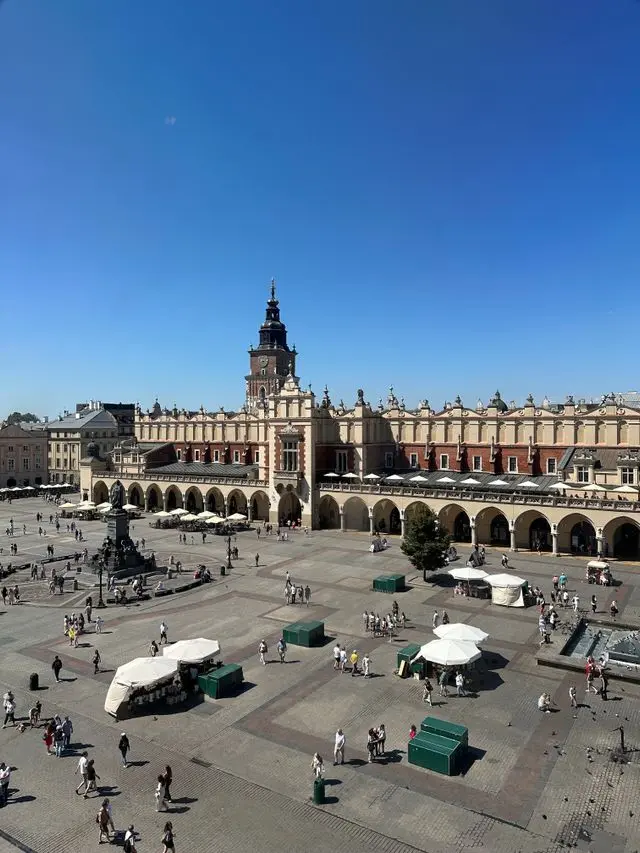
Rynek Główny, Kraków's Main Square, is one of the largest medieval town squares in Europe and the natural heart of any visit. The Cloth Hall, a Renaissance-era trading hall running down the center of the square, now houses souvenir stalls on the ground floor and a gallery of Polish art upstairs, worth a look even if you're not buying anything.
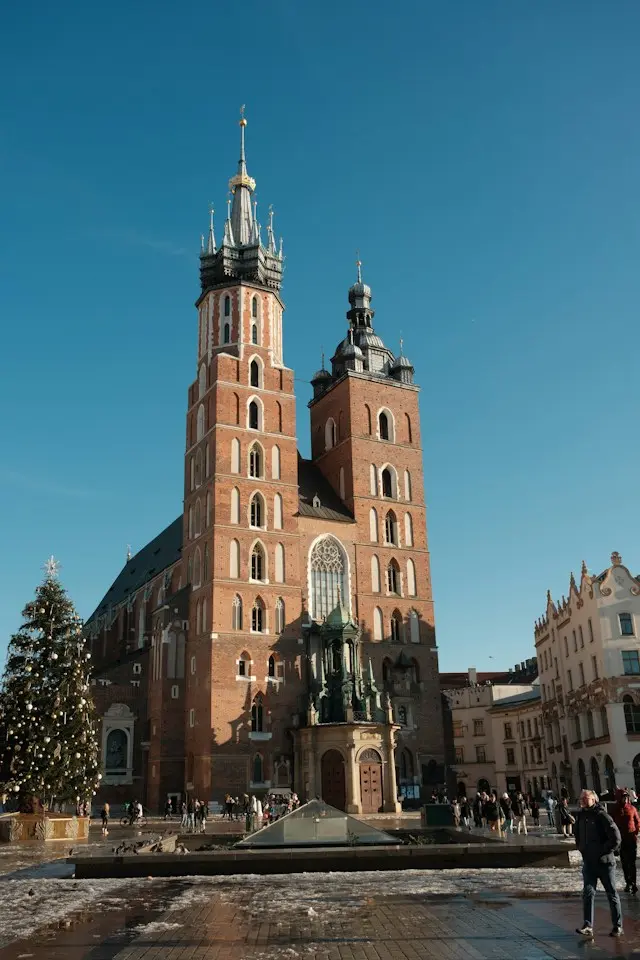
St. Mary's Basilica, with its two mismatched towers, dominates one corner of the square, and its interior altarpiece, an enormous wooden Gothic triptych, is worth the small entry fee. Every hour, a trumpeter plays a short melody from the taller tower that cuts off abruptly, a tradition commemorating a watchman supposedly shot mid-warning during a medieval invasion.
Wandering Beyond the Square
The Barbican and the remaining stretch of the old city walls, just north of the Main Square, are worth a short visit for a sense of Kraków's defensive history, and the Planty, a green ring of parkland that replaced the demolished city walls, makes for a pleasant walking loop around the entire Old Town.
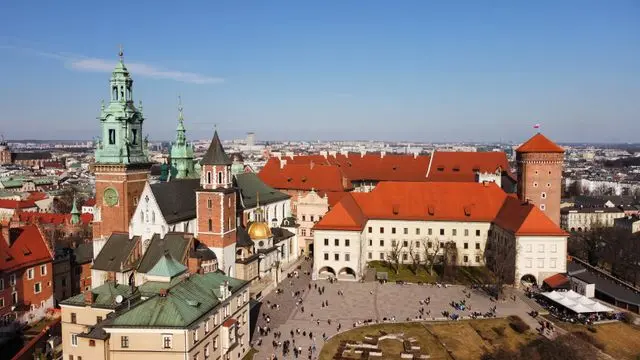
Wawel Castle and Cathedral
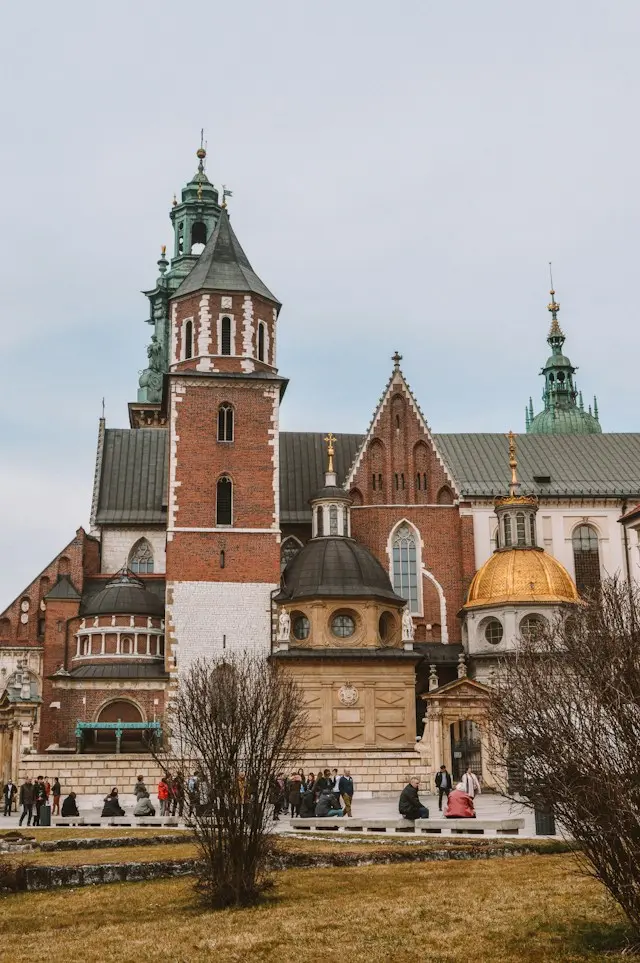
Wawel Hill, overlooking the Vistula River, was the seat of Polish kings for centuries and remains Kraków's most important historical site. The complex includes the Royal Castle, the Cathedral where Polish monarchs were crowned and are buried, and several smaller museums covering everything from state rooms to a dragon's den at the base of the hill, tied to Kraków's founding legend.
Different sections of the complex are ticketed separately, and in peak season, tickets for the most popular areas like the State Rooms can sell out by midday, so arriving early or booking ahead is worth doing if you have specific parts of the castle you don't want to miss. Even without going inside any particular building, walking the grounds and taking in the river views is free and worth the visit on its own.
Kazimierz, the Jewish Quarter
Kazimierz was Kraków's independent Jewish town for centuries before being absorbed into the city, and it remains one of the most historically significant Jewish quarters in Europe. Several historic synagogues, including the Old Synagogue and the Remuh Synagogue with its adjoining cemetery, are open to visitors and offer a direct connection to the neighborhood's centuries of Jewish life before World War II.
The neighborhood also carries the weight of the Holocaust, and a walk through Kazimierz into neighboring Podgórze, where the Nazi-era ghetto was located, gives a fuller picture than either the Old Town or a single museum visit alone. Schindler's Factory, now a museum covering Kraków under Nazi occupation, is a significant stop here, though tickets sell out four to seven days ahead in summer, so book online in advance.
Beyond its historical weight, present-day Kazimierz is also simply a great neighborhood to spend an evening in, with a concentration of good restaurants, bars, and a livelier, less polished energy than the Old Town.
Auschwitz-Birkenau and Wieliczka Salt Mine
Auschwitz-Birkenau, about an hour and a half from Kraków, is the largest former Nazi concentration camp and one of the most important historical sites in the world to visit in person. Entry is free, but visits require a timed, guided ticket booked well ahead, since demand routinely exceeds availability, and independent walk-up access without a guide is limited to a narrow early-morning or late-afternoon window. Most visitors go as part of an organized day tour that includes transport, since public transport connections exist but are less convenient.
It's a heavy, sobering visit, and most people spend three to four hours moving between Auschwitz I and Birkenau. Full names and photo ID for every visitor must be provided at booking, since tickets are personalized and checked at entry, and errors in this information can result in denied entry, so double-check the details when you book.
Wieliczka Salt Mine
The Wieliczka Salt Mine, a UNESCO World Heritage site about 30 minutes from Kraków, has been mined for salt for over 700 years and includes underground chapels, statues, and even an entire cathedral-like chamber, all carved from salt by generations of miners. Many visitors combine it with Auschwitz in a single long day, though it also works well as a standalone half-day trip if you'd rather not pack both into one day. The mine sits at a constant cool temperature underground, so bring a light layer even in summer.

Food and Drink
Polish food in Kraków is hearty, affordable, and built around dumplings, soups, and slow-cooked meats. Pierogi, filled dumplings that come in savory versions like potato and cheese or meat, and sweet versions like fruit-filled, are the dish most visitors gravitate toward first, and quality varies significantly, so a place recommended by locals is worth seeking out over the most touristy spot on the square.
- Zapiekanka, an open-faced baguette topped with mushrooms, cheese, and often meat, then baked, is Kraków's classic late-night street food, especially popular around Kazimierz's Plac Nowy square.
- Żurek, a sour rye soup often served with sausage and hard-boiled egg, and bigos, a hunter's stew of sauerkraut and various meats, are both classic, warming dishes especially good in colder months.
- Obwarzanek, a ring-shaped bread similar to a bagel and sold from street carts throughout the city, is a cheap, genuine Kraków snack rather than a tourist gimmick.
Milk Bars
Bar mleczny, or milk bars, are a holdover from the communist era, cafeteria-style spots serving simple, cheap Polish comfort food. They're not fancy, but they offer some of the most authentic, budget-friendly meals in the city, and locals still eat at them regularly rather than treating them purely as a novelty for tourists.
Money, Costs, and Everyday Practicalities
Poland uses the złoty, not the euro, and it's worth having this straight since some visitors assume otherwise given the country's EU membership. Card payments are accepted almost everywhere in Kraków, but it's worth carrying a small amount of cash as backup, especially for day trips outside the city where card machines are less consistent.
Kraków is one of the more affordable major destinations in this part of Europe, with restaurant meals, transport, and accommodation generally cheaper than comparable Western European cities. Tipping around 10 percent at sit-down restaurants is standard practice, though it's not as rigidly expected as in some other countries.
Safety and Etiquette
Kraków is a safe city for travelers, with petty theft in crowded tourist areas like the Main Square being the main thing to stay aware of. When visiting Auschwitz-Birkenau, dress and behave respectfully, loud conversation, inappropriate photography, and casual behavior are discouraged and, in some cases, actively enforced by site staff.
Final Tips Before You Go
Book tickets for Auschwitz-Birkenau, Wieliczka Salt Mine, and Schindler's Factory well ahead if you're visiting in summer, ideally a week or more in advance, since all three now run on timed, digital-first ticketing systems that regularly sell out. Provide accurate full names and ID details when booking Auschwitz tickets specifically, since entry is checked against this information at the gate.
Pack comfortable shoes for cobblestones, and bring a light layer for the salt mine even if visiting in summer, since it stays cool underground year-round. If you're combining Auschwitz and Wieliczka in one day, expect an early start, often before 7am pickup, and a long day, so keep your evening plans loose.
Kraków rewards visitors who balance its lighter and heavier sides deliberately rather than by accident, an afternoon at Wawel Castle, a quiet walk through Kazimierz, and time set aside to properly absorb Auschwitz rather than treating it as one more stop on a checklist. Done that way, it's a city that stays with you well after the trip ends.
Frequently Asked Questions
How many days do I need in Kraków? +
Three days is a solid amount of time, covering the Old Town, Wawel Castle, Kazimierz, and a full day trip to Auschwitz-Birkenau and Wieliczka Salt Mine. Four or five days allows a more relaxed pace or an additional day trip like Zakopane in the mountains.
Do I need to book Auschwitz-Birkenau tickets in advance? +
Yes, strongly recommended, especially for summer visits. Entry is free but requires a timed, guided ticket that regularly sells out, and independent access without a guide is limited to a narrow window, so book online well ahead of your trip.
Is Kraków expensive to visit? +
No, Kraków is one of the more affordable major destinations in Central Europe, with meals, accommodation, and transport generally cheaper than comparable Western European cities.
What currency does Kraków use? +
Poland uses the złoty, not the euro, despite EU membership. Cards are widely accepted, but carrying some cash as backup is worth it, particularly for day trips outside the city.
Is Kraków walkable, or will I need public transport? +
The Old Town, Wawel Castle, and Kazimierz are all comfortably walkable from most central accommodation. You'll mainly need trams or buses for attractions further out or if you're staying outside the historic core.
Should I visit Auschwitz-Birkenau and Wieliczka Salt Mine on the same day? +
Many tours combine both into one long day, roughly 10 to 12 hours with an early pickup. It's doable, but visiting them separately on different days allows more time to process Auschwitz specifically without rushing to the next stop.
Is Kraków safe for tourists? +
Yes, Kraków is generally very safe, with petty theft in busy tourist areas like the Main Square being the main thing to watch for. Standard travel precautions are usually enough.
When is the best time to visit Kraków? +
Late spring and early fall offer the best balance of comfortable weather and manageable crowds. Winter brings a quieter, more atmospheric visit with a notable Christmas market, while summer is peak season with the biggest crowds and highest attraction demand.
Do I need to speak Polish to get by? +
No, English is widely spoken in hotels, restaurants, and most tourist-facing businesses in central Kraków, though learning a few basic phrases is appreciated by locals.