Table of Contents
Overview
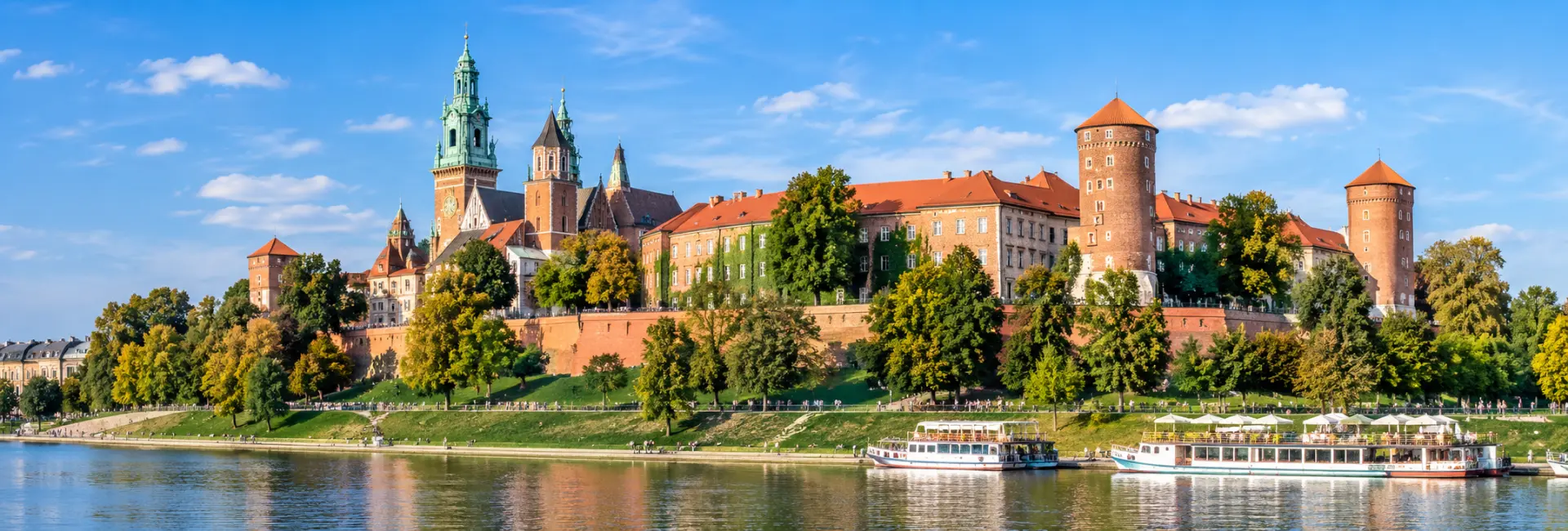
Wawel Royal Castle sits on a limestone hill above the Vistula River in Kraków, and for centuries it stood at the very center of Polish political and cultural life. As the residence of Polish kings and the site of royal coronations and burials, Wawel carries a symbolic weight in Poland that few other buildings can match.
Today the castle and its neighboring cathedral form a sprawling museum complex, with Renaissance courtyards, richly furnished state rooms, and a treasury of royal regalia sitting alongside older Gothic and Romanesque remnants. A visit here moves through nearly a thousand years of Polish history in a single hilltop walk.
History
Early Settlement on Wawel Hill
Archaeological evidence places the earliest stone buildings on Wawel Hill as far back as around 970 AD, making it one of the oldest fortified sites in Poland. Under the early Piast dynasty, the hill became a natural stronghold and seat of power, and some of the country's earliest surviving Romanesque architecture can still be traced to this period.
The Gothic Castle of Casimir the Great
After a fire heavily damaged the earlier buildings in 1306, King Casimir III the Great ordered the construction of a proper Gothic castle on the site in the 14th century, laying the foundations for the structure that would be expanded by later monarchs.
A Renaissance Transformation
The castle took on its present character in the early 16th century under King Sigismund I the Old, who commissioned Italian architects, including Francesco Fiorentino and Bartolomeo Berrecci, to rebuild it in the Renaissance style. Their work produced the arcaded courtyard modeled on Florentine palace design that remains Wawel's architectural centerpiece today.
Decline, Occupation, and Restoration
Poland's royal court moved to Warsaw at the end of the 16th century, and Wawel's importance as a residence gradually faded, though it remained the burial place of Polish monarchs and national heroes. During the period of Austrian rule in the 19th century, the castle was converted into military barracks, causing significant damage. Following the Austrian garrison's withdrawal in 1905, a major restoration effort began under architect Adolf Szyszko-Bohusz, returning much of the complex to something closer to its historic appearance and cementing its role as a national museum and symbol.
Architecture & Design
Wawel's buildings represent nearly every major European architectural style from the Middle Ages through the Baroque period, layered on top of one another as successive rulers rebuilt and expanded the complex. The oldest surviving elements include Romanesque stonework, while Gothic towers and walls from Casimir the Great's reign still anchor parts of the structure.
The most celebrated feature is the Renaissance courtyard, ringed by three tiers of open arcades that bring Italian palace architecture directly into a Central European hilltop fortress. Nearby, the adjoining Wawel Cathedral adds its own architectural layers, most notably the domed Sigismund Chapel, widely regarded as one of the finest examples of Renaissance architecture north of the Alps.
Collections & Exhibits
State Rooms
These grand reception rooms, once used for royal ceremonies and official business, are hung with an extensive collection of 16th-century tapestries commissioned by Sigismund II Augustus, forming one of the largest collections of Renaissance tapestries surviving in Europe.
Royal Private Apartments
Furnished to reflect the personal living quarters of Poland's kings, this section offers a more intimate look at royal life alongside further examples of period furniture, portraiture, and decorative art.
Crown Treasury and Armoury
Home to Poland's royal regalia and historic weaponry, the treasury's most celebrated object is Szczerbiec, the notched coronation sword used in Polish royal ceremonies for centuries, displayed alongside crowns, orbs, and a wide-ranging collection of historic arms and armor.
Lost Wawel
An archaeological exhibition built around excavated remains beneath the current buildings, this section traces the hill's earliest history, including foundations from its Romanesque-era rotunda and other structures predating the present castle.
Exhibition of Oriental Art
This smaller collection features Ottoman tents and other items captured following the 1683 Battle of Vienna, reflecting Poland's historic military and diplomatic connections with the Ottoman Empire.
Must-See Highlights
With several separately ticketed sections spread across the hill, it helps to know which highlights matter most on a first visit.
- The Renaissance arcaded courtyard, free to enter and the architectural heart of the complex
- Szczerbiec, the historic coronation sword displayed in the Crown Treasury
- The Sigismund Chapel inside Wawel Cathedral, celebrated as a masterpiece of Renaissance design
- The Sigismund Bell, rung only on the most significant national and religious occasions
- The Dragon's Den, a cave at the base of the hill tied to Kraków's legend of the Wawel Dragon, marked outside by a fire-breathing bronze dragon statue
Ways to Experience It
Because Wawel is organized into several distinct, individually ticketed sections, most visitors plan ahead rather than trying to see everything at once.
- Walk the free, publicly accessible courtyard and grounds to get an overview of the complex before deciding which paid sections to prioritize
- Choose two or three of the museum sections, such as the State Rooms, the Treasury, and Wawel Cathedral, rather than attempting all five in one visit
- Book tickets in advance during peak season, since daily visitor numbers to some sections are limited
- Descend into the Dragon's Den after touring the hilltop, following the spiral staircase down toward the riverbank
- Consider a guided tour for deeper context on the castle's role in Polish history and royal ceremony
Best Time to Visit
Wawel Hill and its courtyard can be enjoyed at any time of year, but the interior museum sections tend to have shorter hours and can close on certain weekdays outside the summer season, so checking the current schedule before visiting is worthwhile. Spring and autumn generally offer a good balance of pleasant weather and smaller crowds compared to the height of summer.
Early mornings are the best time to see the courtyard and grounds without the crowds that build through the day, particularly in July and August when Kraków's Old Town is at its busiest.
Visitor Tips
A little planning helps visitors manage Wawel's separately ticketed sections and its position as one of Kraków's most visited sites.
- Confirm current opening hours, ticket prices, and daily visitor limits for each section on the official Wawel website before your visit
- The courtyard itself is free to enter, but each interior exhibition, including the cathedral's tower and crypts, requires its own ticket
- Wear comfortable shoes, since the hill involves a steady uphill walk and the complex covers significant ground on foot
- Photography rules vary by section, particularly inside the cathedral and treasury, so check posted signage before taking pictures indoors
- Allow at least half a day if you plan to visit multiple sections along with the cathedral
Nearby Attractions
Wawel Hill sits at the southern edge of Kraków's historic center, making it easy to combine with the city's other major sights.
- Kraków's Main Market Square and its historic Cloth Hall, a short walk north through the Old Town
- St. Mary's Basilica, known for its towering Gothic altarpiece, near the Main Square
- The Vistula Boulevards, running along the riverbank directly below the castle
- Kazimierz, Kraków's historic Jewish quarter, a short walk southeast of Wawel
- The Wawel Dragon statue, marking the entrance to the Dragon's Den at the foot of the hill
FAQs about visiting Wawel Royal Castle
What is Wawel Royal Castle known for? +
It is known as the former residence of Polish kings and the site of royal coronations and burials, celebrated today for its Renaissance courtyard, royal treasury, and the adjoining Wawel Cathedral.
Is it free to visit Wawel Royal Castle? +
The courtyard and grounds are free to enter, but each interior museum section, such as the State Rooms, Crown Treasury, and Royal Private Apartments, requires a separate paid ticket.
How much time should I plan for a visit? +
A quick walk through the courtyard takes under an hour, but visiting two or three interior sections along with the cathedral generally takes half a day.
What is the Dragon's Den? +
It is a cave at the base of Wawel Hill linked to Kraków's legend of the Wawel Dragon, accessible by a spiral staircase and marked outside by a fire-breathing bronze dragon statue.
Do I need to book tickets in advance? +
It is worth booking ahead during peak season, since several of Wawel's museum sections limit the number of daily visitors.
Is Wawel Cathedral part of the same visit? +
The cathedral sits within the same hilltop complex and can be visited on its own ticket, including access to its towers and royal crypts.
How do I get to Wawel Royal Castle? +
It sits at the southern edge of Kraków's Old Town, within easy walking distance of the Main Market Square and directly above the Vistula Boulevards.
What else is nearby if I want to keep exploring? +
Kraków's Main Square, St. Mary's Basilica, and the historic Kazimierz district are all within walking distance, making Wawel easy to combine with a full day in central Kraków.