

Table of Contents
About Zurich
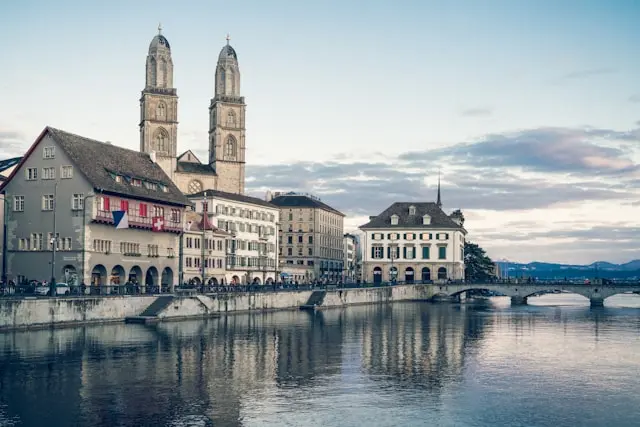
Zurich is Switzerland's largest city and its financial capital, but it wears that status lightly. At its center sits a compact medieval Old Town split by the Limmat River, with twin-towered churches, narrow cobbled lanes, and guildhalls that have stood for centuries. Just beyond it, Lake Zurich opens up, ringed by promenades, swimming spots, and views toward the distant Alps on a clear day.
What sets Zurich apart is how much nature sits inside a major city: locals swim in the Limmat River on summer lunch breaks, hike or sled on the Uetliberg "home mountain" a short train ride from downtown, and treat the lakeside as an everyday extension of city life rather than a weekend escape. It's a small, walkable city that still feels genuinely alpine.
Getting to Zurich
By Air
Zurich Airport (ZRH) is Switzerland's main international gateway and sits directly on the city's train network, with frequent direct trains running straight into Zurich Hauptbahnhof (the main station) in around 10-15 minutes. This makes the airport one of the easiest in Europe to connect from, with no separate shuttle or transfer needed.
By Train
As a major hub on the Swiss and broader European rail network, Zurich has direct international connections to cities including Munich, Milan, Paris, and Vienna, alongside frequent domestic service to Geneva, Bern, Basel, and Lucerne. Switzerland's rail system is known for punctuality and frequency, and Zurich Hauptbahnhof is one of the busiest stations in Europe.
By Car
Zurich is reachable via Switzerland's motorway network, but a car is unnecessary and often a liability once in the city: central parking is limited and expensive, many Old Town streets are pedestrianized, and Zurich's public transport is fast and comprehensive enough that most visitors and locals get by without driving at all.
Transportation in Zurich
Trams and Buses
Zurich's tram network is the backbone of getting around, running frequently and covering the city center and surrounding neighborhoods in a dense, easy-to-navigate grid. Buses fill in routes the trams don't reach, and both run on the same integrated ticketing system.
Walking
The Old Town and lakefront core are compact enough to explore almost entirely on foot, with most major sights within a 20-25 minute walk of the main station, and many Old Town streets closed to cars entirely.
S-Bahn and Regional Trains
Zurich's S-Bahn commuter rail network connects the city center quickly to outlying areas, including the Uetliberg lookout and Zurich Airport, and uses the same transport pass as trams and buses within the city zones.
Boats
Passenger boats operate on Lake Zurich and along the Limmat River, offering a scenic and genuinely practical way to get between lakeside points, not just a tourist novelty.

Things to Do in Zurich
Zurich rewards slow exploration on foot, with most headline sights clustered around the Old Town and lake.
- Old Town (Altstadt) – A maze of medieval lanes split by the Limmat River into Niederdorf, the livelier side known for bars and restaurants, and the quieter Oberdorf.
- Grossmünster – Zurich's twin-towered Romanesque church and most recognizable landmark, with a climbable tower offering wide views over the city and lake.
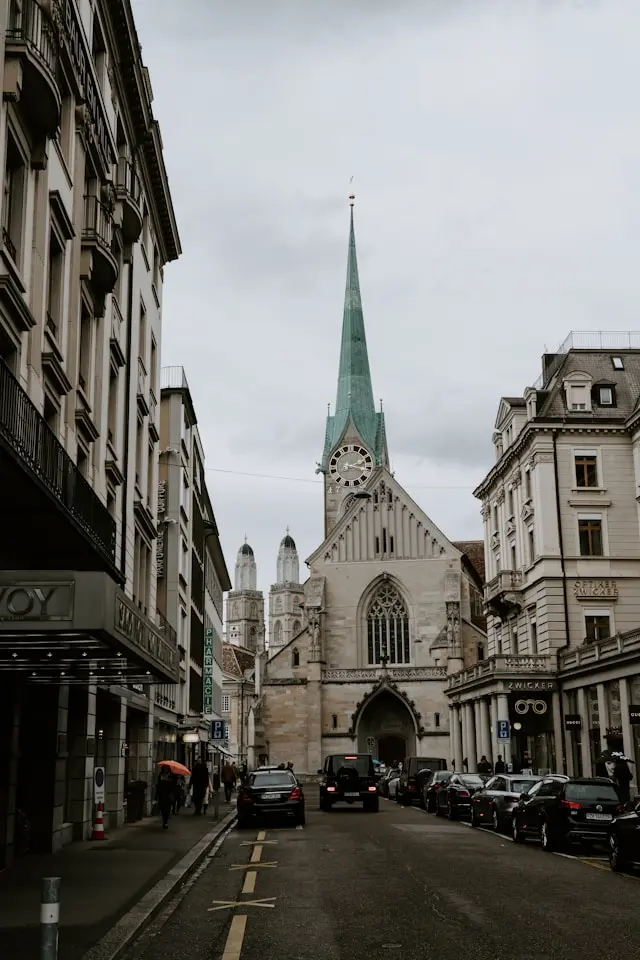
- Fraumünster – A church known for its striking stained-glass windows, including a series designed by Marc Chagall.
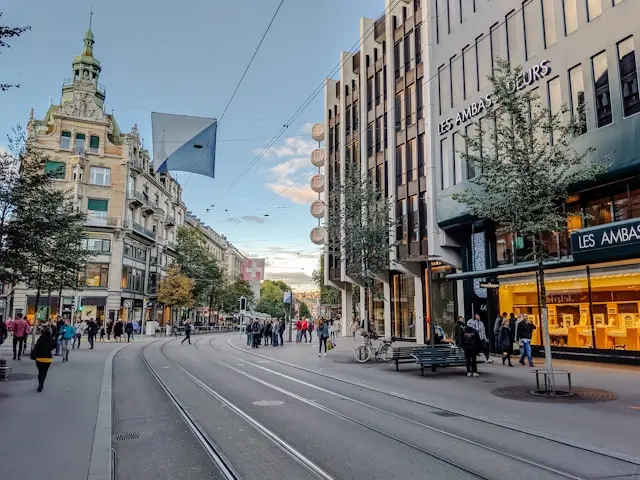
- Bahnhofstrasse – One of the world's most exclusive shopping streets, running from the main station down to the lake, lined with luxury boutiques alongside more affordable Swiss chocolate and department stores.
- Lake Zurich – The city's defining natural feature, popular for lakeside walks, swimming spots, and boat cruises toward towns like Rapperswil.
- Uetliberg – Zurich's "home mountain," reachable by a short train ride and an easy walk to a summit lookout tower with panoramic views of the city, lake, and Alps.
- Lindenhof – A quiet, elevated square on the site of a former Roman fort, offering free views over the Limmat and Old Town rooftops.
- Kunsthaus Zürich – One of Switzerland's most important art museums, with major European collections spanning from medieval works to contemporary art.
- Swiss National Museum – A castle-like museum by the main station covering Swiss cultural history from prehistory to the present.
Neighborhoods to Explore
Niederdorf
The lively, pedestrianized left-bank half of the Old Town, dense with bars, restaurants, and small shops. It's the best base for visitors who want to walk everywhere and enjoy an active evening scene.
Oberdorf
The quieter right-bank counterpart to Niederdorf, home to the Grossmünster and a more relaxed, residential feel despite sitting just across the river from the bustle.
Kreis 5 (Zurich West)
A former industrial district turned creative and nightlife hub, with converted factories now housing bars, galleries, and restaurants. It has a noticeably different, more contemporary character than the Old Town.
Seefeld
An upscale lakeside neighborhood east of the center, known for its promenade, lakeside swimming spots, and a quieter, more residential pace than downtown.

Food in Zurich
Zurich's dining scene mixes hearty Swiss-German classics with a large and increasingly international food culture. The signature local dish is Zürcher Geschnetzeltes, sliced veal in a creamy mushroom sauce typically served with rösti, a pan-fried shredded potato dish found across the city's traditional restaurants.
For something more casual, Zurich has strong bakery, chocolate, and cafe traditions, with the city closely associated with Swiss chocolate brands. Zurich West and the areas around Niederdorf offer a wider international range, from Michelin-recognized fine dining to casual global street food.
- Try rösti and Zürcher Geschnetzeltes at a traditional Swiss-German restaurant in the Old Town.
- Visit a Confiserie for Swiss chocolate and pastries rather than only tourist-facing chocolate shops.
- Expect restaurant prices to run high by European standards; grocery stores and bakeries are a common way locals and budget-conscious visitors eat more cheaply.
- Explore Kreis 5 for a younger, more casual and internationally varied food scene outside the Old Town.
Accommodation in Zurich
Old Town (Niederdorf and Oberdorf)
Staying in the Old Town puts you within walking distance of nearly everything, at a price: this is generally the most expensive area to book, and Niederdorf in particular can be noisy at night given its bar and restaurant density.
Near the Hauptbahnhof
The area around the main train station offers a wide range of hotels at various price points, with excellent transport connections to the airport, Old Town, and greater Zurich, making it a practical base even if slightly less atmospheric.
Zurich West (Kreis 5)
A good option for visitors who want a more contemporary, design-forward stay with strong nightlife and dining nearby, at prices that are often somewhat lower than the Old Town.
Seefeld
A quieter lakeside choice suited to visitors prioritizing calm evenings and lake access over being in the middle of the action, with the Old Town still an easy tram ride away.

Day Trips from Zurich
- Lucerne – A postcard Swiss lakeside city with its famous covered wooden bridge and mountain backdrop, roughly 45 minutes away by direct train.
- Rhine Falls (Schaffhausen) – The largest waterfall in Europe by volume, reachable by a roughly hour-long train journey, with boat rides that go right up to the falls.
- Lindt Home of Chocolate – An interactive chocolate museum and factory experience a short train ride from central Zurich, popular with families.
- Rapperswil – A lakeside town with a hilltop castle, reachable by a scenic boat trip across Lake Zurich as an alternative to the train.
- Mount Rigi or Titlis – Higher-altitude alpine excursions for visitors wanting a genuine mountain experience with cable cars and summit views, doable as a long day trip.
Best Time to Visit Zurich
Late spring through early autumn (May-September) brings the warmest weather and is the best window for lake swimming, outdoor dining, and hiking on the Uetliberg, though it's also the busiest and priciest period for accommodation. Winters are cold with occasional snow, but the city stays lively, and it also makes an efficient base for day trips to nearby ski resorts.
Shoulder months like April, May, September, and October offer a good balance of milder weather and thinner crowds, and are often the most comfortable time for walking-heavy sightseeing in the Old Town.
Budget & Costs in Zurich
- Zurich is consistently ranked among the most expensive cities in the world, and visitors should budget noticeably more here than in most European destinations, especially for meals and hotels.
- Free activities include walking the Old Town, Lindenhof, and lakeside promenades, and several museums offer free or reduced-price entry on certain days.
- The Zurich Card offers unlimited public transport plus discounted or free entry to many museums and attractions, which can offset costs for visitors planning a packed sightseeing schedule.
- Eating from bakeries, supermarkets, or self-service cafeterias is a common way to manage food costs, since sit-down restaurant meals add up quickly.
- Public transport, while efficient, is priced accordingly; a multi-day transport pass is usually better value than single tickets for anyone moving around frequently.

Local Customs & Etiquette
Swiss social norms favor punctuality and a degree of formality; trains and trams run on precise schedules, and arriving on time for reservations or meetings is expected. Tipping is not obligatory since service is included in prices by law, though rounding up or leaving small change for good service is common and appreciated.
Zurich residents value quiet in residential areas, particularly on Sundays, when many shops close and loud activity (including some housework) is culturally discouraged. Recycling and waste sorting are taken seriously across the city, and visitors staying in apartments or guesthouses may notice detailed sorting instructions for trash.
Safety Tips in Zurich
Zurich is considered one of the safer major cities in Europe, with low rates of violent crime. The main practical risks for visitors are petty theft in crowded areas like the main station and around Niederdorf's nightlife strip late at night, along with the usual pickpocketing risk on busy trams.
- Keep bags and valuables secure in crowded areas around Zurich Hauptbahnhof and busy tram stops.
- Be cautious around the Platzspitz park area near the station late at night, historically associated with drug activity, though it's generally fine to pass through during the day.
- Swimming in the Limmat River is popular but should only be done at designated, current-monitored spots given the river's flow.
- For emergencies, dial 112 for general emergencies or 117 for police.
Suggested Itineraries
1 Day in Zurich
Start in the Old Town around the Grossmünster and Fraumünster, then walk down Bahnhofstrasse toward the lake for a stroll along the promenade. In the afternoon, take the short train up to Uetliberg for panoramic views before heading back down for dinner in Niederdorf.
2-3 Days in Zurich
Add time for the Kunsthaus or Swiss National Museum, an afternoon exploring Zurich West's galleries and bars, and a lake cruise toward Rapperswil. On a third day, take a half-day or full-day trip to Lucerne or the Rhine Falls before returning to Zurich for the evening.

Common Questions about visiting Zurich
How many days do you need in Zurich? +
One full day covers the Old Town, Bahnhofstrasse, and Uetliberg, but two to three days lets you add museums, the lakefront, Zurich West, and at least one day trip to somewhere like Lucerne or the Rhine Falls.
What's the best time of year to visit Zurich? +
Late spring through early autumn offers the warmest weather for lake activities and hiking, while shoulder months like May and September balance milder weather with smaller crowds; winter suits visitors planning to combine the city with nearby ski areas.
Is Zurich expensive to visit? +
Yes, Zurich is one of the more expensive cities in the world to visit, particularly for dining and accommodation, though free attractions like the Old Town and lakefront, plus tools like the Zurich Card, can help manage costs.
Do I need a visa to visit Zurich? +
Visa requirements depend on nationality and follow Switzerland's Schengen-area entry rules; travelers should confirm current requirements with official Swiss or Schengen sources before booking, since these rules can change.
Is Zurich safe for visitors? +
Zurich is one of the safer major European cities, with low violent crime rates, though normal precautions against pickpocketing apply around the main station and nightlife areas late at night.
How do you get around Zurich once you're there? +
Zurich's tram and bus network is fast, frequent, and covers the whole city, while the compact Old Town and lakefront are easily walkable; the S-Bahn handles trips further out, including to the airport and Uetliberg.
What's the best area to stay in Zurich? +
The Old Town offers the most central, walkable base at a premium price, while areas near the main station or in Zurich West offer a wider range of prices and a still-easy connection to the center.
What pairs well with a trip to Zurich? +
Zurich works well combined with day trips to Lucerne, the Rhine Falls, or Rapperswil, and its central position on the Swiss and European rail network makes it an easy stop between other major cities.
Is Zurich suitable for families? +
Zurich suits families well, with lakeside swimming spots, the interactive Lindt Home of Chocolate, an easy funicular-style train up Uetliberg, and a compact, low-traffic city center.
What do visitors often wish they knew before going to Zurich? +
Many visitors underestimate how expensive dining out can be and don't realize how much of Zurich's appeal is outdoors and free, like the lake, Lindenhof, and Uetliberg, rather than concentrated only in paid attractions.