
Table of Contents
Overview
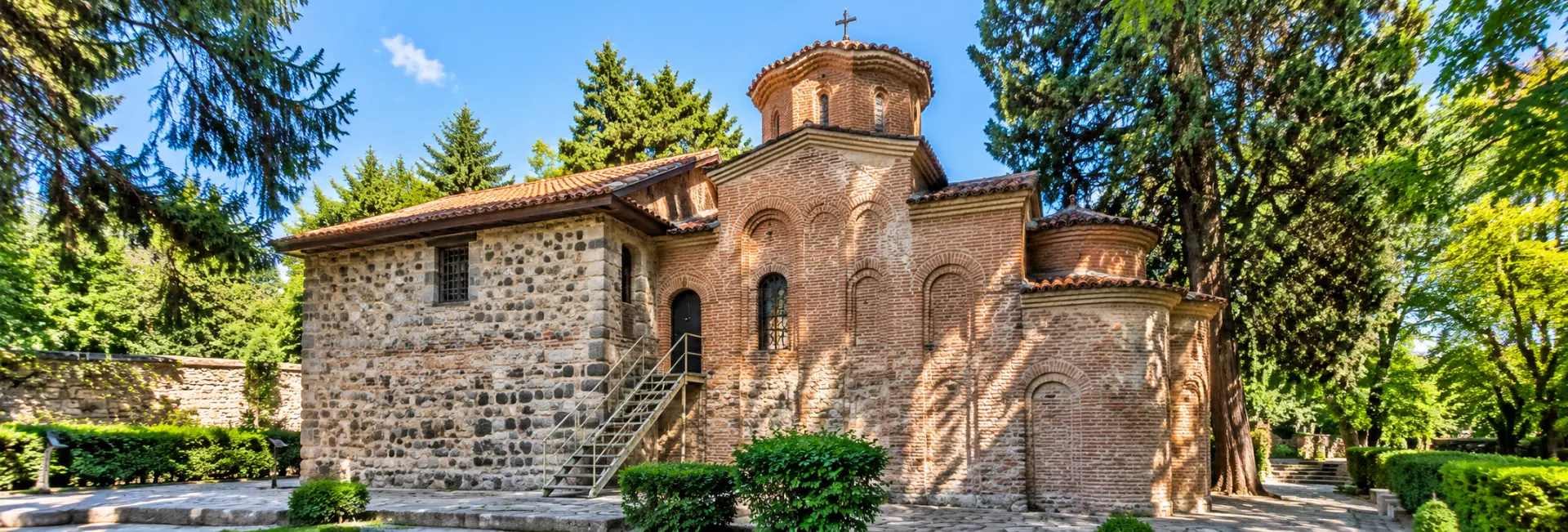
Tucked into a leafy park at the foot of Mount Vitosha, Boyana Church is one of the most remarkable medieval monuments in the Balkans. From the outside it looks modest, a small cluster of stone and brick buildings with simple roofs. Inside, however, the walls are covered with paintings from the thirteenth century that are admired around the world for their lifelike faces and emotional depth.
The church sits in the Boyana district, roughly eight kilometres south of central Sofia, and is dedicated to Saint Nicholas and Saint Panteleimon. It is the only UNESCO World Heritage Site within the city itself, which makes it a natural choice for anyone interested in art, history or religious heritage.
A visit here feels different from most sightseeing stops. Entry is carefully controlled to protect the paintings, so you step into a small, hushed space, take in the scenes in a short window of time, and leave with a vivid sense of how sophisticated Bulgarian medieval art could be.
History
The First Church
The oldest part of the complex dates from the late tenth or early eleventh century. It is a small, single-apse church with a cross-vaulted plan, built during a period when the area around present-day Sofia was a frontier of the Bulgarian lands. Fragments of eleventh and twelfth century paintings survive from this earliest phase.
Kaloyan's Expansion
In the thirteenth century, the local ruler of Sredets, as Sofia was then known, ordered a major addition. He was a nobleman holding the high court rank of sebastokrator, and his name was Kaloyan. Together with his wife Desislava, he commissioned a two-storey annex built against the western side of the old church. The lower floor served as a family burial chamber, and the upper floor became a private chapel dedicated to Saint Panteleimon.
A donor inscription in the narthex records that the new decoration was completed in 1259. It also names the patrons and describes their connection to the Bulgarian tsar and to the Serbian royal family.
Later Centuries
During the Ottoman period, the complex also operated as a monastery. In the nineteenth century, a third building was added to the west with the help of local donations. The church continued to serve worshippers until the mid twentieth century, and it opened to the public as a museum in 1977. Restoration of the paintings took place in several campaigns, starting early in the twentieth century and continuing until 2006.
Architecture & Design
Three Buildings, Three Eras
Boyana Church is really a small ensemble of three joined structures, each from a different period. The eastern church is the oldest and the smallest. The central building is the two-storey thirteenth century addition. The western building is the youngest, added in the nineteenth century to give worshippers more room.
The Tomb-Church Plan
Kaloyan's annex follows the tomb-church type, in which a burial space and a prayer space are stacked in one structure. The ground floor held the family sepulchre, while the upper chapel allowed relatives to pray over the family's resting place. The lower level has a rounded vault, and the whole building has a compact, intimate scale that suits its private purpose.
Protecting the Interior
Because the walls are covered by delicate medieval paint, the interior is kept at a stable, cool temperature. Visitor numbers are limited so that breathing and body heat do not harm the surfaces. This is why you will notice staff controlling entry in small groups.
The 1259 Frescoes
Scale and Subject
The church contains about 89 scenes and a total of roughly 240 human figures. Many come from the 1259 campaign, in which a team of unknown painters decorated both floors of Kaloyan's addition. Scholars refer to this group as the Boyana Master, and they link the style to the artistic tradition of Tarnovo, the medieval Bulgarian capital.
Faces That Feel Alive
What astonishes visitors is the realism. Figures have individual expressions, subtle shading and a sense of personality that was rare in religious painting of the period. Many art historians point to these murals as a forerunner of the more naturalistic approach that later became famous in Western Europe.
Highlights to Look For
- The portraits of Kaloyan and Desislava, shown in rich clothing that reveals the court fashion and symbols of power of their time.
- The royal portraits of Tsar Constantine Asen Tikh and Tsaritsa Irina on the north wall.
- An image of Saint Ivan of Rila, regarded as the earliest known depiction of Bulgaria's national patron saint.
- The cycle of scenes from the life of Saint Nicholas, shown in eighteen episodes in the narthex.
- The commanding figure of Christ Pantocrator in the dome of the oldest church, together with the figures of church fathers below it.
- The dramatic Crucifixion scene, often singled out for its emotional force.
Some later paintings from the fourteenth, sixteenth, seventeenth and nineteenth centuries can also be spotted, showing how the church kept being decorated long after the main medieval campaign.
Recognition / Status
Boyana Church was added to the UNESCO World Heritage List in 1979, during the third session of the World Heritage Committee. It remains the only World Heritage Site inside Sofia.
UNESCO describes the paintings as one of the most complete and best preserved ensembles of eastern European medieval art. The listing also highlights how the frescoes reflect the artistic achievements of the Second Bulgarian Kingdom.
- It is a national cultural monument and is managed as a branch of the National Museum of History.
- Strict visitor controls are part of its conservation plan.
- The church is still occasionally used for cultural events and guided programmes arranged by the museum.
Ways to Experience It
The Short, Focused Visit
Inside the church itself, visits are limited to groups of no more than nine people for about ten minutes. That sounds brief, but the time is well used if you arrive prepared. Many guests find it helpful to read about the main scenes beforehand so that they know where to look once inside.
Guided and Self-Guided Options
Guided tours can be arranged in several languages, and the museum on site offers information about the history of the church and its restoration. Several tour operators in Sofia include Boyana Church in half-day or full-day excursions, often paired with the National Museum of History or with Rila Monastery. Independent visitors can simply buy a ticket at the on-site office and join the next available slot.
Make a Morning of It
The grounds are pleasant for a stroll before or after your slot, and the surrounding neighbourhood has quiet streets, cafes and trails leading into the forest. Treat the church as the centrepiece of an unhurried half-day outing rather than a rushed stop.
Best Time to Visit
Time of Day
Arriving soon after opening is usually the calmest option, as tour groups tend to cluster around late morning. Early afternoon is another good window, while the last slots of the day can feel more relaxed once day-trippers have left.
Season
Late spring and early autumn combine mild weather with attractive park scenery, which makes the walk to and around the church especially pleasant. Summer is warm, but the interior is kept cool. Winter brings fewer visitors and shorter opening hours, and the surrounding trees and mountain view look beautiful under snow.
Special Days
The museum announces certain days with free entry, such as International Museum Day in May and the Day of Sofia in September. These can be crowded and may not allow advance bookings, so plan extra time if you decide to go then.
Visitor Tips
Because access is so tightly managed, a little planning goes a long way. Opening hours, ticket prices and reservation rules are updated from time to time, so check the official museum website before you travel.
Practical Points
- Entry to the church interior is in small timed groups, and tickets are sold at the on-site office.
- Groups and larger parties are encouraged to reserve in advance through the museum.
- Photography and video inside the church are restricted to protect the frescoes, so confirm the current rule at the desk.
- Smoking, drones and most pets are not allowed, although guide dogs may enter the courtyard.
- A ramp and toilet facilities are available for visitors who need them.
Getting There
The church is about 20 to 25 minutes from the city centre by taxi or car. Public buses 64 and 107 both serve the area, with stops near the church entrance. If you drive or take a taxi, note that the street name is Boyansko Ezero.
Dress and Manners
Dress modestly and keep your voice low. The church is a protected monument as well as a place of worship, so follow staff instructions about where to stand and when to move on.
Nearby Attractions
The Boyana district is one of Sofia's greenest corners, which means you can easily combine the church with something relaxing or scenic.
- The National Museum of History occupies the grand former Boyana Residence and is only a short drive away, offering a broad overview of Bulgarian history from prehistory to modern times.
- The trail to Boyana Waterfall, the highest waterfall on Vitosha, begins a few hundred metres from the church entrance.
- Vitosha Nature Park offers hiking routes, viewpoints and picnic spots on the mountain slopes above the neighbourhood.
- The leafy streets of Boyana itself are pleasant for walking and have small cafes and restaurants for a post-visit meal.
Combining the church with the museum or a short walk in the mountain foothills makes a rewarding half-day away from the centre.
FAQs about visiting Boyana Church
Why is Boyana Church famous? +
It is celebrated for its 1259 frescoes, which show remarkably natural faces and emotions for their time. The church is also the only UNESCO World Heritage Site in Sofia.
How long can I stay inside the church? +
Visits are limited to about ten minutes per group, with a maximum of nine people inside at once. This rule protects the delicate paintings.
Do I need to book in advance? +
Individual visitors can usually buy a ticket at the on-site office and join the next available slot. Groups are encouraged to reserve ahead, so check the official museum website for the latest policy.
Can I take photos inside? +
Photography and video inside the church are restricted to protect the frescoes. Ask at the ticket desk about the current rules before you enter.
How do I get to Boyana Church from central Sofia? +
It is about eight kilometres from the centre. A taxi takes roughly 20 to 25 minutes, and city buses 64 and 107 stop near the church.
Is Boyana Church suitable for children or visitors with mobility needs? +
Children are welcome, though the short, quiet visit suits older kids best. The site has a ramp and toilet facilities, but it is worth confirming access details with the museum in advance.
What else can I do nearby? +
You can visit the National Museum of History in the former Boyana Residence, walk to Boyana Waterfall, or explore the trails of Vitosha Nature Park.
