
Table of Contents
Overview
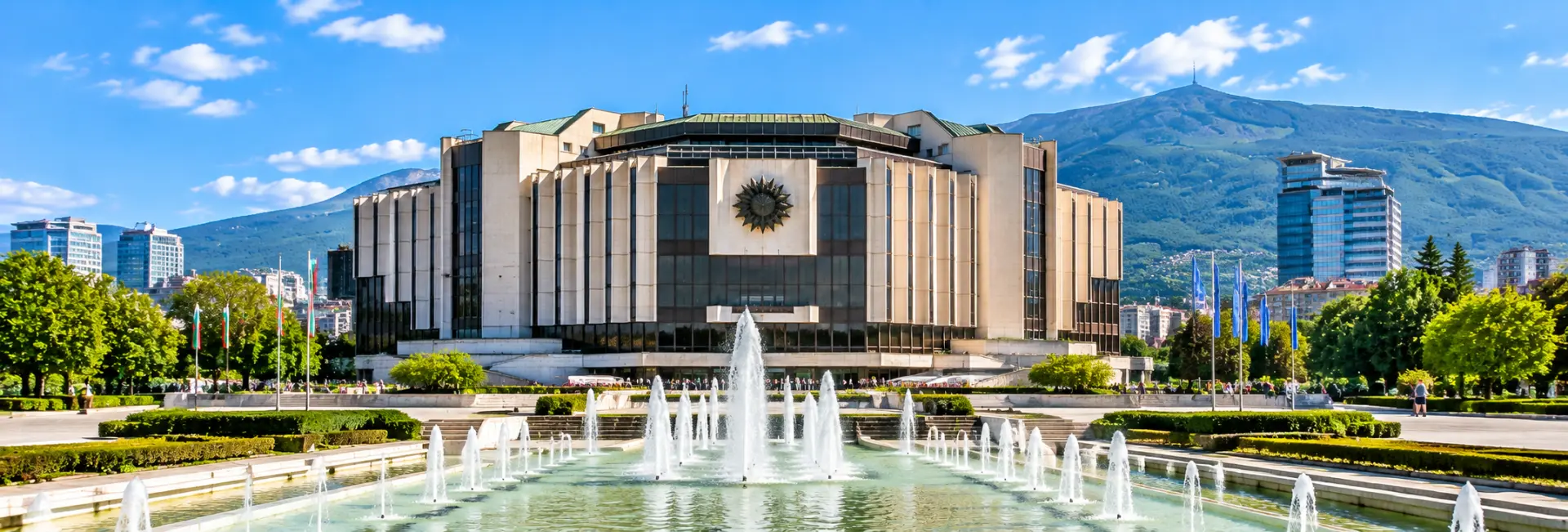
The National Palace of Culture, known to everyone in Sofia as NDK, is the largest and most ambitious cultural complex in the Balkans. It sits at the southern end of Vitosha Boulevard, surrounded by fountains, trees and wide paved squares, and its huge concrete form is one of the most recognisable modern shapes in the capital.
Part concert venue, part congress centre and part public art gallery, the palace hosts hundreds of events every year. International orchestras, film festivals, trade fairs, political summits and New Year celebrations all take place under its roof, which makes it a living cultural hub rather than a monument to be viewed from a distance.
Whether you come for a concert, to admire the artwork in the foyers, or simply to stroll through the park in front, NDK offers a vivid picture of Sofia's modern identity and of the ambitions of the late twentieth century.
History
A Gift for the 1300th Anniversary
The idea for the palace came from Lyudmila Zhivkova, a senior cultural figure of the communist era and daughter of the country's long-time leader Todor Zhivkov. The goal was to create a grand national centre for culture, and to finish it in time for the celebration of 1,300 years since the founding of the Bulgarian state.
Rapid Construction
Construction began in 1978 and was completed in about three years, with the palace officially opened on 31 March 1981. The project relied on Bulgarian materials and on the labour of many workers and volunteers, and it was treated as a national effort. Until 1990, the building carried the name of its initiator, the Lyudmila Zhivkova People's Palace of Culture.
Renewal in a New Era
After the political changes of 1989 and 1990, the palace took on its present name and continued to serve as the country's main venue for large events. In 2005, it was named the best congress centre in the world for that year by an international association of congress centres. A major renovation in 2016 and 2017 prepared the complex to host Bulgaria's presidency of the Council of the European Union in the first half of 2018, with plenary meetings held in Hall 3.
Architecture & Design
A Monumental Modern Form
The building was designed by a team led by the architect Alexander Barov, working together with Ivan Kanazirev and a group of Bulgarian and foreign specialists. Its massive, angular structure is often described as brutalist, and it rises above the surrounding park like a vast, faceted block with terraces and wide entrances.
Scale
The total functional area is about 123,000 square metres, spread across eight floors above ground and three underground levels. There are also several panoramic terraces. Counts of the halls vary between twelve and fifteen depending on how they are grouped, and more than fifty smaller meeting rooms are also available.
Interior Style
Inside, the palace follows a unified design that uses an octagonal motif and a palette of deep, dark colours. Long foyers, broad staircases and high ceilings give the interior a sense of ceremony, and the heavy materials create a distinctive atmosphere that feels very much of its era.
Symbols
The palace has its own symbols, including a stylised bronze sun with rays shaped like ears of wheat and a firebird emblem formed from curved lines. These motifs appear in details around the building and reflect traditional Bulgarian imagery.
Art Inside the Palace
One of NDK's most surprising features is the quantity of art built into it. More than one hundred works of monumental painting, sculpture, woodcarving, tapestry and metalwork were commissioned for its halls and foyers, creating what amounts to a large open gallery of Bulgarian art from the period.
Many walls carry large murals showing historical figures and events, while sculptures and carved panels decorate lobbies and staircases. The artists represented include many of the leading Bulgarian names of the late twentieth century, and their works were designed to match the scale of the architecture.
Restoration of the wall art was part of the recent renovation plans, and you can often see the artwork simply by walking through the public areas on your way to an event or a café.
- Look for large wall murals in the main lobbies and corridors.
- Notice carved wooden and metal panels around doors and stairs.
- Pay attention to the bronze sun and other decorative symbols worked into the design.
Halls & Events
Hall 1
The largest hall seats more than three thousand people in fixed armchairs and is the main stage for big concerts, galas and premieres. It has hosted classical orchestras, opera stars and international pop acts, and in 2026 it was the setting for a gala concert marking the palace's 45th anniversary.
Smaller Halls and Venues
The complex also contains many smaller halls suited to chamber music, recitals, conferences and exhibitions. There is a cinema, a theatre stage and several music clubs, and some parts of the building host trade fairs and fashion shows. Hall 3, the large conference hall, is known as the venue used for the European Union presidency meetings in 2018.
Annual Highlights
- The Sofia International Film Festival, which uses several of the halls and screens.
- Classical, jazz and pop concerts through most of the year.
- Large New Year events, a tradition that dates back to the 1980s.
- Exhibitions, book fairs and international congresses.
The programme changes constantly, so it is worth checking the official event calendar before your visit to see what is on.
Bulgaria Square & the Park
A Park at the Palace's Door
In front of the palace stretches Bulgaria Square, a broad pedestrian space designed by a team led by the architect Atanas Agura. The surrounding park was shaped by the landscape architect Valentina Atanassova, and it is one of the most popular green spaces in central Sofia.
Fountains and Public Life
The long approach is lined with fountains, sculptures and benches, and cafés and restaurants gather around it. In 2022, the square gained the city's first drinking fountains for people and pets, along with water spouts for cooling off on hot days. On warm evenings, the area fills with walkers, families and groups of friends.
A Natural Starting Point
Vitosha Boulevard, the main pedestrian shopping street of Sofia, begins right here. That makes the park a convenient place to start a walk toward the old centre, or to finish one after a day of sightseeing.
Best Time to Visit
Time of Year
The park and square are at their best in late spring, summer and early autumn, when the fountains are running and outdoor tables fill with people. Cooler months are better for indoor events, since concerts, festivals and exhibitions form the heart of the programme.
Time of Day
Daytime is good for wandering the foyers and admiring the artwork, if the building is open for your chosen event or exhibition. Evenings bring a livelier atmosphere, with illuminated walkways and visitors arriving for concerts and shows.
Seasonal Quiet Periods
Activity at the palace slows noticeably in the middle of summer, particularly in August, so check what is on if you are travelling then. The outdoor park remains open and lively regardless of the event schedule.
Visitor Tips
NDK works differently from a traditional museum, because access depends on what is happening inside. There are no fixed sightseeing hours for the whole complex, and many areas are reached by buying a ticket to a concert, film or exhibition.
Planning Your Visit
- Check the official event calendar and buy tickets in advance for popular concerts and festival screenings.
- Use the box office and information desk in the building for current opening times and ticket availability.
- Arrive early for big events, as security checks and crowds can slow entry.
Getting There
- The NDK metro station on line M2 is right beside the building.
- Several city bus, tram and trolleybus routes also stop nearby.
- Underground parking is available, though spaces fill up during major events.
Facilities
The complex has cafés, restaurants and shops, and the building is equipped with facilities for visitors with disabilities. If you have specific access needs, it is sensible to ask the venue in advance about the best entrance and seating options.
Nearby Attractions
NDK sits at a natural crossroads in Sofia, so there is plenty to see within a short walk.
- Vitosha Boulevard starts at the palace and leads north through the main shopping and dining district toward the historic centre.
- South Park, one of the city's largest and most popular green spaces, is close by and ideal for a relaxed walk.
- The Ivan Vazov National Theatre is about a kilometre away and pairs well with an evening of live performance.
- St Nedelya Church and the central squares of the old town lie at the far end of Vitosha Boulevard.
- Vitosha Mountain rises south of the city and is reachable by bus and taxi for a hike or a ski day.
A simple day plan could combine a morning in the park, lunch on Vitosha Boulevard and an evening concert in one of the palace's halls.
FAQs about visiting the National Palace of Culture
What is the National Palace of Culture? +
It is Sofia's largest congress and cultural centre, opened in 1981. It hosts concerts, festivals, exhibitions, conferences and public events throughout the year.
Can I just walk in and look around? +
Parts of the building and the surrounding park are freely accessible, but many halls open only for ticketed events. Check the event calendar or ask at the information desk to see what you can visit.
How do I buy tickets? +
Tickets for concerts, films and exhibitions are usually bought through the palace's official ticket centre, either online or at the box office. Popular events can sell out, so book early.
How do I get to NDK? +
The NDK metro station on line M2 is next to the building, and several buses, trams and trolleybuses also stop nearby. Underground parking is available for drivers.
What is there to see besides events? +
The building contains many murals, sculptures and carved works, and the park outside has fountains, sculptures and cafés. Vitosha Boulevard begins right at the palace.
Is NDK suitable for families and visitors with mobility needs? +
The park and square are family-friendly, and the venue provides facilities for visitors with disabilities. Confirm access arrangements for specific events in advance.
Why do locals call it NDK? +
NDK is the abbreviation of its Bulgarian name, Natsionalen dvorets na kulturata. It is pronounced by saying the three letters, En-De-Ka.
