
Table of Contents
Overview
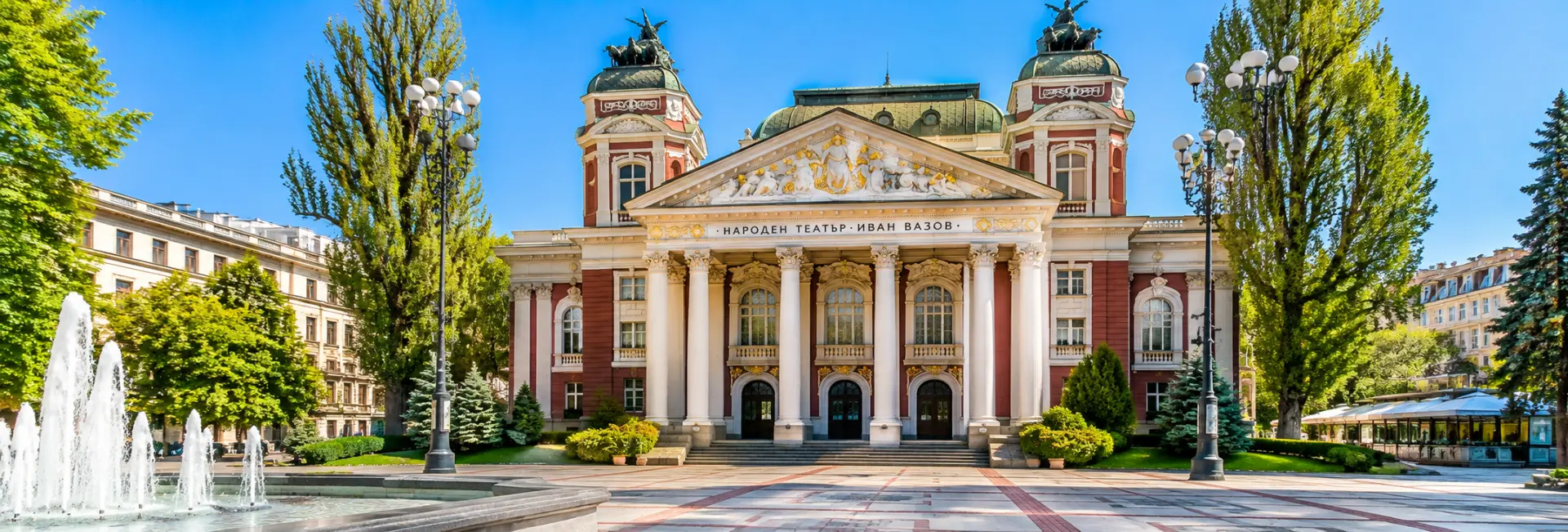
The Ivan Vazov National Theatre is the grandest stage in Bulgaria and one of the most photographed buildings in Sofia. Set at the edge of the leafy City Garden, its pale neoclassical facade, tall columns and sculpted pediment make it an instant landmark for anyone walking through the city centre.
It is both a working national institution and a visitor attraction. Inside, the company stages Bulgarian and international drama on several stages, while outside, the building and its garden setting draw strollers, photographers and coffee drinkers throughout the day. You do not need a ticket to appreciate the architecture, although seeing a performance is the best way to experience the interior.
The theatre is named after Ivan Vazov, the celebrated poet and writer often regarded as the patriarch of Bulgarian literature. This guide covers the building's history, design, cultural role and practical advice for planning a visit.
History
From Private Company to National Theatre
The theatre's roots lie in a private troupe called Salza i Smyah, meaning Tear and Laughter. In 1904 it was turned into a state institution under the name National Theatre, a move supported by leading figures in Bulgarian culture and by the education minister of the time. The new company became the country's first and most authoritative professional stage.
Building the New Home
For the construction of a permanent home, parliament passed a law to raise funds and the city of Sofia provided the land. The site had previously been occupied by an old wooden playhouse known as Osnova, or Foundation. The design was entrusted to the Viennese architects Ferdinand Fellner and Hermann Helmer, who had designed dozens of theatres in cities across Europe. The building was completed in 1906 and opened on 3 January 1907, with a play by Ivan Vazov himself on the programme.
Fire and Rebuilding
In February 1923 a fire broke out during an anniversary celebration and swept through the stage and much of the auditorium. Only the central facade survived. The theatre was rebuilt by the German architect Martin Dülfer and reopened in 1929, with changes that allowed it to hold a larger audience.
War Damage and Modern Restoration
Bombing during the Second World War damaged the building again, including one of its wings, and it was repaired in the years that followed. A thorough reconstruction between 1971 and 1975 renewed the structure and returned it closely to its original appearance. A further restoration project took place in 2006, helping keep the exterior in good condition for the present day.
Architecture & Design
The Facade
The front of the theatre is its most recognisable feature. Six tall columns support a triangular pediment decorated with a sculpture of Apollo surrounded by the muses of the arts. The effect is formal and confident, designed to signal that this was the home of the national drama.
Towers and Roofline
Behind the pediment, twin towers rise above the building. They are crowned with sculptures of Nike, the goddess of victory, which adds a note of ceremony to the skyline. The building is often described as neoclassical, though some sources point to elements of the Viennese Baroque and Art Nouveau fashions that were popular when it was designed.
Interior and Stages
The theatre has a main stage with roughly 750 seats, a smaller chamber stage of about 120 seats and an intimate stage of about 70 seats on the upper floor. Figures for the main hall vary between sources depending on how the seating is counted, but the scale is clearly that of a major national theatre. The main hall is richly decorated, and its stage curtain, featuring a firebird motif, was woven by craftswomen from the town of Panagyurishte.
Setting in the City Garden
The theatre was built in the heart of the city, and its main front looks out over the City Garden, which gives the facade room to be seen from a distance. Because the building stands apart from the surrounding blocks, its columns, pediment and towers read clearly from the garden paths. This open frontage is a large part of why the theatre works as a landmark as well as a working playhouse, and it explains why so many visitors stop here simply to look and take photographs.
Cultural Significance
The National Theatre has been at the centre of Bulgarian cultural life for more than a century. Many of the country's most distinguished actors and directors have worked here, and the stage has been central to the development of Bulgarian playwriting. A theatre school was established as part of the institution in 1925, helping train generations of performers.
The company's repertoire mixes classic Bulgarian drama with European and world theatre, so audiences can see the national tradition alongside international works. The theatre also runs international programmes that bring guest productions to Sofia.
The building itself is part of the national image. Its facade has appeared on Bulgarian banknotes in earlier issues and is a regular feature of postcards, guidebooks and city tours. For many Sofia residents it is simply a favourite meeting place, a point on the map as familiar as the garden at its feet.
The name carries meaning too. Ivan Vazov wrote some of Bulgaria's best-loved literature, and tying his name to the national stage links the theatre with the country's literary heritage.
What to See There
- The facade and pediment: take a moment to look up at the columns, the figure of Apollo and the muses, and the twin towers crowned with Nike.
- The City Garden frontage: the theatre faces a pleasant public garden with benches and flower beds, which makes the best setting for photos of the whole building.
- The foyer and main hall: if you attend a performance, arrive early to see the decorated interior and the woven stage curtain.
- The smaller stages: the chamber and upper-floor stages host more intimate productions and are a good option for visitors who want a shorter, closer experience.
- Posters and programme boards: they show the current season and are an easy way to see which plays and guest productions are running.
Ways to Experience It
Attend a Performance
Seeing a play is the best way to appreciate the interior and the atmosphere. Most productions are in Bulgarian, so choose something you already know, such as a famous classic, or check whether a production offers translation or surtitles. Some seasons also include international guest productions, which can be easier to follow if you do not read Bulgarian.
Admire the Building from Outside
Even without a ticket, the exterior is worth a visit. Walk the full length of the facade, then step back into the garden for the classic view that takes in the columns, pediment and towers together.
Sit at a Garden Cafe
Cafes near the theatre make an easy place to relax and watch the activity around the building. In the evening, theatre-goers in their best clothes add to the atmosphere.
Join a Walking Tour
The theatre is a regular stop on guided walks of central Sofia, usually together with the nearby garden, the Largo and the main historic sights.
Best Time to Visit
Time of Year
The garden in front of the theatre is at its best from late spring to early autumn, when the flower beds are in bloom and the trees shade the paths. Winter has its own appeal, with a quieter garden and lit-up evenings, though the weather can be cold. Theatre programmes follow a seasonal calendar, so check the schedule if you want to attend a performance at a particular time of year.
Time of Day
Morning light is good for photographs of the facade, with fewer people in the frame. Late afternoon and early evening bring the busiest and most atmospheric scenes, especially on show nights, when audiences gather outside before the curtain goes up.
Visitor Tips
- Book ahead for popular shows: tickets for well-known productions can sell out, so check the programme and buy early through the official ticket office or website.
- Check the language: most performances are in Bulgarian, so confirm whether translation, surtitles or an international production is available if you do not speak the language.
- Look at the box office hours: the ticket office keeps its own schedule, which can differ from performance times, so confirm it before you visit.
- Dress for the occasion: many people dress smartly for evening performances, though there is no strict rule for most shows.
- Plan access in advance: if you need step-free access or have other accessibility requirements, contact the theatre before your visit to confirm what is available.
- Do not expect regular public tours: the interior is mainly seen through performances, so check whether any special visits are offered at the time you travel.
- Keep an eye on the season: the programme and any building work or events can change the experience of the garden frontage, so check current information.
Nearby Attractions
The theatre sits in the middle of Sofia's compact centre, so it is easy to combine with other sights.
- City Garden: the park directly in front of the theatre, a popular spot for strolling, sitting and people-watching.
- Vitosha Boulevard: Sofia's main pedestrian street for shopping and cafes, within easy walking distance.
- Serdica Archaeological Complex: the Roman ruins around the Serdika metro station, a short walk away.
- National Archaeological Museum: Thracian gold, prehistoric finds and medieval art in a historic mosque building nearby.
- Sofia University: the historic university building and its surroundings are close by and add a stately, academic feel to the walk.
- Alexander Nevsky Cathedral: the city's best-known landmark, reachable on foot from the theatre.
FAQs about visiting the Ivan Vazov National Theatre
What is the Ivan Vazov National Theatre? +
It is Bulgaria's national theatre and one of the most important cultural landmarks in Sofia, housed in a neoclassical building designed by the Viennese architects Fellner and Helmer that opened in 1907.
Where is it located? +
The theatre is at 5 Dyakon Ignatiy Street in central Sofia, with its main facade facing the City Garden. It is within easy walking distance of Vitosha Boulevard and the Serdika metro area.
Why is it named after Ivan Vazov? +
The theatre is named after Ivan Vazov, a celebrated Bulgarian poet and writer often regarded as the patriarch of Bulgarian literature. The name honours his role in the country's cultural life, and his play was the first on the stage when the building opened.
Can I visit the theatre without seeing a show? +
You can enjoy the exterior and the City Garden at any time, but access to the interior is generally through performances, so check with the theatre whether any special visits are offered.
Are performances in English? +
Most productions are staged in Bulgarian. Some seasons include international guest productions, and surtitles may be offered for certain shows, so it is worth checking the programme before you buy a ticket.
How do I buy tickets? +
Tickets are usually sold through the theatre's box office and its official website. Popular productions can sell out, so it is best to buy early and confirm the current options on the official channels.
What is the best time to photograph the building? +
Morning light usually gives a clean view of the facade with fewer people, while early evening adds atmosphere as audiences gather. The best viewpoint is from the garden, where the columns, pediment and towers all fit in one frame.
What else can I see nearby? +
The City Garden, Vitosha Boulevard, the Serdica Archaeological Complex, the National Archaeological Museum and Alexander Nevsky Cathedral are all within a short walk.
