Table of Contents
Overview
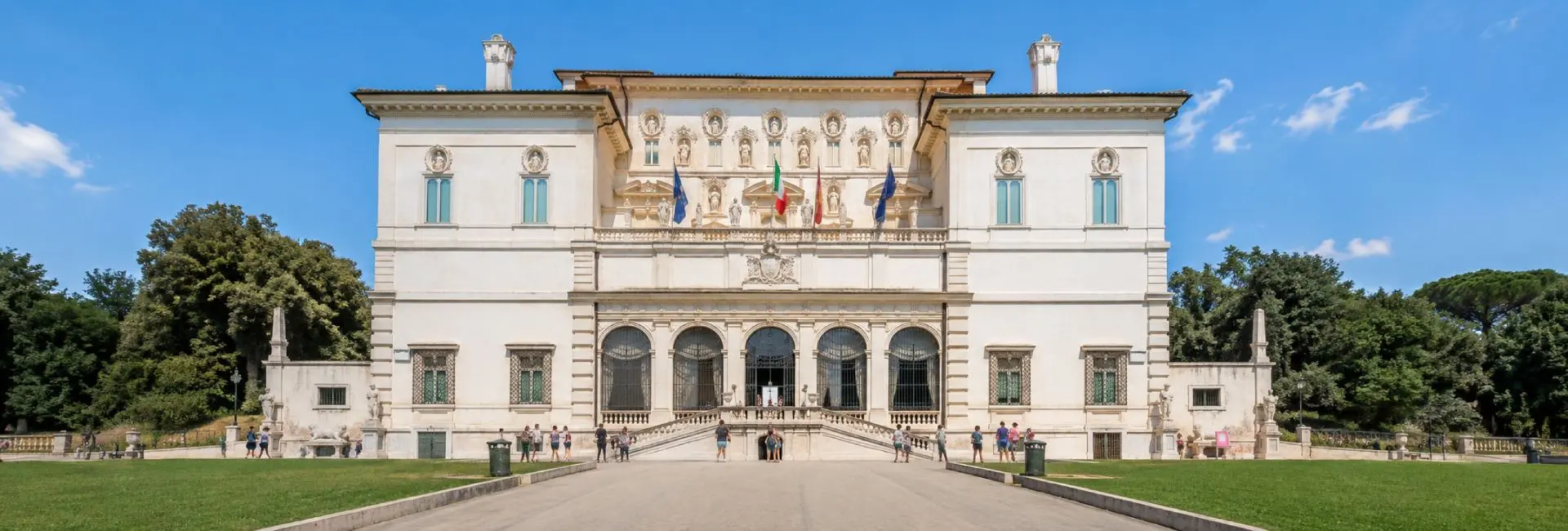
The Galleria Borghese is one of Rome's most treasured art museums, set inside a 17th-century villa on the edge of the Villa Borghese park. Despite its relatively small size, it holds an outsized concentration of masterpieces, including sculptures by Gian Lorenzo Bernini, paintings by Caravaggio, and works by Titian, Raphael, and Canova.
What sets the gallery apart is its intimacy. Visitors move through richly decorated rooms where sculpture, painting, and architecture were designed to be experienced together, giving the museum a personal, almost private feel that larger institutions like the Vatican Museums can't replicate.
History
Origins Under Cardinal Scipione Borghese
The collection began in the early 17th century with Cardinal Scipione Borghese, nephew of Pope Paul V. An avid and strategic collector, he pursued ancient sculpture and contemporary art with equal enthusiasm, while showing little interest in medieval works.
Scipione was also an early patron of major artists. He supported Bernini from a young age and acquired numerous works by Caravaggio, helping shape both artists' early careers. In 1607, his position within the papal court allowed him to acquire more than a hundred paintings that had previously belonged to the painter known as Cavaliere d'Arpino.
Building the Villa
The villa itself was designed in the early 1600s by architect Flaminio Ponzio as a suburban retreat at the edge of Rome, intended to showcase Scipione's growing collection of antiquities. It quickly became a cultural gathering point for Rome's elite, hosting artistic and intellectual life alongside its role as a private gallery.
From Private Collection to Public Museum
The collection expanded over the following centuries through further acquisitions and family additions, including Neoclassical works commissioned in the early 1800s. Eventually the Italian state acquired the villa and its collection, and the Galleria Borghese opened its doors as a public museum, a status it has held ever since.
The Borghese Collection
The Borghese Collection spans roughly two and a half thousand years of art history in a single building. It includes Greco-Roman antiquities and Etruscan pieces, Renaissance paintings, Baroque sculpture, and later additions from the Neoclassical and modern periods.
- Ancient Roman and Greek sculpture, including portrait busts and mythological figures
- Baroque sculpture, most famously the marble groups carved by Bernini
- Renaissance paintings by artists such as Raphael, Titian, and Correggio
- Caravaggio's paintings, one of the largest concentrations of his work anywhere
- Neoclassical sculpture, led by Antonio Canova's portrait of Pauline Borghese
- Later paintings by artists including Rubens, Cranach, Goya, and Renoir
Ground Floor Highlights: Sculpture & Antiquities
The ground floor is largely dedicated to sculpture and antiquities, arranged across a sequence of themed rooms. It's here that Bernini's most famous marble groups are displayed, alongside ancient works that inspired them.
Bernini's Masterpieces
Apollo and Daphne captures the instant a nymph transforms into a laurel tree to escape the god pursuing her, carved with a level of detail that makes marble appear soft and alive. The Rape of Proserpina is equally striking, particularly the illusion of Pluto's fingers pressing into Proserpina's skin. Bernini's early David, carved with the sculptor's own features, rounds out the museum's core trio of Baroque showpieces.
Ancient and Neoclassical Works
The entrance rooms feature busts of Roman emperors and a large gladiator mosaic dating to around the 4th century AD, discovered outside Rome in the 1830s. Canova's Pauline Borghese as Venus Victrix, portraying Napoleon's sister reclining as the goddess of victory, is one of the collection's most photographed pieces.
First Floor Highlights: The Picture Gallery
Upstairs, the picture gallery houses the museum's painting collection, with entire rooms devoted to individual artists or periods.
Caravaggio
The gallery holds one of the richest collections of Caravaggio's work in the world, including his self-portrait as a young Bacchus, a basket of fruit rendered with striking realism, and darker religious scenes painted later in his career.
Raphael, Titian, and the Renaissance Rooms
Raphael's Deposition, depicting the removal of Christ's body from the cross, is considered one of his most emotionally charged works. Titian's Sacred and Profane Love hangs nearby, a painting whose meaning art historians still debate.
Villa Borghese Gardens
The gallery sits inside Villa Borghese park, the third-largest park in Rome, and a visit pairs naturally with time spent among its gardens, lakes, and tree-lined paths.
- The Giardino del Lago, a landscaped lake area with a small temple and rowing boats
- The Pincio Terrace, offering panoramic views over central Rome, particularly at sunset
- Wide avenues and shaded paths that make the park a popular spot for walking or cycling
Tickets & Timed Entry
Unlike most museums in Rome, the Galleria Borghese cannot be visited on a whim. Entry is only possible with a pre-booked, timed reservation, and there are no tickets sold at the door.
- Visits are organized into fixed two-hour entry slots throughout the day
- The museum caps the number of visitors per slot to protect the artwork and the historic interiors
- Visitors must arrive on time, as latecomers are typically refused entry
- Bags and coats must be left in the mandatory cloakroom before entering
- Tickets often sell out well in advance, especially for morning slots in peak season
Ticket prices, exact opening hours, and free-entry dates change periodically, so these details should always be confirmed on the official Galleria Borghese website close to the date of your visit.
Best Time to Visit
Because every visit is capped at two hours regardless of time slot, the Galleria Borghese doesn't suffer from the same overcrowding as many other Rome attractions. Still, some slots are noticeably calmer than others.
- The first entry slot of the day tends to be the quietest and least rushed
- Late afternoon slots are also comparatively calm
- Midday slots are usually the busiest and sell out fastest
- Weekday visits are generally less crowded than weekends
Visitor Tips
- Book tickets as far in advance as possible, ideally weeks ahead in high season
- Arrive 15 to 20 minutes early to allow time for security checks and the cloakroom
- Head to the upper floor first if you want to see the paintings before the crowds arrive
- Photography for personal use is generally allowed, but flash and tripods are not
- Consider a guided or audio tour, since the two-hour limit rewards a focused route through the rooms
- Combine your visit with a walk through Villa Borghese park, since re-entry to the gallery itself isn't possible once you leave
Nearby Attractions
The gallery's location inside Villa Borghese puts several other Rome landmarks within easy reach.
- Piazza del Popolo, a short walk downhill through the park
- The Spanish Steps, roughly 1.5 kilometers away
- The National Etruscan Museum at Villa Giulia, within the wider park grounds
- The Bioparco di Roma, the city's zoo, also inside Villa Borghese
Common Questions about Galleria Borghese
What is the Galleria Borghese famous for? +
It's known for one of the world's best concentrations of Bernini sculpture and Caravaggio paintings, all displayed inside a 17th-century villa built to house them.
Do I need to book tickets in advance? +
Yes. Entry is only possible with a pre-booked, timed reservation, and there are no walk-in tickets sold at the door, even for free-entry days.
How long can I stay inside the gallery? +
Every visit is limited to a fixed two-hour time slot, after which visitors are asked to leave so the next group can enter.
How much time do I need to see the highlights? +
Two hours is generally enough to see the major sculptures on the ground floor and the key paintings upstairs without feeling rushed, especially if you plan your route in advance.
Is the Galleria Borghese suitable for kids or visitors with mobility needs? +
The museum is manageable for most visitors, including families, though the two-hour limit and no re-entry policy are worth planning around with young children; accessibility services are available for those who need them.
What's the best time slot to visit? +
The first slot of the day and the last slot of the afternoon tend to be the calmest, while midday slots sell out fastest and draw the biggest crowds.
Can I combine the gallery with Villa Borghese park? +
Yes, and it's a natural pairing, since the museum sits inside the park itself, but keep in mind that once you leave the gallery you can't re-enter on the same ticket.
What else is nearby? +
Piazza del Popolo, the Spanish Steps, the National Etruscan Museum, and Rome's Bioparco zoo are all within or close to Villa Borghese park.