

Table of Contents
Introduction
Edinburgh is built on and around a cluster of extinct volcanoes, and that dramatic geology is part of what makes it one of Europe's most striking capitals. Edinburgh Castle sits on a rocky crag above the city center, Arthur's Seat rises just beyond the Old Town, and the whole skyline is a jumble of spires, chimneys, and stone tenements that seem to climb straight out of the hillside.
The city splits neatly into two UNESCO-listed halves: the medieval Old Town, with its narrow closes and towering stone buildings, and the elegant, orderly New Town, laid out in the 18th century. Add in world-class museums with free entry, a lively festival calendar, and easy access to the Scottish Highlands, and Edinburgh works equally well as a short city break or the starting point for a longer Scotland trip. This guide covers the essential sights, along with practical advice for planning a visit.
Edinburgh Castle and the Royal Mile
Edinburgh Castle is the city's most visited paid attraction and the natural starting point for most itineraries. Perched on a volcanic plug that has been fortified for centuries, it holds the Honours of Scotland, the country's crown jewels, along with the Stone of Destiny and the tiny St. Margaret's Chapel, believed to be the oldest surviving building in Edinburgh. The One O'Clock Gun is fired daily except Sundays, a tradition that dates back to the 19th century and once helped ships in the harbor set their clocks.
The Royal Mile
The Royal Mile runs downhill from the Castle to the Palace of Holyroodhouse, forming the spine of the Old Town. Its name comes from its length of roughly one Scots mile, and it's flanked by narrow alleyways known as closes that lead to hidden courtyards and stairways worth ducking into.
St Giles' Cathedral and Holyroodhouse
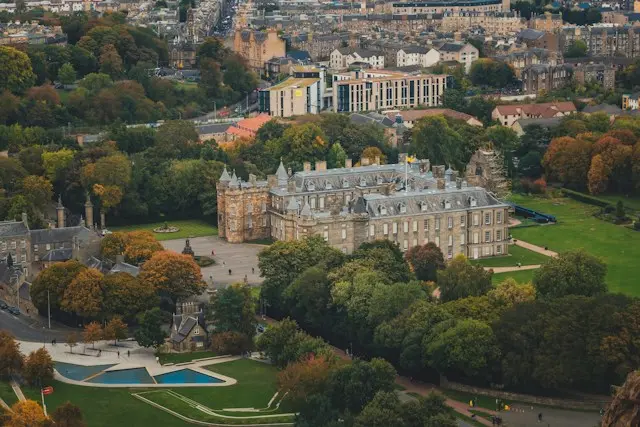
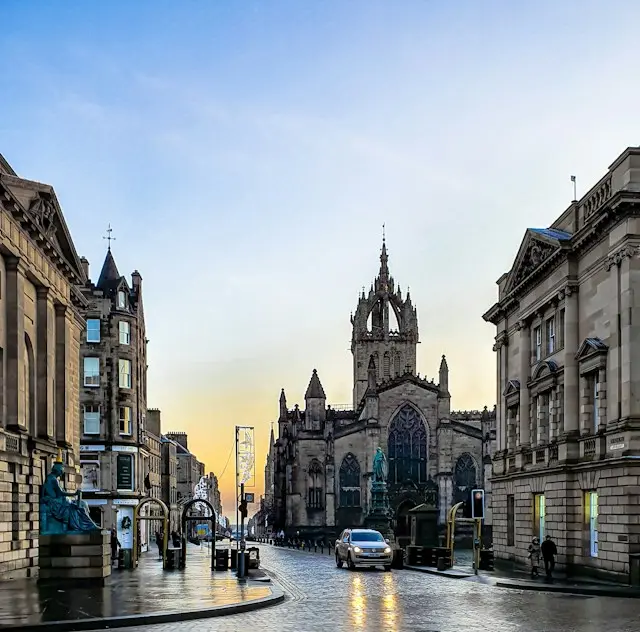
St Giles' Cathedral, with its distinctive crown-shaped spire, is the historic home of the Church of Scotland and a short walk from the Castle. At the opposite end of the Royal Mile, the Palace of Holyroodhouse remains an official royal residence and is open to visitors when not in use for state occasions.
- Book Castle tickets online in advance for a morning slot to shorten queues
- Duck into closes like Advocate's Close or Mary King's Close for a quieter, older side of the Old Town
- Time a visit for 1pm to hear the One O'Clock Gun from the Castle esplanade

Old Town and New Town
Edinburgh's Old and New Towns together form a single UNESCO World Heritage Site, recognized for the contrast between two very different eras of urban planning sitting side by side.
Old Town
The Old Town grew organically over centuries within the city's defensive walls, which is why its buildings are so tall and its streets so tightly packed. Grassmarket, once a market and execution site, is now a lively square lined with pubs and restaurants, and it's one of the few central spots that's entirely free to explore.
New Town
The New Town, developed from the 1760s onward, was a deliberate response to the Old Town's overcrowding, with wide Georgian streets, garden squares, and neoclassical architecture. Princes Street Gardens, laid out in a former loch bed, separates the two halves of the city and offers views up toward the Castle.
Victoria Street
Victoria Street, a curved row of colorful shopfronts linking the Old Town to Grassmarket, is one of Edinburgh's most photographed streets and is often cited as inspiration for parts of the Harry Potter series, though the connection is more folklore than documented fact.
Museums and Galleries
Edinburgh's major museums and galleries are almost all free to enter, which makes them an easy way to fill a rainy afternoon without straining a travel budget.
National Museum of Scotland
The National Museum of Scotland combines a Victorian building with a modern extension and houses more than 20,000 objects spanning natural history, world cultures, science, and Scottish heritage. Exhibits range from Dolly the Sheep, the first mammal cloned from an adult cell, to interactive galleries aimed at younger visitors.
Scottish National Gallery
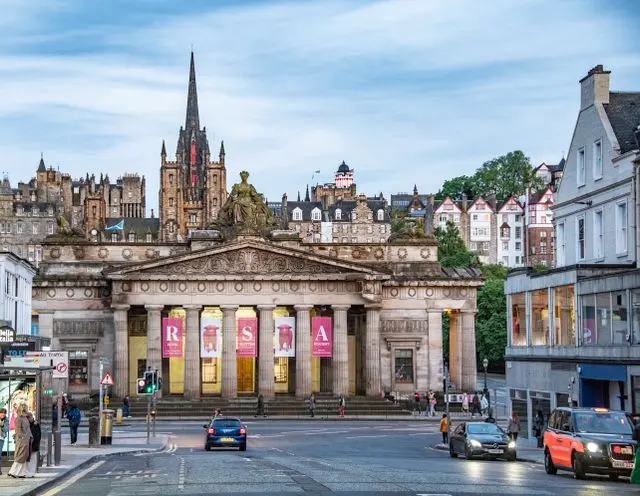
The Scottish National Gallery, on The Mound near Princes Street, holds a strong collection of European and Scottish art from the Renaissance through the 19th century, including works by Titian, Rembrandt, and Turner. Admission to the permanent collection is free, though temporary exhibitions often carry a separate ticket.
Camera Obscura and World of Illusions
Camera Obscura, near the top of the Royal Mile, is one of Edinburgh's oldest purpose-built attractions, combining a Victorian rooftop camera obscura with several floors of optical illusions. It's a popular choice for families and for visitors looking for something more playful between historical sights.

Arthur's Seat and Calton Hill
Edinburgh's volcanic geology gives it some of the best free viewpoints of any European capital, and two in particular stand out.
Arthur's Seat
Arthur's Seat, the main peak in Holyrood Park, is the remains of an extinct volcano roughly 350 million years old and one of four ancient hill forts in the area. The hike to the summit takes most visitors around one to two hours round trip and rewards the climb with sweeping views over the city, the Firth of Forth, and the surrounding countryside.
Calton Hill
Calton Hill, closer to the city center and a much shorter climb, is dotted with 19th-century monuments, including the unfinished National Monument, often compared to the Parthenon, and the Nelson Monument, which can be climbed for an additional fee. It's especially popular at sunset, when the light catches both the Old Town skyline and the water beyond.

Day Trips from Edinburgh
Edinburgh's compact size and strong transport links make it a convenient base for exploring further into Scotland without changing hotels.
Stirling and the Highlands
Stirling Castle, roughly an hour from Edinburgh by train or coach, sits on its own volcanic crag and played a central role in Scotland's wars of independence, with historical ties to figures like Robert the Bruce and Mary, Queen of Scots. Longer day tours push further into the Highlands, taking in Loch Ness and Glencoe for travelers short on time but eager for classic Scottish scenery.
South Queensferry and the Forth Bridges
South Queensferry, about 25 minutes from central Edinburgh, offers close-up views of the three Forth bridges spanning the estuary, including the 19th-century Forth Bridge, a UNESCO World Heritage engineering landmark in its own right. It's an easy half-day trip and pairs well with a coastal walk along the waterfront.

Food and Whisky Culture
Edinburgh's food scene blends traditional Scottish dishes with a growing number of internationally recognized restaurants, and whisky tourism is woven through much of the city center.
What to Eat
Classic dishes to look for include haggis, neeps, and tatties (haggis with mashed swede and potato), Cullen skink, a smoked haddock chowder, and fresh seafood from Scotland's coastline. Edinburgh also has a strong contemporary dining scene, with several Michelin-recognized restaurants concentrated in the New Town and Leith.
Whisky Experiences
The Scotch Whisky Experience, at the top of the Royal Mile, offers tastings and an overview of Scotland's whisky-producing regions for visitors who want an introduction before exploring further. Several dedicated whisky bars around the Old Town also stock extensive single malt selections for a more casual, self-guided tasting.
Where to Stay
Edinburgh's neighborhoods offer noticeably different bases, from being steps from the Castle to a quieter, more residential feel a short bus ride away.
Old Town
Staying in the Old Town puts you within walking distance of the Castle, Royal Mile, and most major sights, though rooms in historic buildings can be smaller and streets get busy, especially during the Edinburgh Festival in August. It's the best choice for visitors prioritizing atmosphere and minimal commuting.
New Town
The New Town offers wider streets, Georgian architecture, and easy access to Princes Street's shops, while still being a short walk from the Old Town's main sights. It tends to be quieter in the evenings and suits travelers who want central convenience without the Old Town's crowds.
Leith
Leith, Edinburgh's historic port district, has become a popular alternative base thanks to its waterfront restaurants and a more local feel, connected to the city center by tram. It's a good option for longer stays or travelers who prefer a neighborhood pace over a tourist-heavy center.
- Book well ahead for August, when the Edinburgh Festival Fringe drives prices sharply higher
- Hotels near Waverley Station suit travelers planning day trips by train
- Old Town accommodations often involve stairs and no elevators, worth checking for travelers with mobility needs
Practical Tips for Visiting
Edinburgh is generally more affordable than London, though prices rise sharply during festival season and major holidays.
- A budget traveler using free museums and hostel accommodation can manage on roughly £50 to £60 per day; a comfortable mid-range visit costs considerably more
- The city center is compact and very walkable, though the Old Town's hills and cobblestones call for sturdy footwear
- August brings the Edinburgh Festival Fringe and several overlapping festivals, which fill the city with events but also push accommodation prices and crowds to their yearly peak
- Scotland's weather is famously changeable; layers and a waterproof jacket are useful in any season
- Trams and buses connect the airport, Leith, and the city center efficiently for visitors not renting a car
Conclusion
Edinburgh packs an unusual amount of history, geology, and culture into a genuinely walkable city center, which is part of why it consistently ranks among Europe's most rewarding short breaks. A few days is enough to cover the Castle, Royal Mile, and a hike up Arthur's Seat or Calton Hill, while a longer stay opens up day trips to Stirling, South Queensferry, or further into the Highlands.
Whatever the length of the visit, it's worth setting aside time simply to wander the closes off the Royal Mile or sit in Princes Street Gardens with the Castle overhead. Edinburgh's layered history rewards unhurried exploration as much as it does a checklist of major sights.
Frequently Asked Questions
How many days do you need in Edinburgh? +
Three days is enough to see the main sights, including the Castle, Royal Mile, and a hike up Arthur's Seat or Calton Hill; four or five days allows time for museums and a day trip beyond the city.
Is Edinburgh expensive to visit? +
Edinburgh is generally cheaper than London, though prices rise significantly during August's festival season; budget travelers using free museums and hostels can manage on a modest daily budget.
What is the best time of year to visit Edinburgh? +
Late spring through early autumn offers the mildest weather, while August brings the Edinburgh Festival Fringe and the busiest, most expensive period; winter is quieter and includes a well-known Christmas market.
Do I need to book Edinburgh Castle tickets in advance? +
Yes, booking online ahead of time, especially for a morning slot, is recommended to secure lower prices and avoid the longest queues.
Is Edinburgh easy to explore without a car? +
Yes, the city center is compact and walkable, and trams and buses cover the airport, Leith, and surrounding areas efficiently for visitors who don't want to drive.
What's a good day trip from Edinburgh? +
Stirling Castle and South Queensferry are both easy half-day to full-day trips by train or coach, and longer tours reach further into the Highlands, including Loch Ness and Glencoe.
Is Arthur's Seat difficult to hike? +
The hike to the summit is moderate rather than difficult, typically taking one to two hours round trip, though the terrain is uneven in places and can be slippery in wet weather.
What should I know about visiting during the Edinburgh Festival? +
August is Edinburgh's busiest and most expensive month, so booking accommodation and major attraction tickets well in advance is essential if visiting during the Fringe.