
Table of Contents
Overview
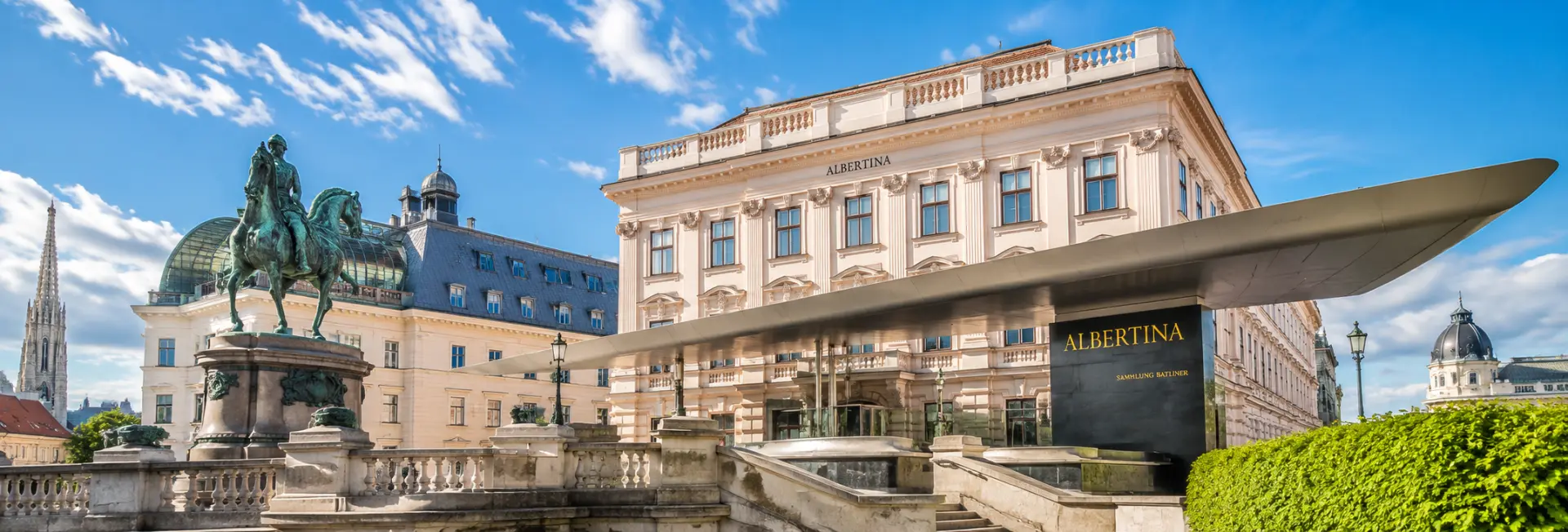
The Albertina occupies one of the largest former residential palaces of the Habsburg dynasty, perched on the last remaining stretch of Vienna's old city ramparts between the State Opera and the Hofburg. Today it operates as one of Vienna's leading art museums, pairing opulent restored staterooms with world-class galleries of graphic art and modern painting.
Its holdings range from Albrecht Dürer's most famous drawings to a permanent collection of French Impressionist and early modern masterpieces, all wrapped inside a building whose own architecture, from Baroque halls to a dramatic titanium canopy over the entrance, tells a story spanning more than two centuries.
History
A Palace Built on Fortifications
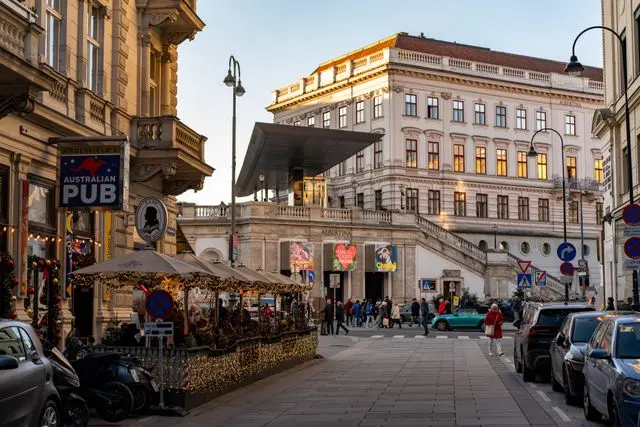
The building began life as a residence constructed on part of Vienna's former defensive bastions, eventually becoming the largest of the palaces the Habsburgs kept in the city. It took its name from Duke Albert of Saxe-Teschen, son-in-law of Empress Maria Theresa, who moved into the palace with his wife, Archduchess Marie Christine, in the late 18th century.
A Collection Built Over Decades
Starting in 1776, Duke Albert began assembling a private collection of drawings and prints, working with agents across Europe over roughly fifty years to acquire graphic works by masters old and new. By the early 1820s the collection already ran to tens of thousands of sheets, forming the core of what would eventually become one of the largest print rooms anywhere in the world.
From Royal Property to Public Museum
The collapse of the Habsburg monarchy in 1918 brought a major turning point: the collection passed into the ownership of the new Austrian Republic in 1919, and the palace opened to the public as a state museum, taking the name Albertina shortly afterward. The building suffered serious bomb damage in 1945, and its restoration stretched across the following decades, culminating in a major modernization completed in the early 2000s.
Architecture & Building
Because the Albertina evolved over more than two hundred years, its architecture reads as a layered history rather than a single style. Much of the interior retains the classical and Rococo-inflected decoration of its palace days, while the building's exterior and public entrance were reshaped dramatically at the start of the 21st century.
The Habsburg State Rooms
Around twenty restored ceremonial rooms preserve the look of the palace's aristocratic era, with gilded detailing, period furnishings, and grand proportions that give visitors a sense of how the building's archducal residents once lived.
The Soravia Wing
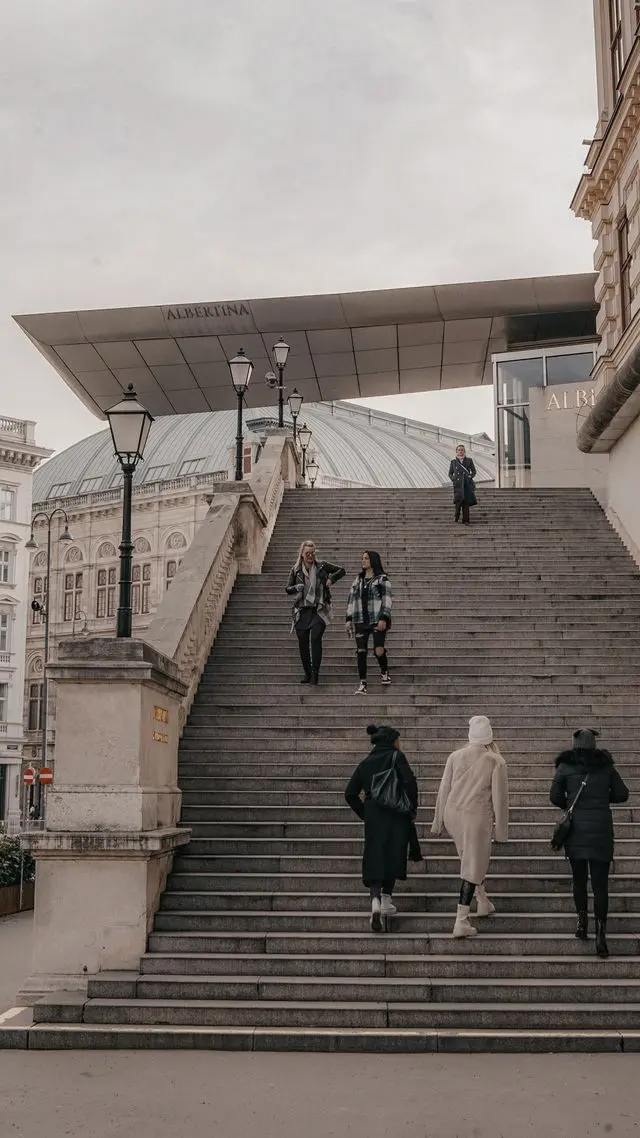
The museum's most photographed architectural feature is a sweeping, cantilevered canopy in anodized titanium, designed by Austrian architect Hans Hollein and completed as part of a comprehensive renovation finished in 2003. Stretching roughly 50 metres over an escalator that connects the square below to the raised main entrance, it deliberately contrasts sharp, modern engineering against the historic stonework of the old fortification wall beneath it.
Collections & Exhibits
The Albertina's collections fall into a few major groupings, each with its own character.
The Graphic Art Collection
This is the museum's founding treasure: roughly 65,000 drawings and close to a million prints, including the world's largest holding of works by Albrecht Dürer. Because works on paper are highly sensitive to light, most of the collection is shown in rotating thematic displays rather than as one fixed exhibit.
The Batliner Collection: Monet to Picasso
In 2007, Liechtenstein collectors Herbert and Rita Batliner placed several hundred works of French Impressionist and early 20th-century modern art on long-term loan to the museum, spanning movements from Impressionism and Fauvism through German Expressionism and Cubism. The loan gave the Albertina its first large collection permanently open to visitors, alongside the graphic art holdings.
Architecture and Photography Collections
Beyond works on paper and painting, the museum holds substantial archives of architectural drawings and photographs, along with rotating temporary exhibitions that draw on both its own holdings and major international loans.
Must-See Highlights
- Albrecht Dürer's "Young Hare" and "Praying Hands," among the most reproduced drawings in art history, shown periodically due to conservation limits
- The Batliner Collection galleries, tracing a line from Monet and Cézanne through Picasso's Cubist and late-period work
- The restored Habsburg State Rooms, offering a rare look at aristocratic interior design largely untouched in spirit since the palace era
- The Soravia Wing canopy itself, best appreciated from Albertinaplatz looking up at the entrance
Ways to Experience It
Most visitors move through the museum at their own pace, though a few options can shape the experience.
- Self-guided visits, with English-language wall text throughout the permanent collections
- Guided tours in multiple languages, bookable in advance or at the ticket counter, usually focused on a specific collection or theme
- An audio guide available for a small additional fee
- The museum shop and an on-site restaurant, both accessible without a museum ticket
Because the museum blends a palace tour with a major art collection, allow more time than a typical single-focus gallery: roughly 90 minutes covers the State Rooms and highlights, while two to three hours allows for the Batliner Collection and any temporary exhibition as well.
Best Time to Visit
- Mornings right at opening tend to be the quietest time to see the graphic art displays and State Rooms
- Wednesdays and Fridays, when the museum stays open into the evening, offer a later and often less crowded alternative to a daytime visit
- Weekday visits generally see smaller crowds than weekends, particularly during peak tourist season
- Major loan exhibitions can draw larger crowds, so checking the current program before visiting helps set expectations
Visitor Tips
- Advance timed-entry booking generally isn't required, so tickets can be bought online ahead of time or on site without losing a reserved slot
- The main entrance sits above street level on the old bastion wall, reached by escalator or lift from Albertinaplatz
- All public areas of the museum are wheelchair accessible, with free wheelchairs available on request
- The nearest metro connections are Karlsplatz (U1, U2, U4) and Stephansplatz (U3), both an easy walk away
- Because much of the graphic art collection rotates for conservation reasons, a specific drawing or print may not always be on view; checking the current display themes in advance helps manage expectations
Nearby Attractions
- Vienna State Opera, immediately adjacent to the museum
- Hofburg Palace complex, within easy walking distance
- Albertina Modern, the museum's contemporary art branch at Karlsplatz, a short walk away
- Kärntner Straße, Vienna's main pedestrian shopping street, just steps from the entrance
FAQs about visiting the Albertina Museum
What is the Albertina Museum known for? +
It's known for holding one of the world's largest collections of drawings and prints, including works by Albrecht Dürer, alongside the Batliner Collection of French Impressionist and modern art and a set of restored Habsburg staterooms.
Do I need to book tickets in advance? +
Advance booking isn't required, since the museum doesn't operate on fixed entry time slots, but buying online ahead of a visit can still help avoid a queue at the ticket counter during busy periods.
How much time should I set aside for a visit? +
Around 90 minutes covers the State Rooms and main highlights, while two to three hours allows time for the Batliner Collection and any current temporary exhibition as well.
Will I definitely see Dürer's "Young Hare"? +
Not necessarily. Works on paper are highly sensitive to light, so the graphic art collection is shown in rotating displays rather than a permanent exhibit, and specific drawings appear only periodically.
Is the museum accessible for visitors with mobility needs? +
Yes, all public areas are wheelchair accessible via escalator and elevator from the main entrance, and free wheelchairs are available on request.
What's the best time to visit to avoid crowds? +
Weekday mornings right at opening tend to be quietest, and the extended evening hours on Wednesdays and Fridays offer a later alternative with typically smaller crowds.
What else is nearby? +
The Vienna State Opera sits right next door, and the Hofburg Palace, Kärntner Straße shopping street, and the museum's contemporary art branch, Albertina Modern, are all within easy walking distance.
