
Table of Contents
Overview
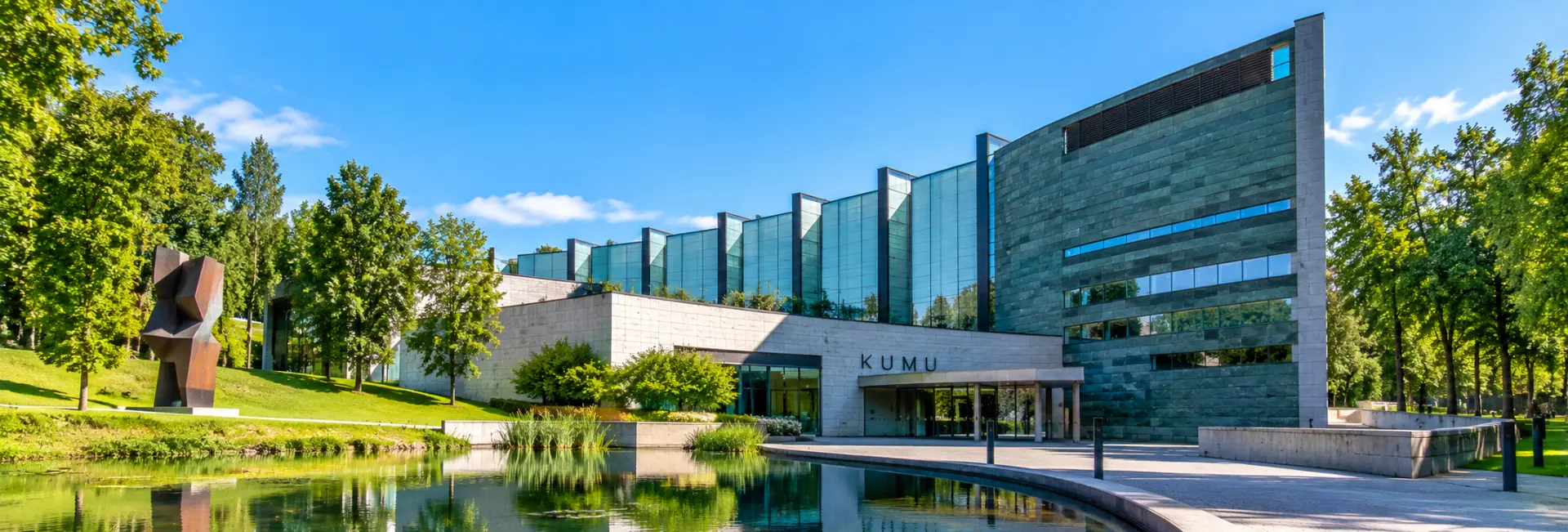
Kumu Art Museum is the largest art museum in Estonia and the main building of the Art Museum of Estonia. Its name is a playful short form of the Estonian word kunstimuuseum, meaning art museum. It stands on a limestone cliff between the green expanse of Kadriorg Park and the Lasnamäe district, a few kilometres east of Tallinn's Old Town.
Inside, Kumu tells the story of Estonian art from the 18th century to the present day. Permanent exhibitions follow the country's artistic life through periods of foreign rule, national awakening, Soviet occupation and renewed independence, while large temporary shows bring in contemporary art from Estonia and abroad.
The building itself is part of the attraction. Its curving metal and glass form seems to grow out of the rock, and its terraces and large windows connect the galleries with the park and the surrounding city. For art lovers, architecture fans and anyone curious about how Estonians have seen themselves over the centuries, it is one of the most rewarding stops in Tallinn.
History of the Museum
A Collection Without a Home
The Art Museum of Estonia was founded on 17 November 1919. For its early years it was housed in the baroque Kadriorg Palace, built for Peter the Great in the early 18th century. In 1929 the palace was taken for use as the residence of the head of state, and the museum moved between temporary spaces before returning in 1946.
A New Building for a New Country
When Estonia regained independence in 1991, Kadriorg Palace was in poor condition and was closed for renovation. The parliament decided that the national art museum should have a purpose-built home in Kadriorg Park, and an international architecture competition was held in the mid-1990s. The winning design came from the Finnish architect Pekka Vapaavuori. Meanwhile the Knighthood House on Toompea served as the museum's temporary main building.
Even the name was chosen through a public competition, which produced the short, memorable form Kumu.
The restored palace reopened in 2000 as the Kadriorg Art Museum, devoted to foreign art. Kumu itself was built between 2003 and 2006, and it opened on 17 February 2006. In 2008 it won the European Museum of the Year Award, a major recognition of its architecture and ambitions as a contemporary museum.
Architecture and Building
Kumu was designed to be large without overwhelming its historic neighbours. The building is set into the slope of the limestone cliff, so that much of its bulk sits below ground or hides within the rock. From the park side it appears lower and softer than its total size would suggest.
Form and Materials
The museum is made up of curved shapes in glass, stone and copper-toned metal that echo the cliff and the surrounding greenery. Seven levels, including some underground, hold galleries, storage, public spaces and conservation facilities. The facade can also be used as a screen for video art.
Entrances and Public Spaces
There are two main ways in. One entrance faces Kadriorg Park, while another leads in from the car park on the Lasnamäe side and opens onto the information desk, cloakroom, terrace, library, bookshop and restaurant. A cafe and a large auditorium host talks, film screenings and events, and the terrace has views of the park and the city beyond.
Collections and Permanent Exhibitions
The main collection covers Estonian art from the early 18th century onwards and includes tens of thousands of works. Three permanent exhibitions give a clear route through the story.
Landscapes of Identity: Estonian Art 1700-1945
This exhibition introduces older local art, where Baltic German, Russian and Estonian traditions intertwine against the backdrop of the country's multi-ethnic history. It follows portraits, landscapes and academic painting through to the rise of a distinct national school and the modernist movements of the early 20th century.
Conflicts and Adaptations: Estonian Art in the Soviet Era (1940-1991)
Here you can see how artists responded to the political order that followed World War II. The exhibition covers official Socialist Realism, quieter forms of adaptation and the work of nonconformist artists who pushed against restrictions. It is one of the museum's most talked-about displays because it shows how art and politics were entangled. Many works by artists who stayed outside the official system were only acquired after independence, and they now sit alongside the more public art of the period.
The Future Is in One Hour: Estonian Art in the 1990s
This exhibition looks at the decade after independence, when artists explored new freedoms, new media and new identities. It makes a lively end to the permanent route and connects the historical collection with the contemporary art shown in temporary exhibitions.
Must-See Highlights
- The Soviet-era galleries - arguably the most distinctive part of the museum, because they show how Estonian artists navigated censorship, official ideology and private experimentation.
- Classics of national art - the early galleries trace the development of Estonian painting and sculpture and introduce key names in the national story, such as Johann Köler and Konrad Mägi.
- Contemporary and temporary exhibitions - large shows by Estonian and international artists change several times a year, so every visit can bring something new.
- The architecture and terrace - take time to look at the building from inside and out, and enjoy the views over Kadriorg Park and toward the city.
- The facade and video art - the surface of the building doubles as a screen for projected works.
If you are short of time, give priority to the Soviet-era exhibition and the current temporary show, then finish with a coffee on the terrace.
Ways to Experience It
Guided Tours and Programmes
The museum runs guided tours of its permanent exhibitions, and short tours in several languages are common during special events. Workshops, talks and family activities take place throughout the year, and the education centre offers programmes for children and school groups.
Museum Night
Kumu takes part in Estonia's annual Museum Night in spring, opening its permanent exhibitions into the late evening with tours, creative workshops and an outdoor programme in the courtyard. It is a lively, busy way to see the museum after dark.
Talks, Film and Research
Beyond the galleries, Kumu functions as a cultural centre. The auditorium hosts lectures, discussions and screenings, and the museum library is available for those who want to dig deeper into Estonian and international art history.
Cafe, Restaurant and Shop
Visitors can take a break at the cafe or restaurant, then browse the bookshop and museum shop for art books, design objects and gifts.
Combine With the Art Museum's Other Branches
Joint tickets are available for all branches of the Art Museum of Estonia, which makes it easy to pair Kumu with the Kadriorg Art Museum in the nearby palace or with other branches around the city.
Best Time to Visit
Kumu is an indoor museum and works well in any season. It is an especially good choice on rainy, windy or very cold days, when a long visit in the warm galleries is more appealing than walking outdoors.
Late spring to early autumn is ideal if you want to combine the museum with a stroll through Kadriorg Park. In summer the park is at its greenest, and the terrace and courtyard are pleasant places to pause.
Large temporary exhibitions often draw bigger crowds in their first weeks and on weekends, so if a particular show is your priority, a weekday visit later in its run is usually calmer.
For fewer crowds, aim for weekday mornings soon after opening. The museum has a late opening evening on one weekday, which is a good alternative if you prefer a quieter visit after work or sightseeing.
Visitor Tips
- Allow about two to three hours to see the permanent exhibitions and one temporary show without rushing. Art lovers can easily spend longer.
- The museum is normally closed on Mondays, and opening hours include a late evening on one weekday. Check the official website for the current schedule and for holiday closures.
- Tickets include adult, reduced and family options, and joint tickets cover other branches of the Art Museum of Estonia. Prices and offers change, so confirm them before you go.
- Temporary exhibitions change often, so check what is on to plan your route. Some exhibitions may be included in the standard ticket, and others may have separate arrangements.
- Information about accessibility, including lifts, wheelchair access and facilities, is available on the museum's website, and you can contact the museum in advance if you have special needs.
- Free parking has been offered in the car park on Valge Street, but check current conditions before travelling by car.
- Photography rules vary between exhibitions, so look for signs and ask staff if you are unsure.
Nearby Attractions
Kumu sits at the edge of Kadriorg Park, one of Tallinn's most beautiful green spaces. Paths, ponds, flower gardens and tall trees make the park ideal for a walk before or after your visit. At its heart stands Kadriorg Palace, the baroque residence commissioned by Peter the Great, which now houses the Kadriorg Art Museum with Western European and Russian art from the 16th to the 20th centuries.
Other museums and sights are close by, including the Mikkel Museum, whose collection includes European and Chinese porcelain and Western European painting. Trams 1 and 3 run from the city centre to Kadriorg, so it is easy to continue from here to the Old Town or the seafront.
FAQs about visiting Kumu Art Museum
What is Kumu Art Museum? +
Kumu is the largest art museum in Estonia and the main building of the Art Museum of Estonia. It displays Estonian art from the 18th century to the present and hosts major temporary exhibitions.
Where is Kumu and how do I get there? +
It stands at the edge of Kadriorg Park, a few kilometres east of the Old Town. Trams 1 and 3 run from the city centre to Kadriorg, and from there it is a walk of roughly ten minutes to the museum.
How long should I spend at Kumu? +
Plan on two to three hours for the permanent exhibitions and one temporary show. If you enjoy art, you may want to stay longer.
What are the main permanent exhibitions? +
They are Landscapes of Identity: Estonian Art 1700-1945, Conflicts and Adaptations: Estonian Art in the Soviet Era (1940-1991) and The Future Is in One Hour: Estonian Art in the 1990s.
How much does it cost and when is it open? +
Hours and prices change over time, and the museum is usually closed on Mondays. Confirm the current schedule and ticket options, including reduced, family and joint tickets, on the official website.
Is Kumu suitable for children? +
Yes. The museum runs family and education programmes, and the open spaces and terrace are good for breaks. Check the events calendar for children's exhibitions and workshops.
Is the building accessible for wheelchair users? +
The museum publishes accessibility information on its website. For specific needs, it is best to contact the museum before your visit.
Can I eat at the museum? +
Yes. There is a cafe and a restaurant, and the museum shop and bookshop are on site.
What can I combine with a visit? +
Kadriorg Park and Kadriorg Palace are next door, and the Mikkel Museum is nearby. You can also use a joint ticket to visit other branches of the Art Museum of Estonia.
