

Table of Contents
Introduction to Budapest
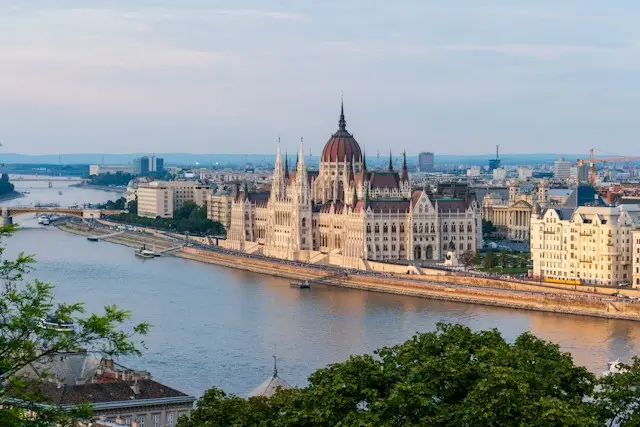
Budapest is really two cities stitched together by the Danube. Buda, on the hilly west bank, holds the castle district and a more residential, quiet feel, while Pest, flat and sprawling on the east bank, is where most of the shopping, nightlife, and grand 19th century architecture sits. The split isn't just geographic, it's a genuine change in atmosphere crossing from one side to the other, and part of what makes the city interesting is bouncing between the two.
It's also one of Europe's better value capitals, with a level of architectural grandeur, thermal bath culture, and food that punches well above what the prices suggest. Budapest spent decades as a major city in the Austro-Hungarian Empire, and that history shows in everything from the neo-gothic Parliament building to the elaborate bathhouses built when soaking in mineral-rich water was considered a normal part of daily life rather than a spa day treat.
Best Time to Visit
Late spring, April through June, and early fall, September into October, are the strongest windows to visit, with mild temperatures in the 60s and 70s Fahrenheit and crowds that haven't hit peak summer levels yet. These months also make outdoor thermal bath visits genuinely pleasant rather than either too cold or uncomfortably hot to walk between the pools.
Summer, July and August, brings heat that can climb into the 90s and heavier tourist numbers, particularly around the Castle District and Fisherman's Bastion. It's still a good time to visit if you're planning to spend afternoons in the outdoor thermal pools, since that's exactly when the baths make the most sense.
Winter in Budapest
Winter, November through February, is cold and can be gray for stretches, but it's also when Budapest's Christmas markets take over the main squares and the outdoor sections of thermal baths like Széchenyi become genuinely magical, with steam rising off the water into cold air. It's the quietest season for crowds and the cheapest for hotels.

Getting to Budapest and From the Airport
Budapest Ferenc Liszt International Airport sits about 10 miles southeast of the city center and is well connected to most major European hubs, with a growing number of long-haul connections as well. Getting into the center is straightforward and doesn't require much planning.
Getting Into the City
- The 100E airport bus runs directly to Deák Ferenc tér in the heart of the city every 10 to 20 minutes and costs around €5, making it the simplest budget option for most travelers.
- A taxi from the airport runs roughly €25 to €35 to the center; use the official taxi stand outside arrivals rather than accepting offers from drivers approaching you inside the terminal.
- Public buses connecting to the metro network are cheaper still if you're comfortable with a transfer, though the 100E is more convenient for most first-time visitors with luggage.
Arriving by Train
Budapest has excellent rail connections to Vienna, about 2.5 hours away, and Prague, roughly 7 hours, making it easy to combine with a wider Central European trip. Trains generally arrive at Keleti station, which connects directly to the metro system.
Getting Around the City
Budapest's public transport network, covering metro, trams, and buses, is efficient, cheap, and easy to navigate even without Hungarian. A single ticket costs around €1.20 to €1.50, and a 10-ride pass or a 72-hour travel card, priced around €17, can work out cheaper if you're moving around a lot.
The metro's M1 line, known as the Millennium Underground, is worth riding at least once purely for its history, it was the first underground railway in continental Europe, opened in 1896, and still has a distinctly old-world feel with small tiled stations. Trams along the Danube, particularly tram 2, offer some of the best skyline views in the city without paying for a river cruise.
Walking Between Buda and Pest
The Chain Bridge, the most iconic of the bridges connecting the two sides, is walkable and offers a great vantage point, though it's often under partial renovation, so check current access. Much of central Pest is flat and walkable, while Buda's Castle District sits on a hill best reached by the funicular railway or a short uphill walk.

Where to Stay
Where you base yourself shapes the trip significantly given the Buda-Pest divide. Staying in Pest, particularly around the Jewish Quarter or the Basilica area, puts you close to restaurants, ruin bars, and most of the shopping, and it's generally the more practical base for first-time visitors.
District V (Belváros)
The historic downtown of Pest, home to St. Stephen's Basilica and the main shopping streets, is central and walkable but comes with higher hotel prices and heavier crowds.
District VII (Jewish Quarter / Erzsébetváros)
This is Budapest's nightlife and ruin bar hub, with a grittier, more atmospheric feel and good value accommodation, though it can be noisy at night given the concentration of bars.
Buda Side
Staying in Buda, particularly near the Castle District, offers quieter evenings and a more residential feel, though you'll cross the river regularly to reach Pest's restaurants and nightlife, which is easy enough by tram or on foot across the Chain Bridge.
Top Things to See and Do
The Hungarian Parliament Building is Budapest's most recognizable landmark, and touring the interior is worth the effort of planning ahead. Standard tickets for non-EEA visitors run around €36, and tours consistently sell out two to three weeks in advance during peak season, so book through the official vendor well before your trip rather than assuming you can walk up.
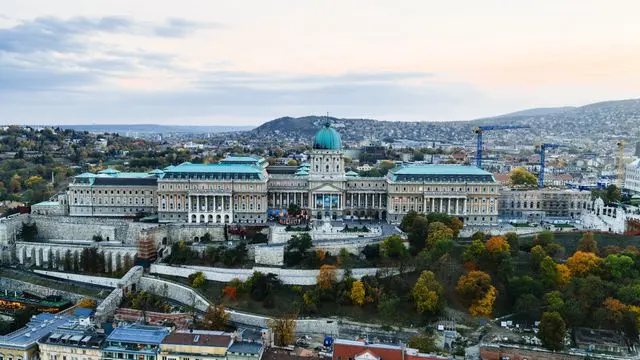
Across the river, the Castle District brings together Buda Castle, the historic royal palace, and Fisherman's Bastion, a neo-Gothic terrace with sweeping views over the Danube and Pest's skyline. Matthias Church, with its colorful tiled roof, sits right alongside it and is worth a look inside as well as out.
St. Stephen's Basilica
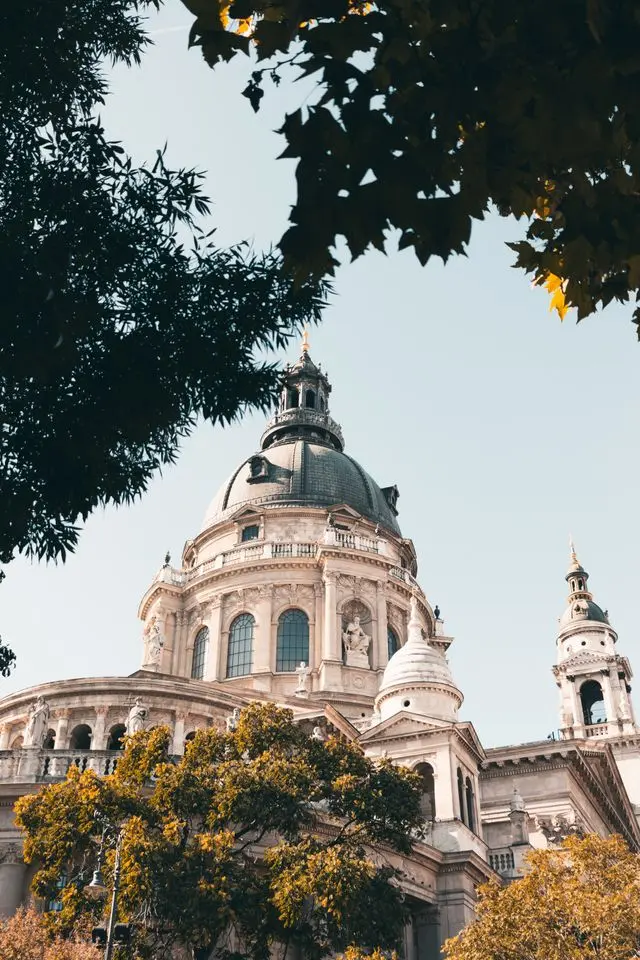
Budapest's largest church holds the mummified right hand of Hungary's founding king as a relic, which is a genuinely odd but memorable thing to see, and climbing to the dome gives one of the best panoramic views in the city, rivaling Fisherman's Bastion.
The Danube by Night
A Danube cruise, whether a short daytime sightseeing trip or a sunset cruise with drinks, is one of the better ways to see the Parliament, Chain Bridge, and Castle District lit up at night, and prices are reasonable compared to similar river cruises elsewhere in Europe.
Ruin Bars
Budapest's ruin bar scene, centered in the Jewish Quarter, turns abandoned buildings and courtyards into eclectic, mismatched bar spaces. Szimpla Kert is the most famous and the one most visitors start with, though the area has dozens of smaller, less crowded options worth exploring on foot.
Thermal Baths, a Budapest Essential
Budapest sits on a network of natural thermal springs, and bathing culture here goes back to Roman times, later expanded significantly under Ottoman rule. This isn't a novelty spa experience, it's a genuine part of local life, and skipping it means missing something distinctly Budapest.
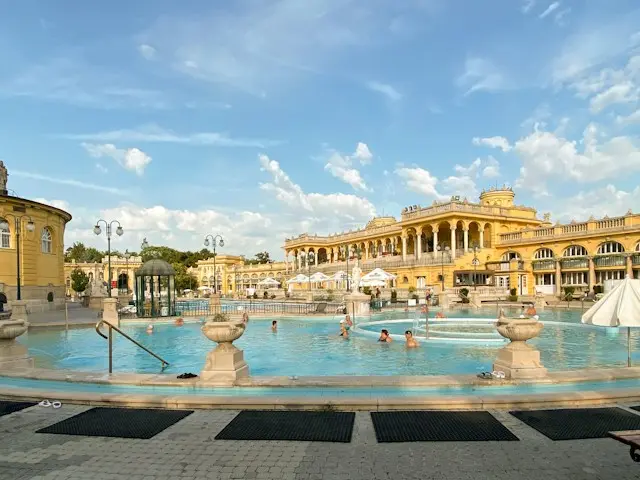
Széchenyi Baths, with its grand yellow Neo-Baroque building and multiple outdoor pools, is the most famous and the one most first-time visitors head to, partly because the outdoor thermal pools stay open and usable year-round, including in winter when steam rising off the water against cold air is a genuine spectacle. Gellért Baths, attached to the historic Gellért Hotel, offers a more intimate, art nouveau setting with striking tiled interiors.
Plan for two to four hours if you want to actually relax rather than rush through, and note that ticket tiers vary depending on whether you want a locker or a private cabin, with cabin access costing more. Booking online ahead of time, especially in peak season, helps you skip some of the queue at the entrance.
Food and Drink
Hungarian food is hearty, paprika-forward, and built around slow-cooked stews and pastries. Goulash, a paprika-spiced beef stew, is the dish most people know before arriving, though the Hungarian version is often soupier than international interpretations. Chicken paprikash, served with dumplings, and stuffed cabbage are similarly classic, comforting dishes worth seeking out at a traditional restaurant.
- Lángos, deep-fried dough typically topped with sour cream and cheese, is Budapest's essential street food, sold at markets and small stands throughout the city.
- Chimney cake, a sweet spiral pastry rolled in sugar and sometimes cinnamon or nuts, is popular with visitors and sold in tourist areas, though it's more of a Transylvanian tradition than a strictly Budapest one.
- Pálinka, a strong fruit brandy, is the local spirit of choice, often offered as a shot before or after a meal in traditional restaurants.
Where and When to Eat
The Great Market Hall, a large 19th century covered market near the Liberty Bridge, is a good spot for an affordable lunch alongside fresh produce and souvenir shopping upstairs. For dinner, wandering a few streets away from the main tourist strips in District V or into District VII generally turns up better value and more authentic food than restaurants directly facing major landmarks.

Money, Costs, and Everyday Practicalities
Hungary uses the forint, not the euro, despite being an EU member, and this catches some visitors off guard. Cards are widely accepted in restaurants, shops, and on public transport, but it's worth carrying some forint in cash for smaller vendors, market stalls, and tips.
Budapest is genuinely one of the more affordable capital cities in Western and Central Europe, with a main course at a restaurant typically running €10 to €18. Tipping around 10 percent is standard and expected at sit-down restaurants, and it's worth double-checking your bill since some restaurants in heavily touristed areas add a service charge automatically, which means an additional tip isn't necessary on top.
Safety and Etiquette
Budapest is a safe city for travelers, with the main things to watch for being overpriced menus without visible prices near major tourist sites and taxi drivers who don't use a meter, both avoidable by choosing official taxi apps or metered cabs and checking menus before sitting down. Dress modestly when visiting the Parliament or major churches, as this is enforced at the door.
Day Trips Worth Taking
Budapest's central location in the Carpathian Basin makes it a good base for day trips, with the domestic rail network reaching most nearby towns without much hassle.
- Szentendre, about 40 minutes away by train, is a small riverside town known for its artist colony history, colorful baroque buildings, and museums, making for an easy half-day escape.
- Eger, roughly two hours away, combines a striking castle with the Valley of the Beautiful Women, a hillside area lined with wine cellars, making it a favorite for a wine-focused day trip.
- Lake Balaton, Central Europe's largest lake, is about 1.5 to 2 hours away and popular in summer for swimming and lakeside towns, though it's more of a full day or overnight trip given the distance.
- Vienna, while more of a separate city trip than a quick day trip, is close enough at 2.5 hours by train that some travelers do combine both cities in one itinerary.
Final Tips Before You Go
Book Parliament tour tickets well ahead, ideally two to three weeks before your visit in peak season, since they sell out reliably and same-day availability is limited to a few late slots or specific languages. The same advance planning applies to popular Danube cruises during summer weekends.
Pack a swimsuit even if bathing wasn't originally part of your plan, since a visit to Széchenyi or Gellért ends up being one of the highlights for most travelers, and a bathing cap is sometimes required in certain indoor pools, usually available for rent onsite if you forget one. Carry a bit of cash for smaller vendors and always check that a taxi is running its meter or use an app-based service instead.
Budapest rewards visitors who take it slow, an afternoon soaking in a thermal bath, a long dinner over goulash, an evening tram ride along the Danube watching the Parliament light up. It's a city that works well whether you're chasing grand architecture or just want to relax somewhere beautiful and affordable for a few days.
Frequently Asked Questions
How many days do I need in Budapest? +
Three full days is a comfortable amount of time to cover the Castle District, the Parliament, a thermal bath visit, and a proper meal or two in each neighborhood. Four or five days allows room for a day trip to somewhere like Szentendre or Eger.
Do I need to book Parliament tour tickets in advance? +
Yes, strongly recommended. Tours regularly sell out two to three weeks ahead in peak season, and same-day tickets are limited and often only available for late time slots or specific languages, so book through the official vendor as early as you can.
Is Budapest expensive to visit? +
No, Budapest remains one of the better value capital cities in Europe, with restaurant meals, public transport, and even thermal bath entry priced noticeably lower than comparable experiences in Western European capitals.
What currency does Budapest use? +
Hungary uses the forint, not the euro, even though it's a European Union member. Cards are widely accepted, but it's worth carrying some forint in cash for smaller vendors and markets.
Is Budapest walkable, or will I need public transport? +
Central Pest is quite walkable and flat, while Buda's Castle District sits on a hill best reached by funicular or a short climb. You'll want public transport, which is cheap and efficient, to move between the two sides regularly.
Which thermal bath should I visit, Széchenyi or Gellért? +
Széchenyi is the bigger, more famous option with a grand yellow building and multiple outdoor pools open year-round. Gellért offers a smaller, more intimate art nouveau setting with striking tiled interiors, and many visitors enjoy both if time allows.
Is Budapest safe for tourists? +
Yes, Budapest is generally very safe. The main things to watch for are overpriced restaurants near tourist landmarks and unmetered taxis, both easily avoided by checking prices beforehand and using metered cabs or ride-hailing apps.
When is the best time to visit to avoid crowds? +
Late fall through winter, excluding the Christmas market period, is the quietest stretch, while spring and early fall offer a good balance of mild weather and manageable crowds compared to peak summer.
Do I need to speak Hungarian to get by? +
No, English is widely spoken in hotels, restaurants, and most tourist-facing businesses in Budapest, though Hungarian is a genuinely difficult language unrelated to most European tongues, so don't expect to pick up much beyond basic greetings.