

Table of Contents
About Athens
Athens is one of the oldest continuously inhabited cities in the world, and it wears that history openly: the Acropolis rises directly above the modern downtown, and ancient ruins turn up mid-sidewalk or beneath glass panels in the metro. At the same time, it's a sprawling, energetic Mediterranean capital of nearly four million people, with a food scene, nightlife, and street-art-covered neighborhoods that have little to do with antiquity.
The contrast is part of the appeal. Visitors come for the Parthenon and leave remembering the rooftop bar with the view of it, the neighborhood taverna that served dinner at midnight, or the flea market chaos of Monastiraki on a Sunday morning. Athens rewards travelers who balance a serious ancient-history itinerary with unstructured time to just wander.
Best Time to Visit Athens
Spring (April–May)
Widely regarded as the best season: warm but not punishing, wildflowers on the hillsides, and archaeological sites far less crowded than in summer.
Summer (June–August)
Peak tourist season and peak heat, with July and August regularly exceeding 35°C (95°F) and offering little shade at outdoor sites like the Acropolis. Extreme heat has occasionally forced midday closures at the Acropolis in recent summers, so plan visits for early morning or late afternoon.
Autumn (September–October)
Another excellent window, with the heat easing by mid-September and crowds thinning noticeably after the summer peak.
Winter (November–March)
Mild by northern European standards, rarely dropping below freezing, and the quietest and cheapest time to visit, though some island-hopping connections that pair well with an Athens trip run less frequently.
Getting to Athens
By Air
Athens International Airport (ATH), also called Eleftherios Venizelos, sits about 20 miles (33 km) southeast of the city center and handles most international arrivals, including direct long-haul flights from North America and hubs across Europe and Asia.
By Sea
The port of Piraeus, reachable by metro in under an hour from central Athens, is one of the busiest passenger ports in the world and the main gateway to the Greek islands by ferry.
Entry Requirements
Greece is part of the Schengen Area, so most non-EU visitors can enter visa-free for stays of up to 90 days within a 180-day period. The EU's new ETIAS travel authorization for visa-exempt travelers is expected to roll out from late 2026 alongside the Entry/Exit System already being phased in at European borders; requirements can shift as these systems launch, so confirm current rules with an official source shortly before you travel.

Transportation in Athens
Metro
Athens has three metro lines that cover the main tourist areas well, and several stations near the historic center double as informal archaeological museums, with excavated ruins visible through glass floors and display cases. A standard ticket costs a little over €1 and is valid for 90 minutes across metro, bus, tram, and trolley, with transfers included.
Airport Transport
The metro's Blue Line runs directly from the airport to Syntagma Square in the city center in about 40 minutes, but it uses a separate, higher airport fare rather than the standard city ticket. An express bus is a cheaper, slightly slower alternative, and metered taxis operate on a flat fare to and from the airport.
Multi-Day Passes
Short-stay visitors often do best with a multi-day travel pass covering unlimited city transport; some versions also bundle a round-trip airport transfer, which can work out cheaper than buying tickets separately.
Trams and Walking
A tram line connects central Athens to the southern coastal suburbs and beaches, useful for a day at the sea without leaving the city. Central Athens itself - from the Acropolis to Syntagma to Monastiraki - is compact and very walkable, though pavements can be uneven and hilly in places.
Things to Do in Athens
The Acropolis and Ancient Sites
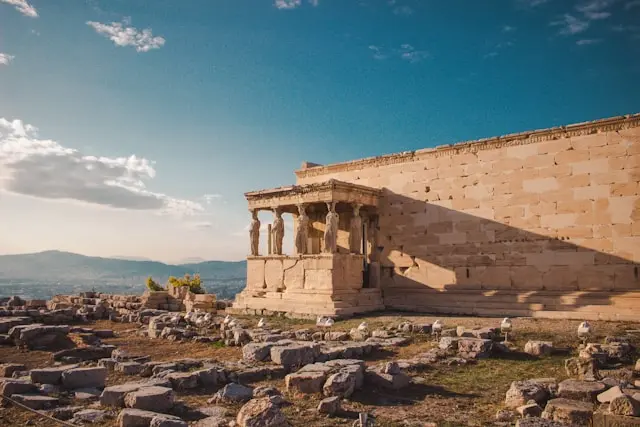
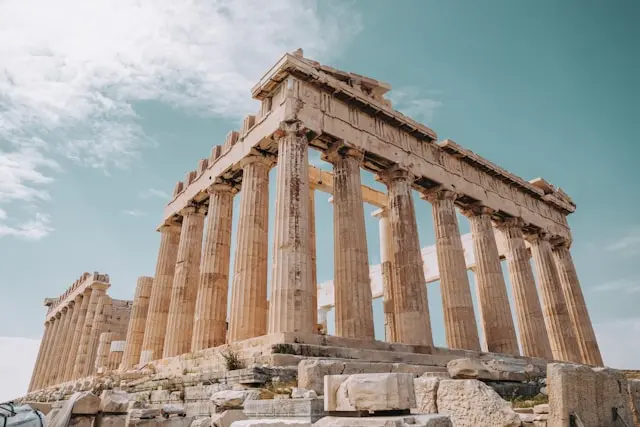
The Acropolis, crowned by the Parthenon, is Athens' defining landmark and usually the centerpiece of any visit; a timed-entry ticket is required and booking ahead is strongly recommended in peak season. The Ancient Agora below it, once the civic heart of classical Athens, is less crowded and includes the well-preserved Temple of Hephaestus, while the Roman Agora and the Temple of Olympian Zeus round out the classical core.
Museums
The Acropolis Museum, at the foot of the hill, houses artifacts from the site itself, including surviving originals of the Parthenon sculptures, displayed with views up toward the Acropolis. The National Archaeological Museum holds one of the world's most important collections of Greek antiquities, from Mycenaean gold to classical sculpture.
Neighborhoods and Views
Plaka, the old town beneath the Acropolis, is dense with narrow lanes, neoclassical houses, and tavernas, while neighboring Monastiraki hosts a sprawling flea market, especially lively on Sundays. Lycabettus Hill, reachable by funicular, offers the best panoramic view over the entire city, Acropolis included.
Everyday Athens
Beyond the monuments, the city's street-art scene in areas like Psyrri and Exarcheia, its rooftop bar culture with Acropolis views, and its lively café squares are as much a part of an Athens visit as the ruins.
Neighborhoods to Explore
Plaka
The oldest neighborhood in Athens, all narrow pedestrian lanes and neoclassical buildings at the base of the Acropolis. Charming and central, though also the most tourist-priced part of the city.
Monastiraki
Home to the flea market and a lively square where ancient ruins, Ottoman-era mosque architecture, and modern street life all sit within view of each other. Busy and a little chaotic, especially on weekends.
Psyrri
A former industrial district turned nightlife hub, known for its street art, live rebetiko music venues, and a younger, more local crowd than Plaka.
Koukaki
A quiet, mostly residential neighborhood just south of the Acropolis that's become popular with visitors for its walkability, good cafés, and easy access to both the Acropolis Museum and the metro.
Exarcheia
An anarchist-leaning, artsy district known for murals, bookshops, and a countercultural identity distinct from the rest of the city center; interesting to explore but historically the site of occasional protests and periodic tension with police, so it's worth checking current conditions before visiting at night.
Kolonaki
The upscale neighborhood on the slopes of Lycabettus Hill, with designer boutiques, gallery spaces, and some of the city's more refined dining, a contrast to the grittier character of Psyrri or Exarcheia.

Food in Athens
Everyday Staples
Souvlaki - grilled meat skewers or gyro wrapped in pita with tomato, onion, and tzatziki - is Athens' defining street food and available everywhere from stand-up counters to sit-down tavernas. Greek salad (horiatiki), moussaka, and freshly baked spanakopita and tyropita (spinach and cheese pies) round out the everyday menu.
Taverna Culture
A traditional taverna meal is meant to be shared: several small and medium plates ordered for the table rather than one dish per person, paired with local wine or ouzo, and stretched out over a long evening. Plaka and Psyrri have the highest concentration of tavernas, though some of the best, more affordable options are in less touristy neighborhoods like Koukaki.
Markets and Coffee
The Varvakios Central Market near Monastiraki is where many Athenian restaurants still source fish and produce, and it's worth a walk-through even without buying anything. Greek coffee culture runs on freddo espresso and freddo cappuccino (cold, foam-topped coffees), a fixture of café terraces even outside summer.
Accommodation in Athens
Plaka
The most atmospheric and walkable base, right beneath the Acropolis, though rooms are smaller and pricier for the location, and the area gets crowded during the day.
Koukaki
Increasingly the go-to choice for visitors who want to be near the Acropolis and its museum without paying Plaka prices, with a quieter, more residential feel.
Syntagma
Central and well-connected by metro, close to the parliament and National Garden, good for visitors prioritizing transport links over neighborhood charm.
Kolonaki
A quieter, upscale option with easy access to Lycabettus Hill and high-end shopping, at a higher price point than the historic center.
Day Trips from Athens
Cape Sounion
A dramatic clifftop Temple of Poseidon at the southern tip of Attica, especially popular at sunset, reachable by bus or organized tour in under two hours.
Delphi
The ancient sanctuary once considered the center of the world, set on a mountainside above the Gulf of Corinth, about a two-and-a-half-hour drive and doable as a long day trip or better as an overnight.
Nafplio
A pretty seaside town in the Peloponnese with a Venetian old town and a hilltop fortress, popular for a slower, more relaxed day away from Athens' pace.
Aegina and the Saronic Islands
Aegina, Hydra, and Poros are all reachable by ferry from Piraeus in roughly an hour to ninety minutes, making a genuine Greek island day trip possible without an overnight stay.
Safety Tips in Athens
Athens is generally safe for visitors, and violent crime against tourists is uncommon. The main everyday risks are pickpocketing in crowded areas and occasional scams targeting tourists near major sights.
- Watch belongings closely around Monastiraki, Syntagma metro station, and the Acropolis during peak hours
- Be wary of unsolicited "friendly" invitations to bars near Syntagma that lead to inflated bills, a known local scam
- Use only metered taxis or licensed ride-hailing apps, and confirm the fare or meter is running before setting off
- Exarcheia has occasionally seen protests and clashes with police; check current conditions before visiting at night
- For emergencies, dial 112, the general EU emergency number

Budget & Costs in Athens
Athens is one of the more affordable capitals in Western Europe, generally cheaper than Rome, Paris, or London for food and accommodation, though ticketed archaeological sites add up quickly if visited individually rather than via a combined pass.
- Greek coffee or a soft drink at a café: around €3–4
- Souvlaki wrap from a stand: roughly €3–4; a sit-down taverna dinner: €15–25 per person
- Metro single ticket: a little over €1; multi-day travel passes offer better value for a multi-day stay
- Acropolis entry: priced seasonally, higher in peak season (roughly April–October) and lower in winter months - combined tickets covering several ancient sites can offer savings if visiting more than two or three; check the official ticketing site for current prices, as these have changed more than once recently
- Mid-range hotel double room: roughly €80–140 per night, more in Plaka or peak summer
Local Customs & Etiquette
Meal Times
Greek meal times run later than in northern Europe: lunch is often 2–3 p.m. and dinner rarely starts before 9 p.m., with many tavernas busiest between 10 p.m. and midnight.
Tipping
Tipping is appreciated but not obligatory; rounding up the bill or leaving small change is standard, and around 5–10% at a sit-down restaurant is a generous but not expected gesture.
Hospitality and Pace
Greek hospitality (philoxenia) runs deep, and it's common for meals to stretch long past when the food is finished. Rushing a host or a waiter to bring the bill is considered impolite; asking for it directly ("to logariasmo, parakalo") is normal and expected, since it typically isn't brought unprompted.
Language and Gestures
Greek is the primary language, though English is widely spoken in tourist areas. One gesture worth knowing: an open palm pushed toward someone (the "moutza") is considered a serious insult, unlike its casual "stop" meaning elsewhere.
Suggested Itineraries
2 Days in Athens
Day one: Acropolis and Acropolis Museum in the morning before the heat and crowds build, lunch in Plaka, afternoon at the Ancient Agora, sunset from Lycabettus Hill. Day two: National Archaeological Museum in the morning, Monastiraki flea market and Varvakios Market for lunch, an evening exploring Psyrri's bars and street art.
3 Days in Athens
Follow the two-day plan, then use day three for a trip to Cape Sounion for sunset over the Temple of Poseidon, or a Saronic island day trip to Aegina or Hydra if an early ferry departure works with your schedule.
5+ Days in Athens
Add an overnight trip to Delphi, a slower day exploring Kolonaki and Exarcheia's contrasting neighborhood characters, and a proper beach day using the tram line to the southern coast, plus a buffer day with no fixed plan for whichever ancient site or neighborhood pulled at you most.

Common Questions about visiting Athens
How many days do you need in Athens? +
Two to three days covers the Acropolis, the main museums, and the historic center comfortably, while five or more days lets you add day trips like Delphi or the Saronic Islands and explore neighborhoods beyond the tourist core.
What is the best time of year to visit Athens? +
Spring (April–May) and early autumn (September–October) offer the mildest, most comfortable weather, while summer brings peak heat and crowds and winter is quiet, cheap, and mild but with fewer island-ferry connections.
Is Athens expensive? +
Athens is one of the more budget-friendly Western European capitals for food and accommodation, though ticketed archaeological sites can add up, so it's worth planning which sites matter most rather than trying to see all of them individually.
Do you need a visa to visit Athens? +
Most non-EU visitors, including from the US, UK, Canada, and Australia, can enter Greece visa-free for up to 90 days within a 180-day period, though the EU's new ETIAS travel authorization is expected to become required for visa-exempt travelers from late 2026, so it's worth checking current requirements close to your travel date.
Is Athens safe for tourists? +
Athens is generally safe with low rates of violent crime against visitors, though pickpocketing in crowded tourist areas and occasional bar scams near Syntagma are worth being aware of, and it's sensible to check current conditions before visiting Exarcheia at night.
How do you get around Athens? +
The metro is fast, covers the main sights well, and even doubles as an informal archaeology exhibit at some stations, while the historic center itself is compact and walkable; a multi-day travel pass is usually the best value for visitors staying more than a couple of days.
What's the best area to stay in Athens? +
Plaka suits visitors who want to be right beneath the Acropolis and don't mind paying for the location, Koukaki offers similar proximity at better value, Syntagma is convenient for transport links, and Kolonaki suits those wanting a quieter, upscale stay.
What day trips pair well with an Athens visit? +
Cape Sounion works well as a half-day or sunset trip, Delphi is best as a full day or overnight, and Aegina, Hydra, and Poros are all reachable by ferry from Piraeus in about an hour, making a genuine island day trip possible.
Is Athens good for families or solo travelers? +
Athens works well for both: its ancient sites and hands-on museums appeal to kids, while its walkable center, strong café culture, and easy public transport make it comfortable and sociable for solo exploration.
What do first-time visitors often get wrong about Athens? +
Trying to visit the Acropolis at midday in summer instead of early morning or late afternoon, and treating Athens purely as an Acropolis stopover rather than budgeting real time for its neighborhoods, food scene, and nearby islands.